


95 Years and Counting
Ron Wilson
Nearly a century ago, North Dakota OUTDOORS was introduced to readers. Fittingly referred to then as a bulletin as the number of pages of the first publication could be counted on one hand, NDO was first published in August 1931, as the Great Depression escalated globally.
Turning 95 is significant. It’s a marker that deserves pause, if only briefly, to recognize the Game and Fish Department’s effort, as the authors at the time put it, to include “items of conservation news as may be of interest to the sportsmen and lovers of wild life over the state.”
While these “items of conservation news” haven’t changed much in 95 years, the narrative at times has certainly gotten louder and more widespread.
For the sake of nostalgia, and for some insight into topics that have remained of interest for decades, we take a brief look at NDO that first year.
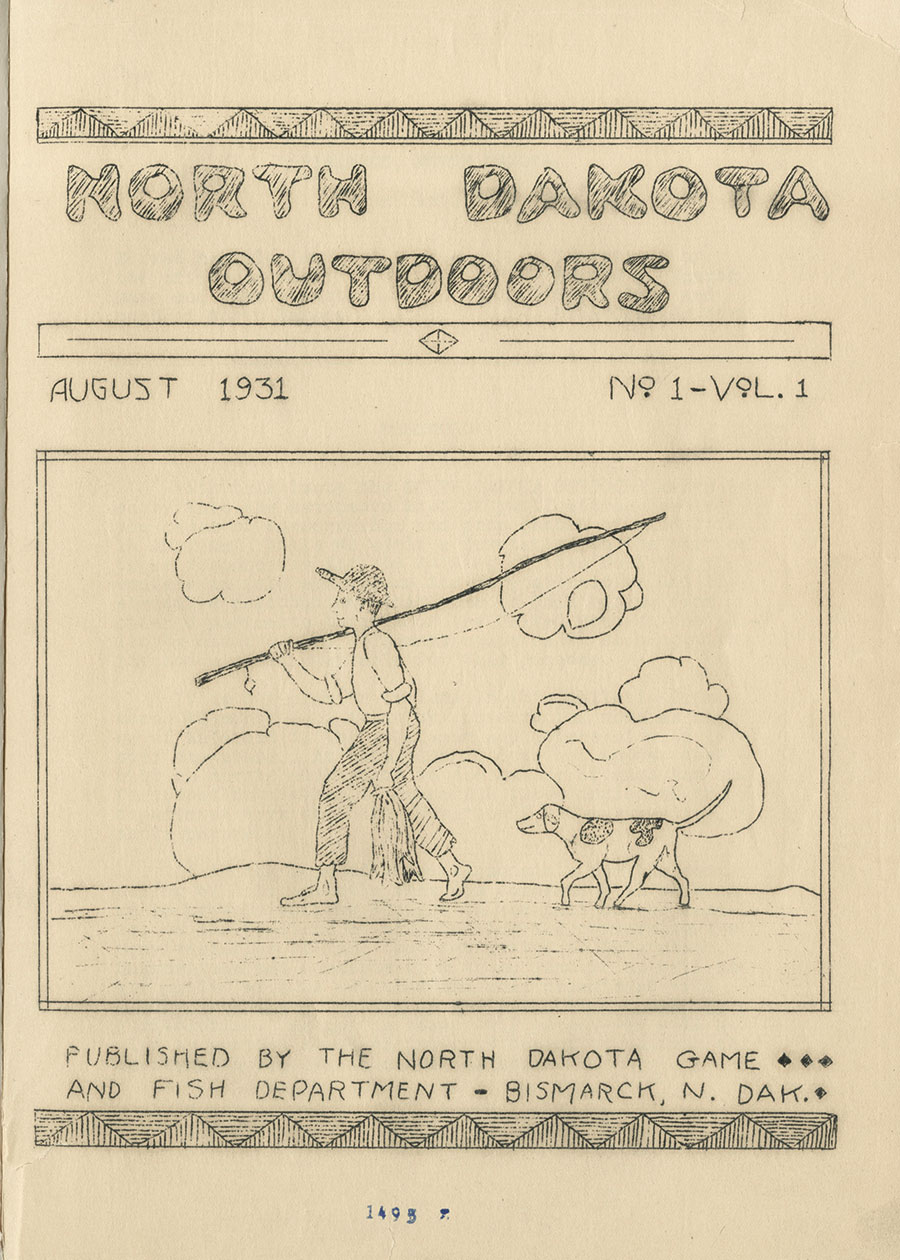
August 1931
With this issue the North Dakota OUTDOORS makes its entry into the extensive list of publications devoted to the cause of conservation and propagation of wild life in America.
It is the hope of those responsible for this compiling of this bulletin that its contents will be such as to provoke serious thought on the part of the readers to the problems of perpetuating and conserving the many varieties of game that are native to the state.
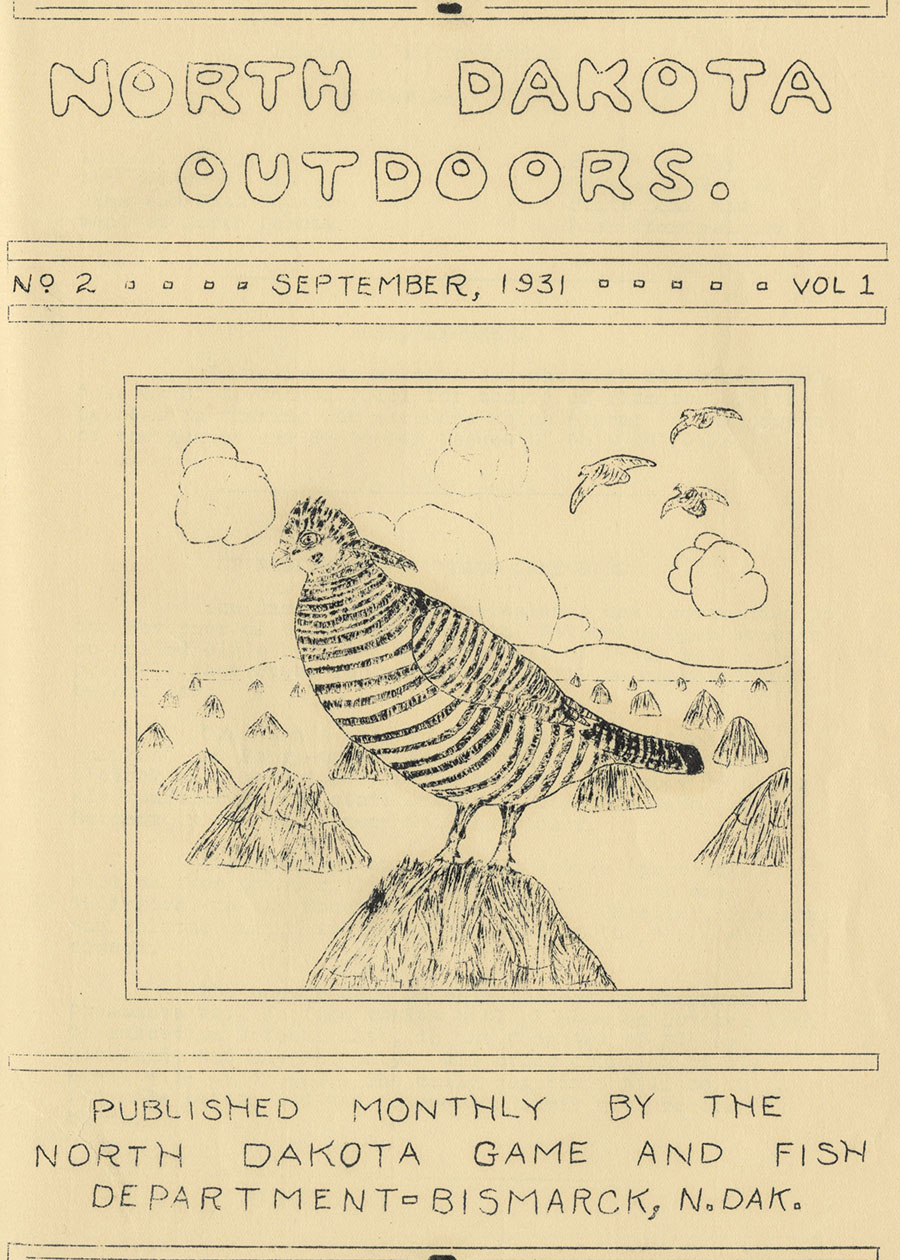
September 1931
For the first time since 1922 there will be an open season on deer in North Dakota … for a short period of time in November.
The taking of one antlered deer only during the open season will be legal. The fee for a resident big game license is Five Dollars and for a non-resident big game license, Fifty Dollars.
Deer are unusually plentiful this year and those who follow the sport will have an opportunity to secure one specimen each during the season. Hunters are required to wear red caps.
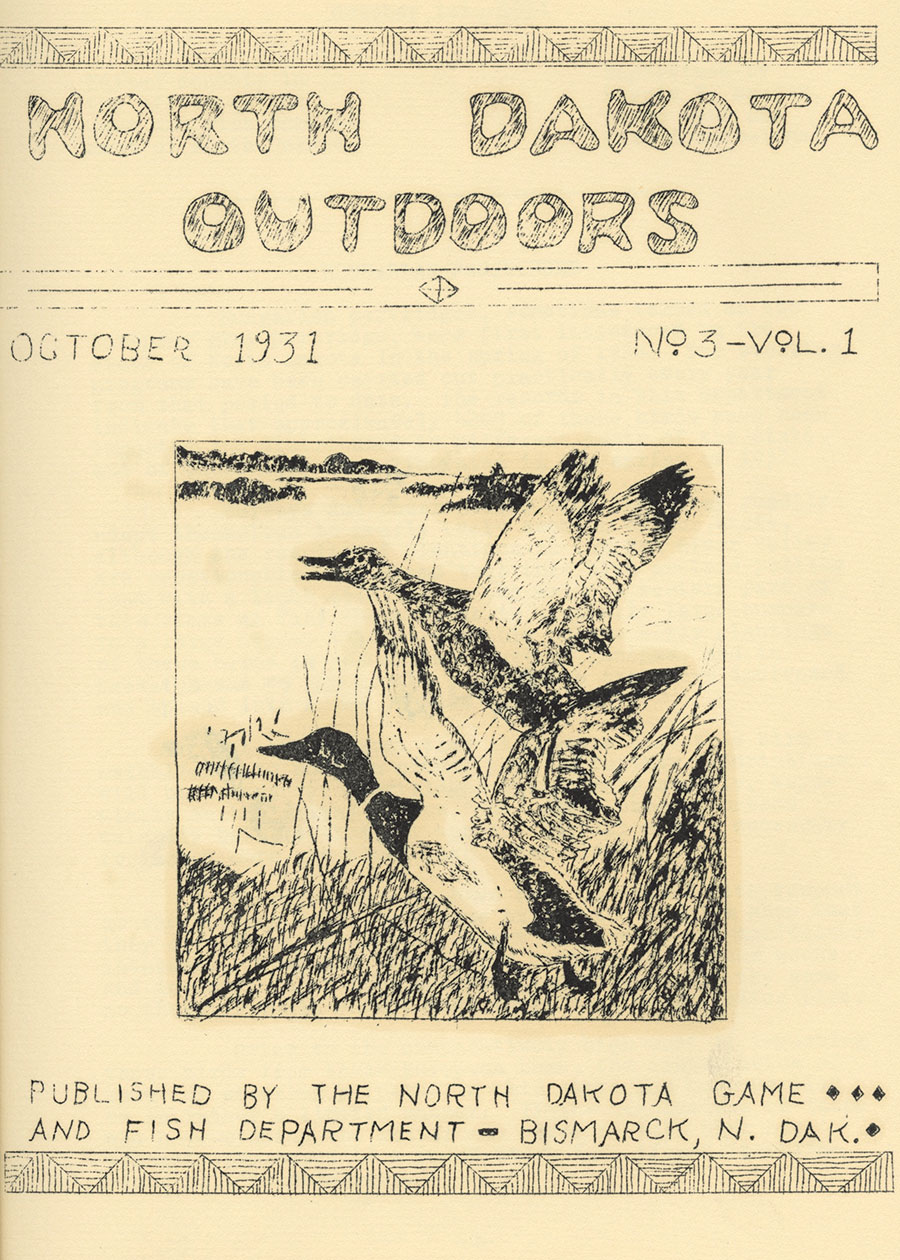
October 1931
Hungarian partridges, sometimes termed as the European gray partridge, were first introduced in the state in the spring of 1924. The stockings programs have been carried out practically every year from that period to date.
Surveys and observations show that they readily adapt themselves to nearly every section of the state, although the results of plants in the Red River Valley are questionable. It seems that this bird prefers rolling land with a light soil, as in the extreme western part of the state we find these birds in unusually large numbers.
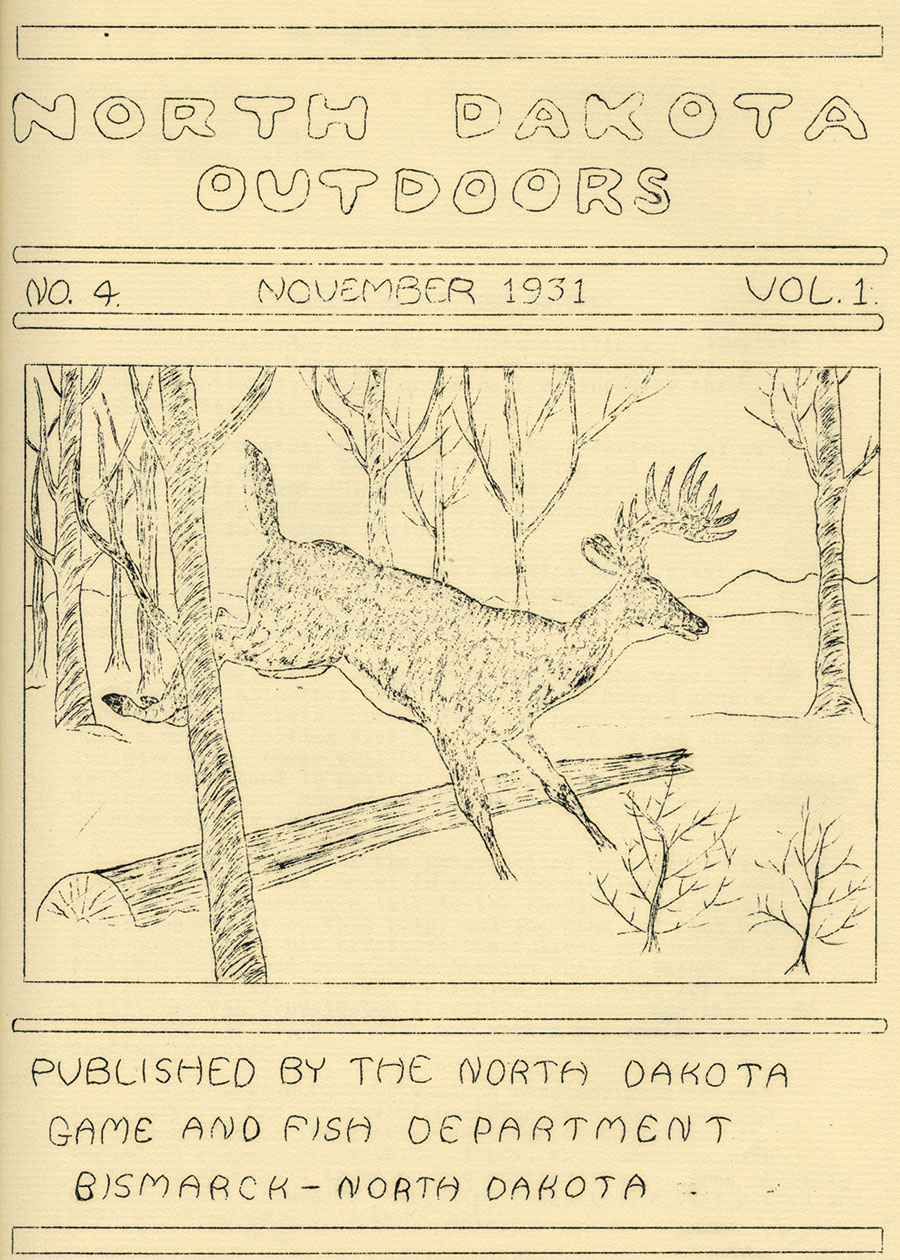
November 1931
On Saturday at noon of October 17th approximately 10,000 sportsmen were gathered in Richland, Sargent and Dickey Counties for a day and a half of shooting the wily ringneck pheasant.
Farmers are beginning to realize the value of the pheasant and all other game birds, and to have a general recognition of their worth. When the hunter places himself upon a mutual footing with the farmer, who raises and protects the game bird, there will be a better understanding why privately owned land is posted. Today public land is practically depleted of game, and private land is being posted in order to save what is left.
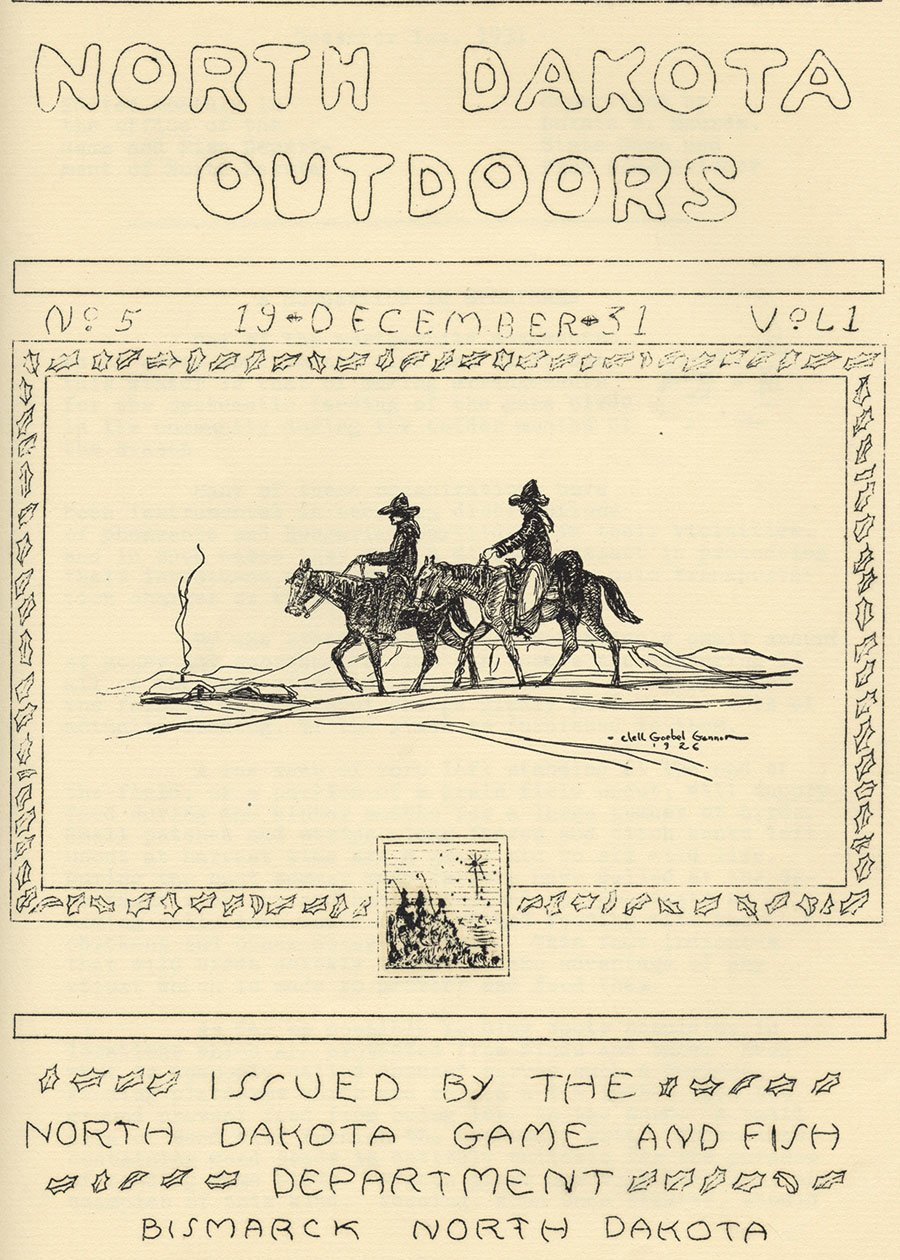
December 1931
The first open season on deer since 1922 closed Friday evening, November 20th. Approximately twelve hundred licenses were issued, and estimates of the number of deer killed range from four hundred to eight hundred. Since the majority of these were legal bucks, it is apparent that no loss of consequences has been suffered by the deer.
In spite of the many wild rumors to the contrary, comparatively few does and fawns were killed. In fact, in view of the number of hunters in the field, the kill of illegal deer was smaller than the normal average experienced by other states, a fine tribute to the North Dakota sportsmen.