

NORTH DAKOTA OUTDOORS MAGAZINE

Creatures of the Night

Greg Schonert
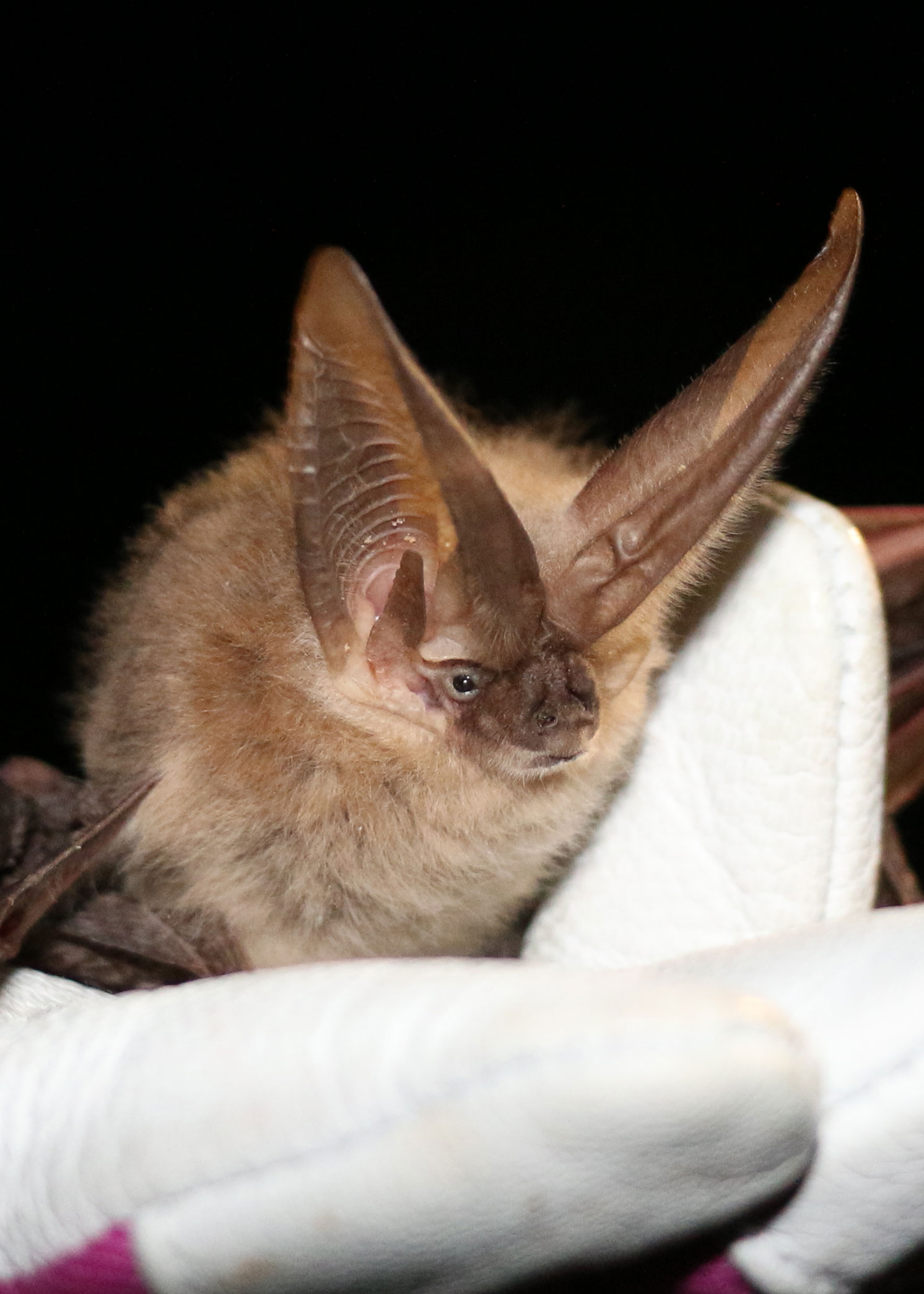
Townsend's big-eared bat

For those old enough to remember Rodney Dangerfield, his signature line was “No respect, I don’t get no respect.” When it comes to wildlife, bats are the Rodney Dangerfield of the animal kingdom due to a host of misconceptions and negative connotations which have led them to be feared rather than respected. In this article I will help shed some insight into these amazing creatures of the night and give them the respect that they deserve.

Bats belong to the order Chiroptera, which translates to “hand wing.” While other mammals like lemurs and squirrels glide or parachute, bats are the only mammal with true sustained flight, often very fast and for long distances. They are the second largest order of mammals with more than 1,500 species worldwide. Bats are split into two suborders, Megachiroptera and Microchiroptera. Megachiroptera includes “fruit bats,” which eat fruit, nectar and pollen. Microchiroptera, primarily insect-eating bats, are found distributed across the world, making up most of the bats in North America.

Often incorrectly referred to as “flying mice,” bats are not even closely related to rodents; they are more genetically related to whales, mountain lions and cows. Unlike rodents, which reproduce quickly and have large litters, bats give birth only once a year and most species only have one offspring. Bats also have much longer lifespans than rodents, living on average three times longer than other mammals of equal size. The oldest wild bat on record was 41 years old.

At some point in your hunting endeavors, someone may have told you that you are as “blind as a bat.” Although this phrase has been around for ages, it is not true. While vision varies from species to species, all bats have functional eyesight, and some can see exceptionally well. Not only can all bats see, but most species also have another means to navigate and find food called echolocation; a sophisticated method of using sound that enables them to orient themselves, forage for food, and avoid obstacles while flying.
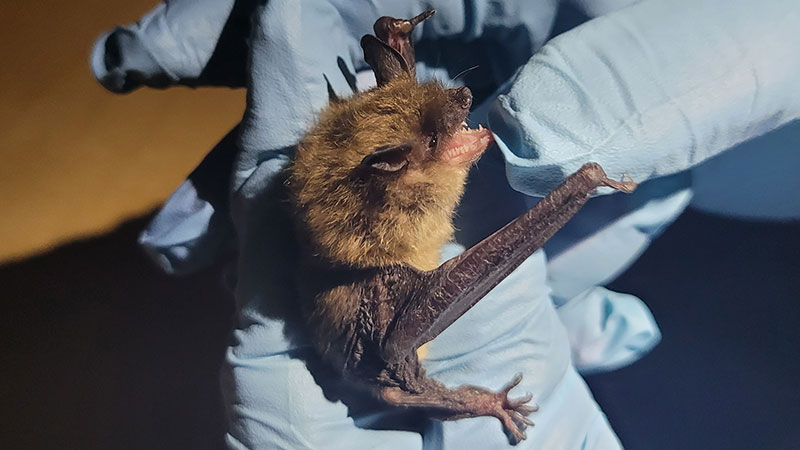
Bat held by researcher

In a nutshell, bats produce echolocation by emitting high frequency sound pulses through their mouth or nose and listening to the echo. From the echo, the bat can distinguish the size, shape, distance and even the texture of objects in its environment. When a bat detects an insect it wants to eat, it produces a rapid series of calls to pinpoint the exact location of its prey and then swoops in and devours its dinner either directly in the air or by gleaning them off the surfaces of foliage, trees, or ground. To humans, echolocation is a very complex and fascinating behavior, but for bats, it’s just another day in the office as they have been echolocating for about 50 million years.

Bat foraging behavior also varies in how they echolocate and each species has their own unique call pattern. These calls, when recorded on acoustic devices capable of recording high frequency sounds inaudible to humans, are what enable biologists to help determine species. Bats do not just use sound for echolocation; they also produce social calls for communication with other bats. Some bats can even sing, primarily to attract mates and to defend their territories. When navigating in the darkness, communication is key, and bats are very good at it.

North Dakota has 11 bat species, all insect eating and strictly active at night. Most bats in North Dakota are migratory and are only present from the middle of April until the end of October. During this time, bats need areas to roost and to forage. The most common roosting sources include trees, rock crevices, badlands features, buildings, bridges, and even clusters of leaves or pine needles. Dead and dying trees are of special importance for bats and other wildlife because they contain loose bark and cavities and crevices that allow shelter from the elements.

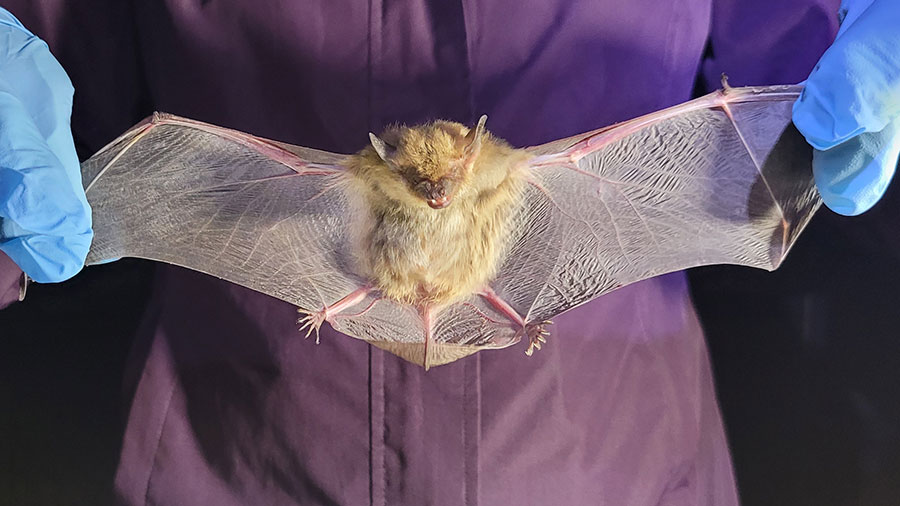
Big brown bat
Big brown bat

Foraging habitat for bats includes riparian areas, forest or woodland interiors and edges, and urban areas where water is also present in some capacity. Bats not only need water to drink, but also bodies of water are home to a rich community of insects. During spring and summer, male bats are generally solitary, and females of various species form maternity colonies which can be quite large. Although there are exceptions, females give birth to a single pup in June through July, and pups are completely dependent on their mothers for 4-5 weeks until they can fly and forage on their own.

Bats will breed in fall, but females will not give birth until the following spring. This tactic, called delayed fertilization, allows bat moms to give birth at an optimum time for survival when ample prey items are available and temperatures ideal.

During winter, many species of bats find refuge in places called hibernacula such as caves, abandoned mines, buildings and subterranean rock crevices where high humidity and above-freezing temperatures exist. During this time, bats are in a physiological state called torpor, where they reduce their body temperature and metabolism and wait for the seasons to change and emerge again when conditions are right. Not a bad way to spend winter if you ask me, although I admit that I would miss ice fishing.

Just like many wild animal species, coming into direct contact with bats should be avoided. Racoons, skunks, coyotes, foxes, bats, and several domestic animals are all known to carry rabies. Rabies is a rare but serious public health concern; but contrary to societal views, it should be noted that less than 1% of bats carry the virus. Rabies is primarily transmitted from the bite of a rabid animal. If you ever suspect you’ve been bitten or had other direct contact by any potentially rabid animal, you should call the state health department immediately.

If you get a bat inside your home or suspect you may have them roosting in an attic space or elsewhere, there are humane methods to remove them. There are a host of resources online to help with this safely on your own or contact a professional that specializes in humane removal. If you do exclude bats from a structure, consider placing a bat box in the vicinity to keep them around in a place they can be tolerated.

You may question why we should care about bats? The answer is simple. The essential role they play in pest control, plant pollination and seed dispersal is enormous. The insect-eating bats are ferocious predators of many kinds of bugs, including pests such as mosquitoes, beetles and moths. A single bat can consume up to 1,000 mosquito-sized insects in one hour and they can consume up to 30-100% of their own body weight in just one night.

Across the globe, bats consume an extraordinary number of insects. That knowledge alone should help people want to cheer for bats. They are so efficient at hunting insects that many insect species, particularly moths, have developed ways to elude them, or at least try. Bats in response have developed strategies to counter those techniques. An evolutionary arms (or wings) race so to speak.

Bats eat so many bugs that they are a major benefit to agriculture and studies have shown that the pest control services they provide are estimated to save the industry billions annually in avoided crop damage and reduced pesticide use. Insects that are key economic pests of corn, canola and soybeans in North Dakota, such as corn rootworm, diamondback moths, and clover worms are targets of bats, particularly in their adult stage. Most of the pest damage to crops come from the larval stage; however, when bats consume adults of these species, fewer eggs are laid, translating to less damage to crops and fewer pesticides. Across the world, there are many other agricultural and forest pests that are consumed by bats. Estimating the economic importance of bats in these systems is particularly challenging; however, bats have vast potential to influence the economics of agriculture and forestry.

Non-insect-eating bats also are important for agriculture. Several species in tropical areas eat nectar and many types of plants rely on bats for pollination including guava, coconuts, bananas, avocados and agave. Next time you have some guacamole and a sip of a margarita, tip your hat to bats. For the fruit-eating bats, they play an important role in seed dispersal for a variety of foods including figs, almonds, papayas, cashews and mangos. The best part of the services bats provide to agriculture is that they come free of charge to producers and consumers.
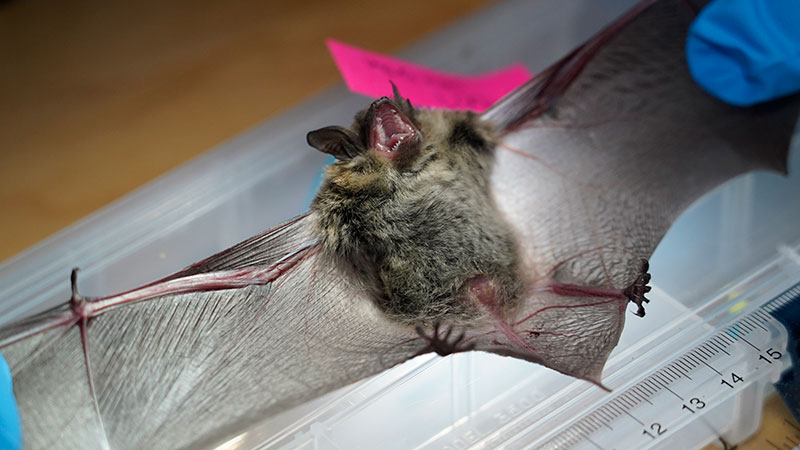
Silver-haired bat
Silver-haired bat

Unfortunately, all is not well with bats. In 2007, a fungus called Pseudogymnoascus destructans, or Pd, was discovered in a cave in New York, and its origin is believed to have been inadvertently introduced by humans. Pd thrives in cold, damp places, including caves and mines where bats like to hibernate. The fungus attacks and grows on bats while they are in hibernation, causing them to become active and burn up energy needed to survive winter and causes them to starve or freeze to death. These behaviors and symptoms are referred to as white-nose syndrome. This has resulted in catastrophic declines in several bat populations and is one of the most severe wildlife diseases in modern history. Since discovery in the U.S., the disease has spread to more than 40 states, including North Dakota in 2019, and nine Canadian provinces. Over 6 million bats in North America are estimated to have died as a result. This has caused several bat species to be listed under the Endangered Species Act, including the northern long-eared bat found in North Dakota.

While there are ways to slow the spread of WNS, there is no cure yet to completely stop the disease. The WNS response team, comprised of over 150 organizations, has made great steps in treatment options such as vaccines, UV light treatment and probiotic bacteria. There is hope that an option can be developed that can be used in any situation and benefits bats for years after a single application. In addition to treatments, decontamination protocols to prevent spread, restricting cave use where bats are hibernating, and population monitoring are all important tools for limiting the spread of WNS and keeping tabs on bat populations affected by this devastating disease.

In addition to WNS, bats face other threats much like other wildlife. Habitat loss has contributed to bat declines and wind energy has taken its toll on several bat species susceptible to injury and death, particularly during migration periods.

Prior to 2009, very little research had been done on bats in North Dakota. Since that time, professors and students with North Dakota State University and United Tribes Technical College, as well as a host of partners, have joined forces to learn more about the distribution, habitat use, genetics, and status of populations of North Dakota bats. Tremendous strides have been made in the last 15 years with research on North Dakota bats, but there is more work to be done, especially post-WNS arrival to the state. To facilitate this, a working group was recently formed to help guide conservation and management of bats in North Dakota.

While most people consider bats as scary, what is even scarier is a world without them. Bats play a vital role in our ecosystems both locally and globally. We often fear the unknown, and the negative associations surrounding bats have not helped.