The Missouri Gets Its Stripes
Zachary Eshleman
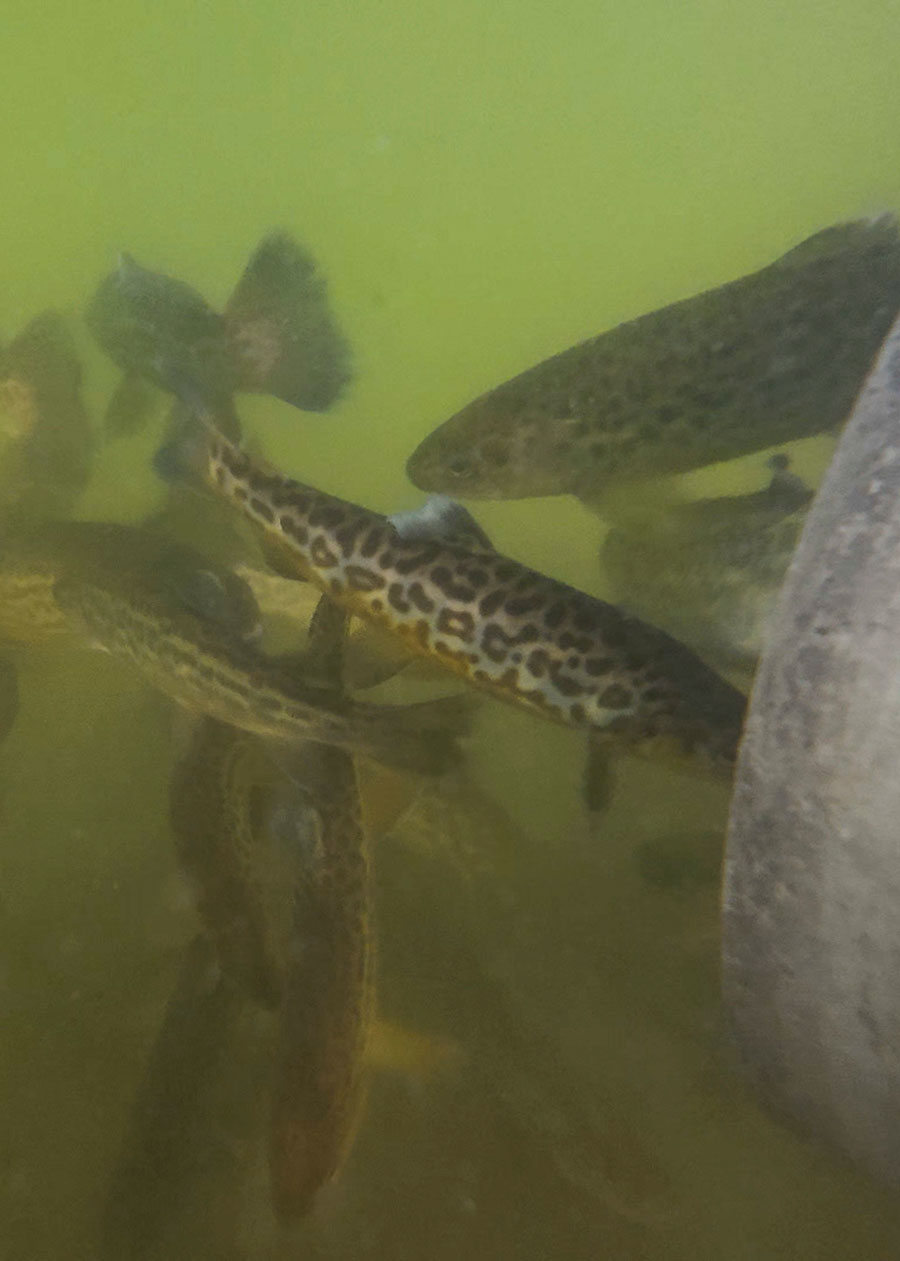
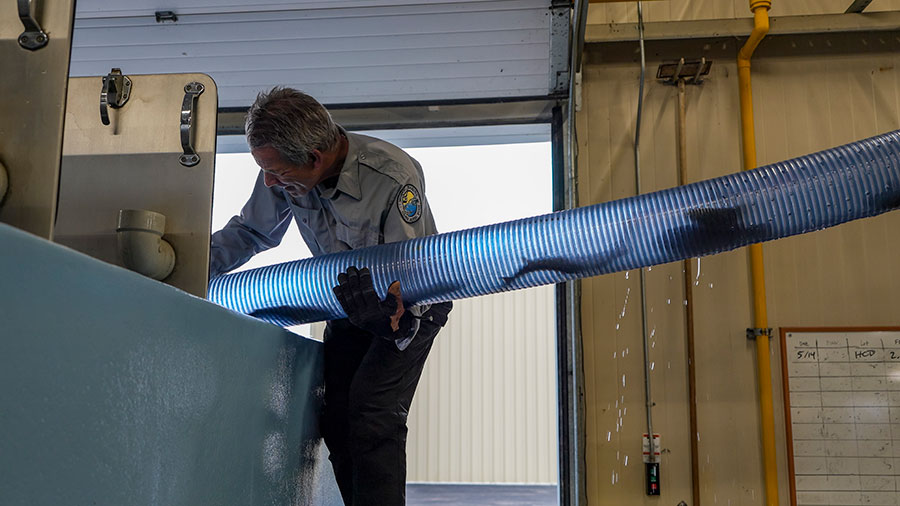
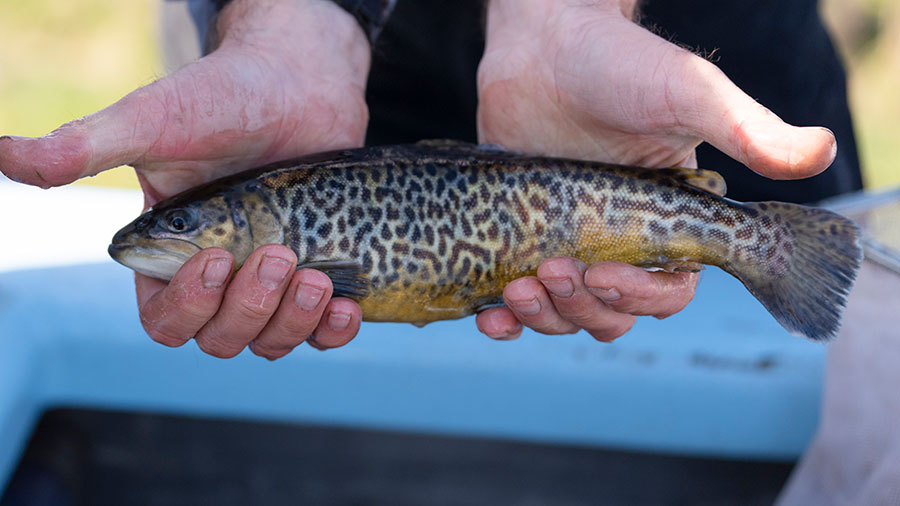
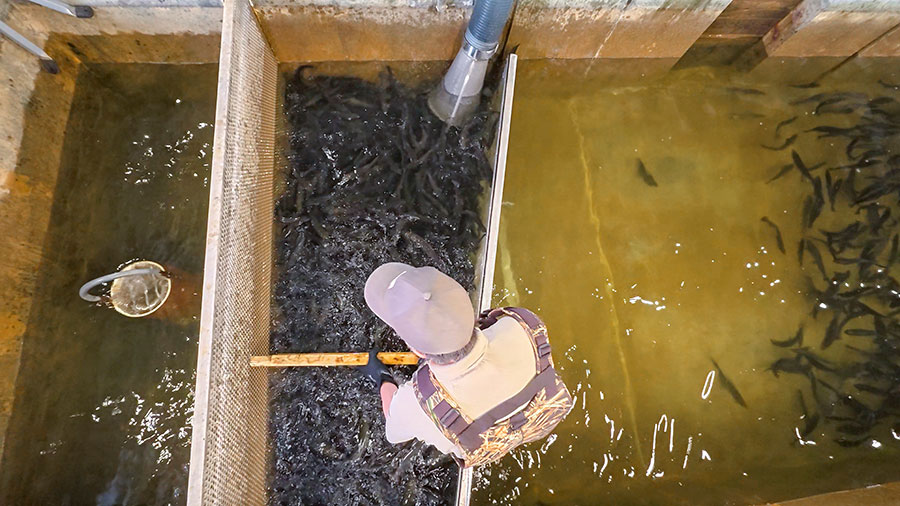
On a windy May morning below Lake Sakakawea, crews from the North Dakota Game and Fish Department made runs back and forth from the Garrison Dam National Fish Hatchery to the banks of the Missouri River, towing trailers full of fish. Among the usual loads of rainbow trout came something new: 11,420 advanced-fingerling tiger trout. Their bold markings twisting around their sides and down to their dark bellies made them stand out from the rest. For the first time in North Dakota, these fish have reached the Mighty Mo.
Tiger trout are sterile hybrids that can sometimes show up in the wild on their own. Most of the time, though, they’re created by human intervention. Hatchery crews fertilize eggs from female brown trout with milt, or sperm, from male brook trout. The young fish grow fast and fight hard when hooked.
Since they cannot reproduce in the wild, managers can add them to existing fisheries without much risk of extra pressure on native populations. The Department can also adjust future stockings based on survival rates and angler feedback without long-term worries regarding natural reproduction.
The Department first brought tiger trout into North Dakota waters in 2023. Staff chose a handful of cool, clear waters that already supported good trout fishing. Hooker Lake in the Turtle Mountains and Fish Creek in Morton County received the first fish.
Additional waters have been added since then, and the early results have been strong. Last winter, Minot angler Evan Trottier pulled a new state record from the ice at Hooker Lake. That fish weighed 6 pounds, 2 ounces and measured nearly 25 inches. The catch showed what these hybrids can become when conditions are right.
Now the Missouri River has its turn. The fingerlings stocked this spring went primarily into the tailrace below Garrison Dam, a stretch already popular with trout anglers. The cold, well-oxygenated water below the dam provides excellent habitat for these fast-growing fish.
“Tiger trout are a unique fish,” said Jerry Weigel, the fish production and development section supervisor for the Department. “They definitely act like the brown part of their parents. Brown trout like to hug the bottom, and these seem to do that. And they’re fish-eating trout, way more so than rainbow trout, which are more interested in insects.”
Tiger trout fit that goal perfectly. They grow quickly, fight well, and give anglers something fresh to chase without complicating the river’s existing balance. Early stockings in prairie lakes proved the concept. The move to the Missouri River expands that success to one of the state’s most important and heavily used waterways.
The tiger trout are here now, and you just gained another reason to grab a rod and head to the river. Watch for those bold markings and feel the strong pull when one takes your line. This is good news for North Dakota anglers. It’s the kind of steady improvement that keeps people excited about getting on the water.
What are you waiting for? Time to go meet them.