Back Cast
I grew up with a kid with a dog named Ruff. He was a good dog. A mixed breed that was mostly black with some white thrown in. Or maybe it was the other way around. No matter. What was certain was that people weren’t hustling out of work, and in some cases driving long distances, to simply lay eyes on Ruff and report to the likeminded that they did.
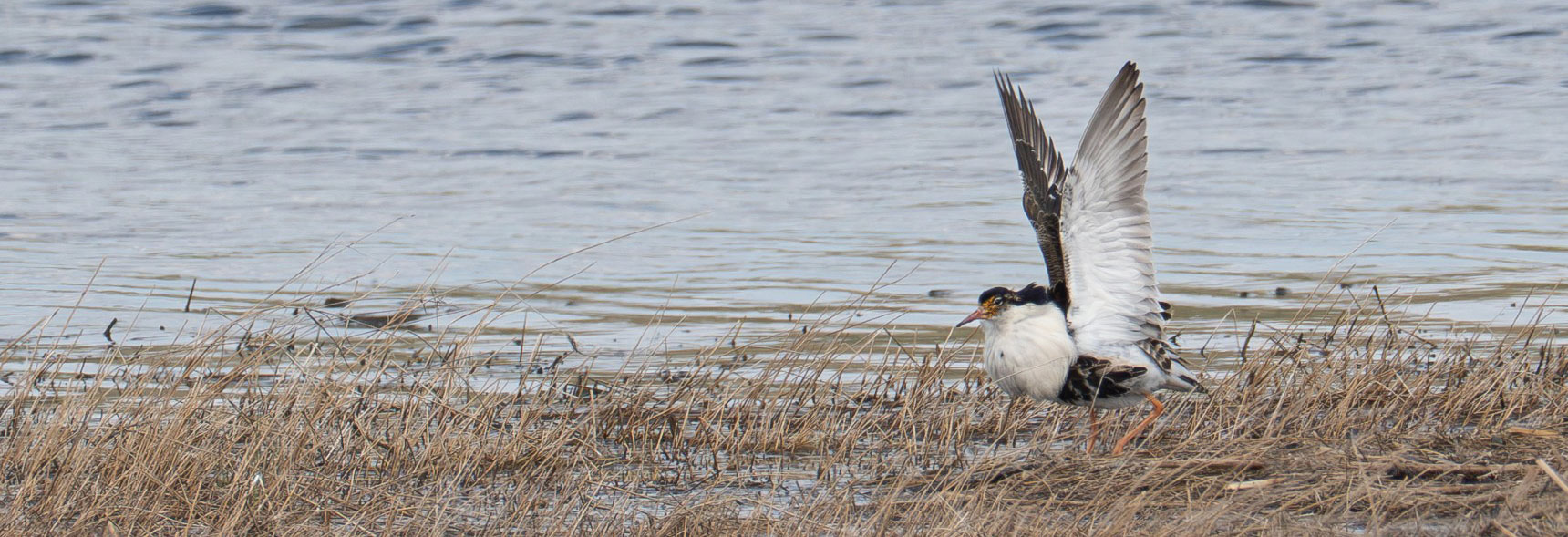
On May 6, while driving a test run for a long-running waterfowl survey in North Dakota, a bird rare to the state and a long way from where the species is typically found, was spotted by Mason Ryckman, Game and Fish Department waterfowl biologist.
“What caught my eye was that there was so much white on the bird … I knew when I spotted it that I’d never seen a shorebird like that in my life,” Ryckman said.
The bird was a male ruff. A medium-sized shorebird that, scientists tell us, mainly winters in Africa but also across India and Southeast Asia, and breeds in bogs and wet, grassy meadows across northern Eurasia.
So, spotting this vagrant in a wetland along N.D. Highway 3 north of Steele was certainly news to North Dakota’s enthusiastic birding community.
To get confirmation on what he’d spotted, Ryckman sent a photo to Jesse Kolar, with the Game and Fish Department in Dickinson, and from there it got in the hands of Bob Anderson, with Valley City State University.
The latter, upon receiving the photo said at the time, “I’m leaving in 5 minutes.”
“Obviously, North Dakota is way out of this bird’s range and is another example how amazing birds are and the amazing things that they are able to do … fly across vast oceans safely,” said Sandra Johnson, Department conservation biologist. “When word got out in the birding community, birders from Williston, Jamestown and elsewhere headed to the wetland north of Steele.”
While this strikingly uncommon visitor is interesting, so are the folks who ditch whatever plans and head to a wetland to spy a bird they’ve never seen before, knowing news of the ruff is maybe all they’ll get unless they act quickly because the bird, for whatever reason, has already lifted off and headed elsewhere.
These folks, I believe, are no different in their enthusiasm than, say, the angler who fishes six days in a row, no matter the weather, during the Missouri River’s spring walleye bite.
That kind of passion, no matter the outdoor pursuit, is easy to get behind and applaud.
Bird experts tell us the ruff got its name from the large, extravagant collar of feathers the male grows around his neck during the breeding season. They also tell us that breeding males gather on leks for a chance to mate with females just like sharp-tailed grouse have done for eons on prairie flat spots across North Dakota.
“North Dakota has very few rare bird sightings than other states like, say, Texas and Arizona where the birding communities are so much larger,” Johnson said. “The sighting of this ruff makes your wonder how many other super rare birds end up in North Dakota, and we don’t even know it.”