Nesting Grounds of Rock Stars
Sandra Johnson
They’re neither duck nor coot.
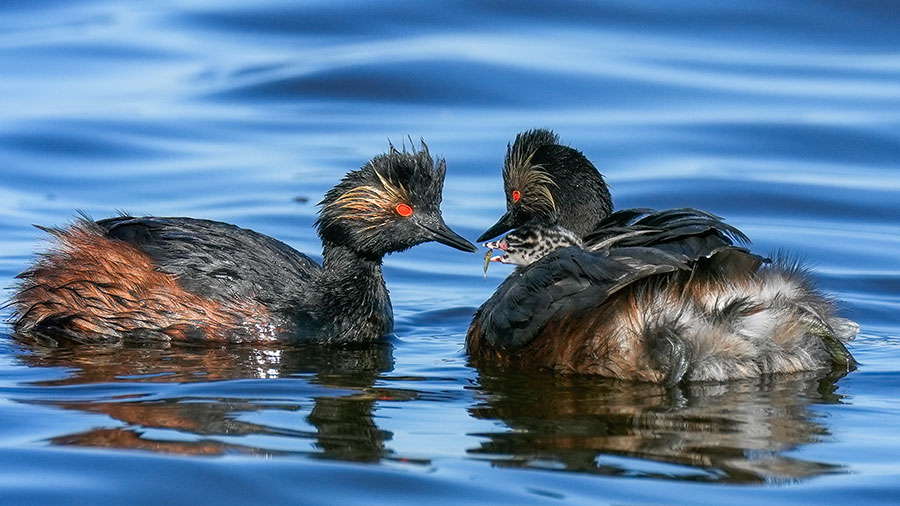
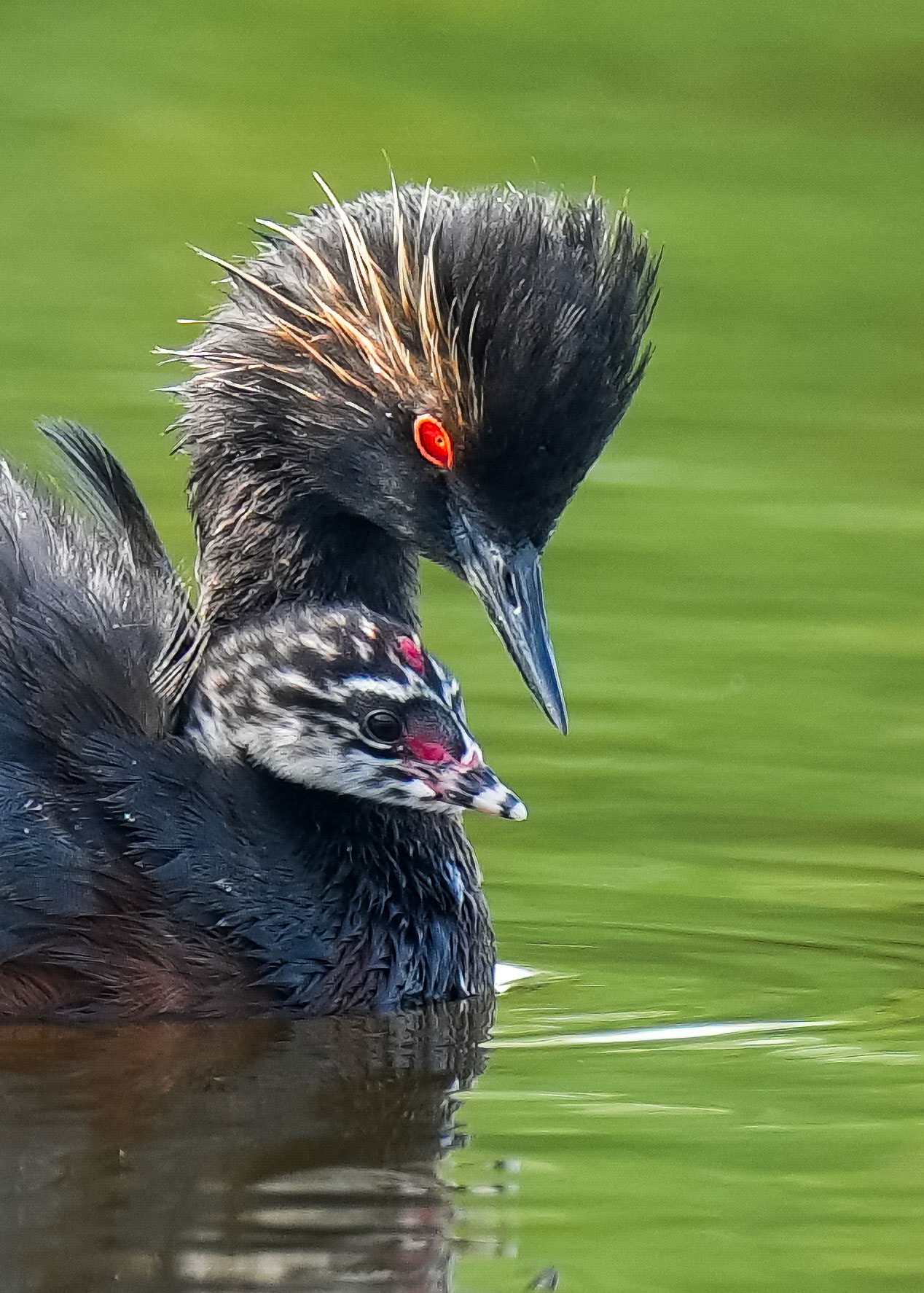
Eared grebes are in a class of their own, and a peculiar one at that. Their legs are placed at the far rear of the body and their toes are lobed. They have striking, flowing, golden ear tufts set behind a blaze red eye and poofy crown feathers.
Eared grebes are part bird, part 1980s rock stars.
Entirely bound to the water, the grebe’s body is built for diving and swimming underwater in pursuit of aquatic invertebrates and small fish.
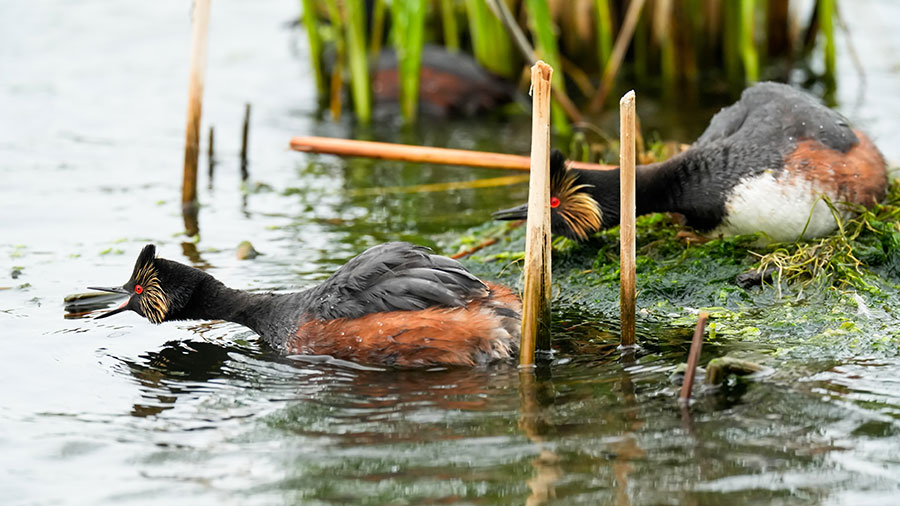
One of the most important decisions they make is selecting a wetland to nest in when arriving in North Dakota in April and May. During this period, their flight muscles atrophy (shrink), leaving them unable to fly for several months. At the same time, their leg muscles increase by about a quarter, turning them into proficient swimmers, enabling them to run across the water during breeding displays, known as rushing.
The Prairie Pothole Region is a key nesting region for eared grebes. Eared grebes also nest throughout the Intermountain West. They are colonial nesting birds, which means they nest near each other in groups of two or more.
Colonies range from single digit nests to several hundred. The largest eared grebe colony was recorded in the Great Salt Lake in Utah at 1,492 nests. North Dakota’s largest recorded colony, at least in recent times, is 636 nests.
While North Dakota doesn’t have the largest colony, it has ample smaller- to medium-sized colonies (25 to 100 nests) spread across the Missouri Coteau, Drift Prairie and a few south and west of the Missouri River.
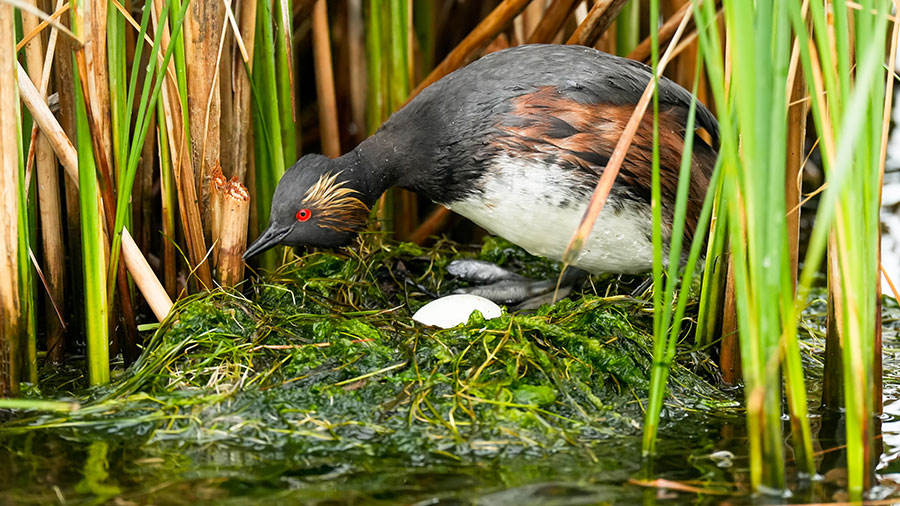
Eared grebes form a new pair bond each spring. Together, the male and female build a soppy platform nest in water 1 to 4 feet deep. The nest is anchored to emergent or submerged vegetation or, occasionally, on a flooded fence post or other human-made structure.
Nests within a colony are spaced several feet to several yards apart. Those close living quarters lead to frequent squabbles between neighbors, turning the wetland into a noisy concert.
Once at the Great Salt Lake, they feed almost exclusively on brine shrimp, nearly doubling their weight. After several months, when the brine shrimp go dormant, eared grebes continue to coastal and inland areas of Mexico, Pacific Coast, or the Gulf Coast to spend the remainder of the winter.
In recent years, the Great Salt Lake and other Western saline lakes have experienced low water levels due to drought and water diversion. Lower lake levels hinder brine shrimp production. The deficit of this food source poses a risk to eared grebes, as well as the millions of ducks, shorebirds, and other waterbirds that depend on these vital habitats to refuel after the breeding season and prepare for winter.
Viewed across their full annual cycle, it becomes clear that even the most common birds like eared grebe persist in a precarious balance elsewhere in their range.