Fish Abundance and Health – A-
It’s a constant story, but a positive one: our fish populations and water levels continue to hover near record highs. From walleye and pike to paddlefish and trout, the state provides top opportunities for every skill level.
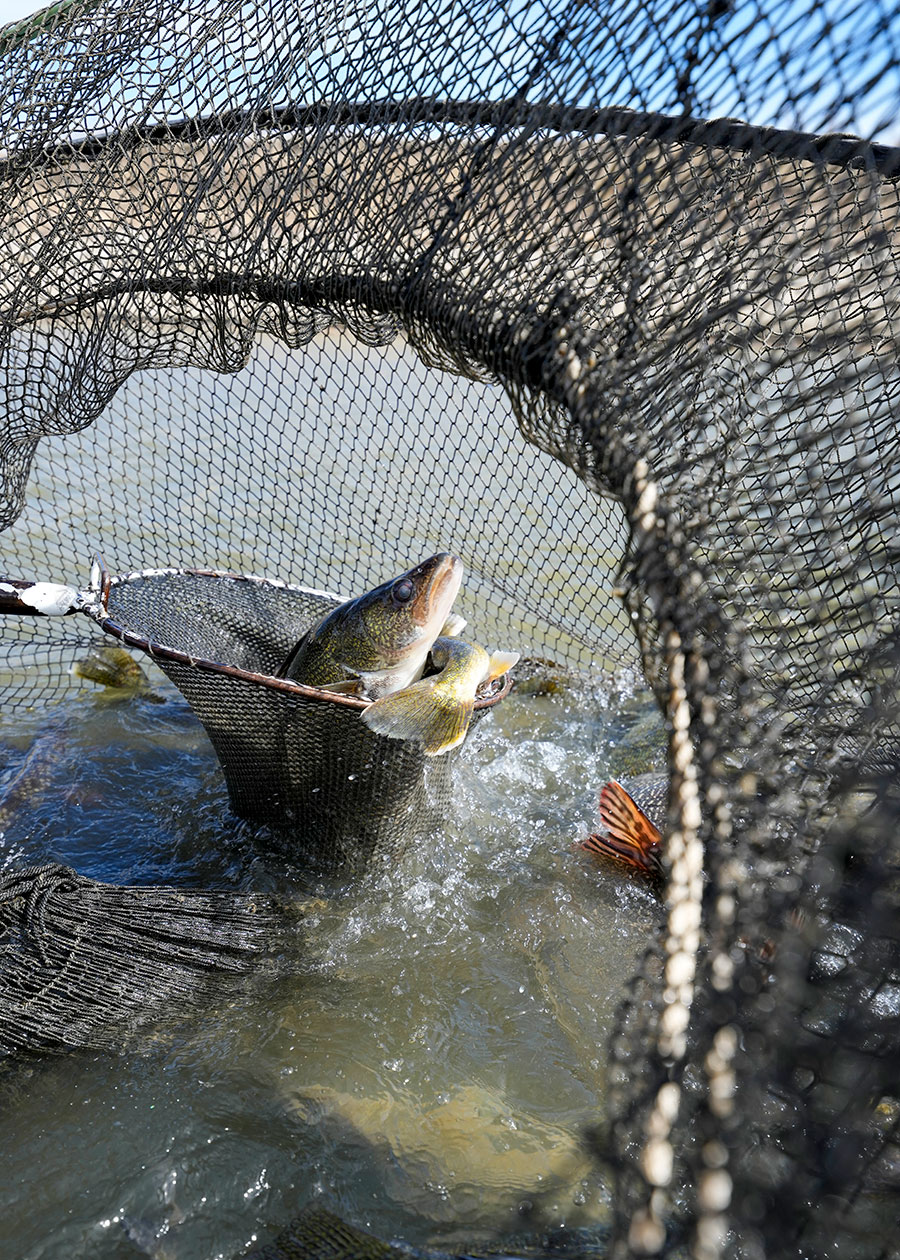
Walleye, of course, remains North Dakotas’ popular student. The addition of nearly 90 new fisheries across the central and eastern regions over the last 25 years has fundamentally changed the fishing map of North Dakota. Anglers have successfully harvested more than 1 million walleye from these “new” waters that, in virtually all cases, didn’t even exist as viable fisheries a generation ago.
And the Big 3 — Lake Sakakawea, Devils Lake and the Missouri River/Lake Oahe — remain the heart of North Dakota fishing, supporting 50% of all angling activity. Both Sakakawea and Devils Lake maintain very solid catches of walleye, continuing a long-term upward trend. And the Missouri River/Lake Oahe continues its impressive rebound.
While it’s been a walleye world for the past 10-plus years, many would love to see northern pike and yellow perch make a comeback to their 2010-15 levels. In the big picture, these respective populations are driven by Mother Nature. The lack of periodic flooding and a strong stocking program have allowed walleye to take over many of our former pike and/or perch fisheries. Unless we receive a significant “recharge” of water to create new spawning/rearing habitat (including more groceries), the pike and perch outlook will likely remain as it has been the past few years.
Looking ahead, our success is naturally linked to the environment. Due to extremes in weather, water levels, and so on, North Dakota fisheries always have extreme ranges in the respective fish populations. While recent wet cycles have set the stage for years of great fishing, we know that the eventual return of a long-term drought will pose a significant challenge to these record-setting populations. Fortunately, that shift appears to be a long way off.
Management – A
Managing North Dakota’s ever-growing fishing waters is a balancing act of science and resources. Because we can’t be everywhere at once, Department biologists utilize a three-tier priority system to maximize our field staff’s influence. While we lack the personnel to sample every lake annually, this system ensures the higher priority waters are surveyed at least once a year. These frequent check-ins are vital for shaping stocking plans and making informed regulation changes.
The Department’s regulation philosophy is simple: keep the rules straightforward while fostering healthy fish populations. This approach has allowed us to protect and improve our fisheries without frequent regulatory shifts. Because both our climate and fish populations are constantly changing, we prioritize a long-range view when considering updates to our state’s fishing regulations.
The fisheries division’s sampling and monitoring goes far beyond just counting fish. Our crews are consistently engaged in many other activities including water quality monitoring, creel surveys to understand angler success, specialized research, and ramped-up walleye tagging projects the past few years to gather high-precision data for management purposes.
Stocking is often the public’s favorite topic, but it doesn’t happen in a vacuum. There is a direct link between Department netting surveys and stocking recommendations. The data tells us what and how many fish a lake needs. And to meet these needs, we rely on our invaluable partnership with the Garrison Dam and Valley City national fish hatcheries. The ongoing good news: around 33 million adult and fingerling fish, representing 13 species, were stocked into more than 300 North Dakota waters in the past three years.
The bully in the hallway remains aquatic nuisance species. In recent years, we’ve ramped up watercraft inspections, monitoring, enforcement, and education to keep our waters free of ANS. For example, in the past three years, the Department has inspected over 30,000 watercraft and collected thousands of early detection samples from hundreds of water bodies. So far, the defenses are holding, as greater than 95% of the lakes in North Dakota have no ANS … but we can’t afford to look away.
Habitat – B
As noted in past report cards, habitat can be a rather vague word but put simply, the quality of North Dakotas fishing waters is predicated upon both the quality and quantity of water. In terms of water quality, its long-term performance in the classroom is struggling to maintain a satisfactory grade. Nutrients and blue-green algae blooms continue to cause headaches. For some of our fishing lakes, blue-green algae blooms have resulted in advisories and warnings issued by the Department of Environment Quality. Since we can’t control the outside environment or the global economics of the farm bill, finding long-term solutions for our watersheds remains our biggest extra credit challenge for the coming decades.
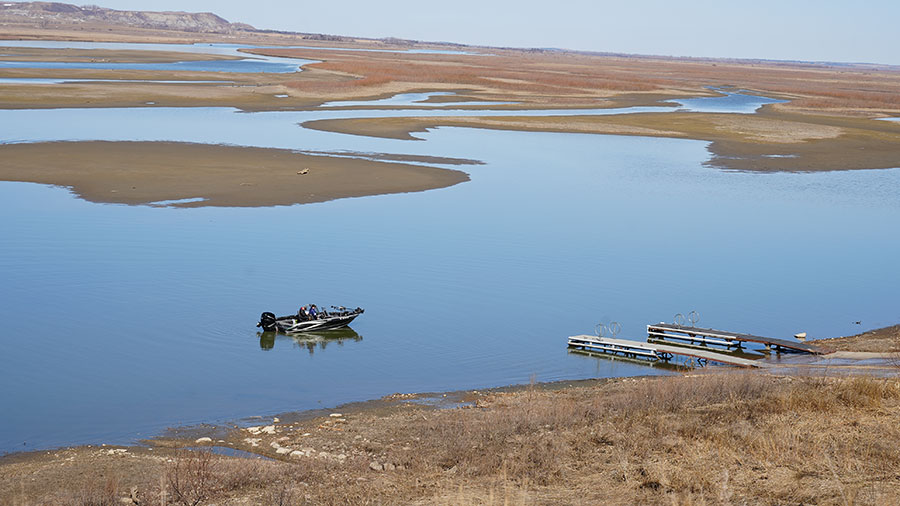
The other portion of the fish habitat formula is water quantity. As stated earlier, conditions have never been better as we currently have a near record number of fishing lakes dotting our landscape. Periodic large precipitation events, including what was witnessed in western North Dakota in spring of 2025, have benefited our lakes greatly. Going into summer, we continue to be in good shape as most of our waters are full or nearly full.
Of all the subjects to be graded in the classroom, habitat is the most difficult to improve upon; reason being, is both parameters, water quantity and quality, are far outside our ability to adequately address. Water quantity is determined by Mother Nature who doesn’t attend school. And issues dealing with water quality, although within human hands, involve macro-economic issues including the farm bill. As mentioned, finding long-term solutions to landscape use will be one of the largest challenges facing many resource professionals in the years and decades to come.
Overall – A- 2026 Final
An overall A- signifies that our outdoor classroom is not just surviving — it is still flourishing. Thanks to a long-running assist from Mother Nature and a Department staff that is quick to capitalize on every opportunity, North Dakota remains a premier destination for anglers.
R3 efforts (recruitment, retention and reactivation) are, more than ever, foundational to the Departments mission. We want to help anglers find the right spot for their specific style, whether that’s a quiet afternoon on a community pond, snagging paddlefish on the Yellowstone River, angling for catfish on the Red, or a weekend of boat fishing on Sakakawea.
For 2026, the message remains simple: Take the time to wet a line. For the older generation, it’s a chance to enjoy the golden age. For the newcomer, the experience of a perfect morning on a North Dakota lake might be transformative. And while you’re at it, take out someone new to fishing. It’s a long-term investment that will pay dividends for future generations.