


2026 Hunting Season Outlook
Index
- Upland and Small Game
- Ring-necked Pheasants
- Wild Turkey
- Ruffed Grouse
- Sharp-tailed Grouse
- Hungarian Partridge
- Tree Squirrels
- Big Game
- White-tailed Deer
- Mule Deer
- Pronghorn
- Bighorn Sheep
- Moose
- Elk
Introduction
There is a lot to be excited about for North Dakota’s upcoming hunting season. Waterfowl and upland game hunting prospects look excellent, while moose, elk and bighorn sheep populations remain at or near record levels. And mule deer, white-tailed deer and pronghorn populations continue to recover following the devastating winter of 2022-23.
That winter brought historic snowfall and had a tremendous impact on resident wildlife. Harsh winters are a defining part of life on the Northern Plains, and they have always been one of the primary factors shaping wildlife management in our state. Wildlife populations naturally rise and fall with the severity of our winters. When quality habitat is available, those populations can recover remarkably quickly.
Habitat is the key to North Dakota’s wildlife populations. More than 15 years ago, even when Conservation Reserve Program enrollment was near its peak and habitat conditions were among the best we had seen, Randy Kreil, former Game and Fish Department wildlife division chief, warned readers in North Dakota OUTDOORS: “Don’t be fooled. You may see clear skies overhead, but there is serious trouble over the horizon.”
Today, that warning has become reality.
North Dakota’s landscape has changed dramatically since 2008. More than 2 million acres of CRP have been lost, native prairie continues to be converted to cropland, thousands of shelter belts have been removed, wetlands drained, and energy development has expanded across the state. As a result, wildlife populations, especially white-tailed deer, now take much longer to recover from severe winters.
The lesson is clear: habitat is the foundation of healthy wildlife populations. The challenge is developing solutions that work for both wildlife and the people who own and manage the land.
More than 90% of North Dakota is privately owned, making private landowners essential partners in conservation. Many landowners value our hunting heritage and want to improve or preserve wildlife habitat, but conservation programs must also be practical and economically competitive. Historically, North Dakota has relied heavily on federal conservation programs, and they will continue to play an important role. However, federal programs alone are no longer enough to meet the challenges ahead.
The Governor’s Legacy Soil Health and Habitat Program represents an important step toward addressing those challenges. Launched in spring as a pilot effort, the program quickly enrolled contracts for 10,000 acres of new perennial grass plantings. Administered by the North Dakota Association of Soil Conservation Districts in partnership with the Department and many other organizations, the program demonstrates what can be accomplished when conservation and agriculture work together.
We are now working with the governor and legislature to identify long-term, sustainable funding that will allow this program to grow. Restoring habitat across North Dakota is a significant investment, and expanding these efforts to a landscape scale will require multiple funding sources and strong partnerships. The benefits, however, will extend well beyond wildlife by improving soil health, water quality, and the long-term resilience of our working lands.
You can help.
As lawmakers consider future funding for habitat conservation, stay informed and make your voice heard. There will be many competing priorities for limited state resources, and it is important that legislators hear from hunters, landowners and outdoor enthusiasts about the value of investing in wildlife habitat. Together, we can ensure future generations enjoy the same outstanding hunting opportunities that make North Dakota special.
Have a safe and enjoyable fall, and best of luck during the upcoming hunting season.
BILL HAASE is the Game and Fish Department’s wildlife division chief.
Upland and Small Game
--- Ring-necked Pheasants ---
Opens: Oct. 10
Closes: Jan. 3, 2027
Daily Limit: 3
Possession Limit: 12
Shooting Hours: Half-hour before sunrise to sunset.
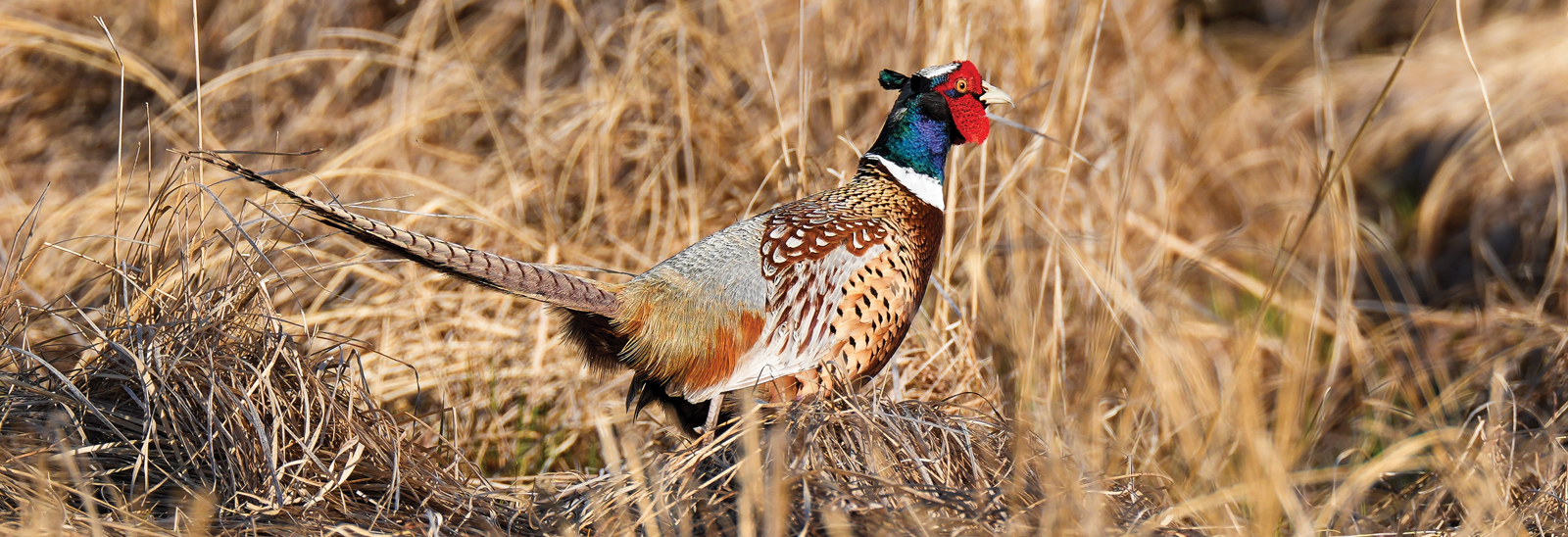
Compared to typical winters in North Dakota, pheasants and other wildlife experienced three mild winters in a row with most of the state receiving little to no snow during the last go-round. Results of spring’s crowing count survey showed higher numbers of breeding roosters throughout the entire pheasant range. The number of roosters heard calling was up anywhere from 4-41% throughout the state’s good pheasant range.
Cover for nesting hens was above average in spring due to excess moisture from the timely fall and spring rains. Habitat was lush and green for early nesting attempts to be successful. However, July was exceptionally dry, and drought conditions were present in far southwestern North Dakota. It is expected that conditions during peak hatch were favorable for high chick survival in some parts of the state, but some later-hatched birds could have struggled during the dry and hot July.
As of this writing in late August, we are conducting our late summer roadside brood counts, and preliminary numbers indicate hunters will see a similar number of adult birds and a few more juveniles in fall compared to 2025. As always, hunters need to be mobile and willing to move to different locations to find localized optimal hunting opportunities. It’s expected the west-central part of the state to have the best opportunities available in fall.
Rodney Gross, Upland Game Management Biologist, Bismarck
--- Youth Pheasant ---
(For legally licensed residents and nonresidents ages 15 and younger.)
Opens: Oct. 3
Closes: Oct. 4
Daily limit: 3
Possession limit: 6
Shooting hours: Half-hour before sunrise to sunset.
--- Wild Turkeys ---
Opens: Oct. 10
Closes: Jan. 3, 2027
Shooting Hours: Half-hour before sunrise to sunset.
The turkey population in many of our hunting units has been higher than normal the past few years due to increased production in the western half of the state. The state saw below average production on turkeys last summer so fall numbers were lower in parts of the state and jakes were hard to find during the spring hunt.
The eastern part of the state has seen decreasing numbers of birds the last few years in response to the loss of quality turkey habitat. Early reports from brood surveys show a slight increase in the number of turkey broods on the ground, and similar adults in the west.
Slightly higher turkey production numbers are expected this year thanks to favorable spring weather during the nesting season.
The Department decreased slightly fall licenses for wild turkeys in response to below average production last year in hopes of getting more adult males to survive until spring. It’s anticipated that the central and west-central parts of the state along river corridors will provide some of the better turkey hunting opportunities in the state this fall.
Rodney Gross
--- Ruffed Grouse ---
Opens: Sept. 12
Closes: Jan. 3, 2027
Daily Limit: 3
Possession Limit: 12
Shooting Hours: Half-hour before sunrise to sunset.
In the Turtle Mountains biologists documented a 40% increase from 2025, returning the population to the highest number of drums heard in the Turtle Mountains since 2009-10. Ruffed grouse drums heard in the Pembina Hills were down slightly (-15%) but remain above the 15-year average.
Ruffed grouse hunting should be average to above average in North Dakota this year, which means a full day of walking should yield one to two ruffed grouse flushes. Ruffed grouse are rarely found at high densities in North Dakota.
Ruffed grouse are uncommon in North Dakota because they live almost exclusively in aspen forests. They are only found in the Turtle Mountains and Pembina Hills. Although there was a small population in the J. Clark Salyer Wildlife Refuge in McHenry County, there have been zero reports of birds there since 2006.
Jesse Kolar, Upland Game Management Supervisor, Dickinson
The 2026 sharp-tailed grouse index (weighted average by area surveyed) was unchanged from 2025. Despite poor production in 2025 and reports of low densities, biologists suspect the mild winter facilitated high over-winter survival, yielding an overall stable population from 2025.
While the 2026 brood routes are still ongoing at the time of the writing, preliminary results are showing increases in grouse density (+11%), brood sizes (+18%; average five chicks per brood). Unchanged were the abundance of broods observed (1/100 miles) and age ratio (+1.8%, 1.2 juveniles per adult). These numbers are not good enough to expect a rebound in the fall sharptail population, but after the decline in 2025, the trend held steady in 2026 and reproduction improved.
It should be noted that the abundance estimates from Department brood routes have less certainty for sharptails because they do not gather at roadsides as predictably as pheasants or partridge. Our brood routes are not designed to measure grouse density like the spring lek counts.
Improved reproduction was expected since the warm dry weather this summer was more beneficial to incubation and early chick survival (mid-May – mid-July) than the cold, wet weather experienced in 2025. However, in areas where drought was severe, grouse had to travel longer distances to find mesic areas with abundant forbs and insects for feeding chicks; we suspect the droughty conditions prevented a more rapid recovery of sharptails this summer.
Statewide, sharptail populations remain near the 10-year average. The population in the northwest has fallen from where it peaked in the early 2020s, and the declines in 2025 have further prevented the southwest from recovering to the numbers hunters expect, especially in the Little Missouri National Grasslands. The eastern third of the state continues to hold very few grouse, as sharptails primarily reproduce on pastures and other grasslands.
Sharptails nest almost exclusively in native prairies, pastures and planted grasses, so even though they move between nesting season and fall, the best places to find them are in areas near grasslands resembling native prairies. In fall they can often be found in shrub patches on hillsides, alfalfa fields, sunflower fields, and near harvested canola fields.
Hunters can request prepaid wing envelopes here.
Jesse Kolar
--- Gray Partridge ---
Opens: Sept. 12
Closes: Jan. 3, 2027
Daily Limit: 3
Possession Limit: 12
Shooting Hours: Half-hour before sunrise to sunset.
While the Department does not have a spring index for partridge, biologists continue to hear reports across the state of how many partridge people are seeing. However, this is the third consecutive year that reproduction surveys for partridge are lower than where they were from 2019-23.
On the late summer roadside counts, biologists are seeing slightly smaller brood sizes, fewer broods (-14%), and fewer partridge (-15%) than in 2025. Partridge reproduction had been excellent from 2019-23, and the population peaked in 2023. Despite slow declines, the population remains above average across the state.
Hunters rarely go “partridge hunting,” but like last year, upland hunters could expect to put up a covey of partridge every 1-2 days (or more in some areas). One downside with lower reproduction is that the coveys will be smaller. Instead of seeing coveys of 12-15 birds, it’s likely hunters will notice many more coveys with fewer than 10 partridge. Although mainly a hunter anecdote, leaving at least five in a local covey, assuming normal winter mortality (up to 60%), should ensure a surviving pair for the following spring.
Partridge overlap with pheasants and sharptails in North Dakota, but their preferred habitat is weedy edges, particularly along small grain fields. Focus on rock pile islands in stubble fields, lone trees or shrub patches in ditches, field edges, fence lines and abandoned farmsteads.
Rodney Gross
--- Tree Squirrels ---
Opens: Sept. 12
Closes: Feb. 28, 2027
Daily Limit: 4
Possession Limit: 12
Shooting Hours: Half-hour before sunrise to sunset.
Tree squirrels may be taken statewide with firearms loaded with shot, rimfire rifles, or with bows and arrows legal for taking upland game.
Big Game
--- White-tailed Deer ---
Archery Opens: Sept. 4
Archery Closes: Jan. 3, 2027
Youth Gun Season Opens: Sept. 18
Youth Gun Season Closes: Sept. 27
Regular Gun Season Opens: Nov. 6
Regular Gun Season Closes: Nov. 22
Muzzleloader Opens: Nov. 27
Muzzleloader Closes: Dec. 13
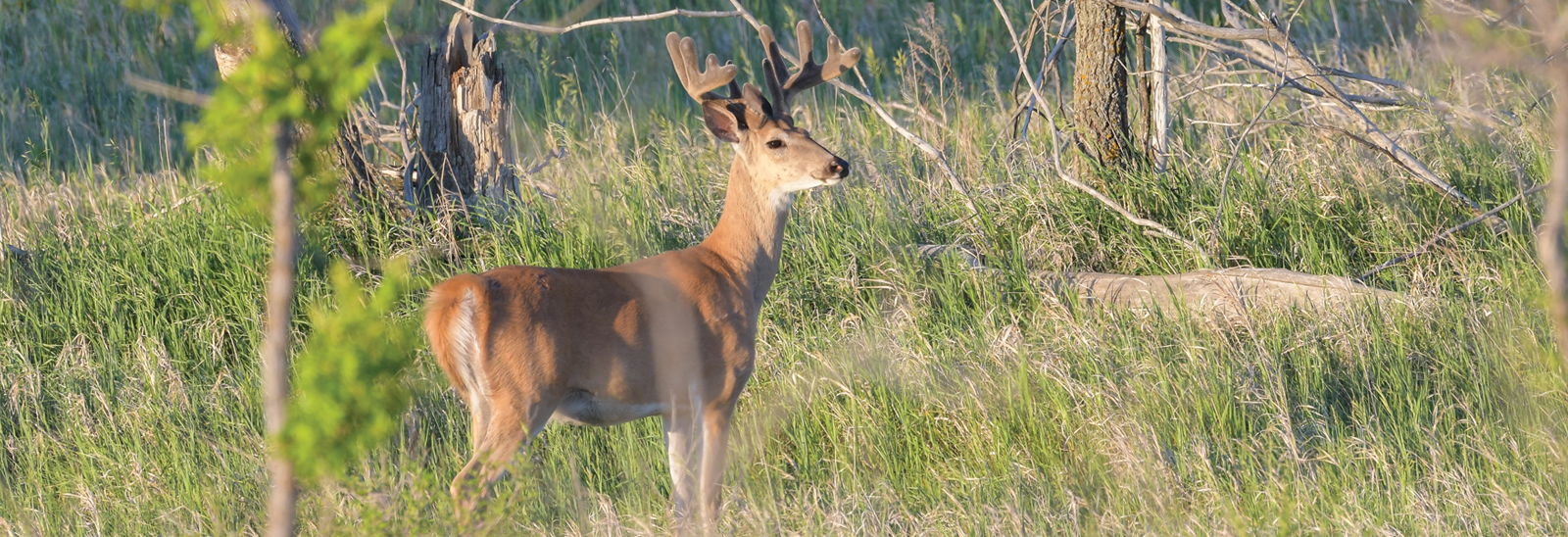
The Game and Fish Department made available 39,100 licenses for the 2026 deer gun hunting season, a decrease of 3,200 from 2025. Many of these reductions came from antlerless licenses in the eastern one-third of the state, primarily in the Red River and Sheyenne-James River hunting units. Statewide hunter success for the 2025 regular gun season was slightly greater than 2024 at 57%.
Hunter observation and harvest indices indicate deer populations are stable to decreasing throughout the state. Big game biologists were able to conduct winter aerial surveys for white-tailed deer in hunting units 1, 2D, and 2E this past winter. Deer densities in hunting unit 1 remained relatively unchanged, while densities in hunting units 2D and 2E were 37% and 22% lower than what was observed during the 2023 winter survey. The current trend of mild winters has resulted in minimal winter losses and the break in the drought pattern has resulted in conditions that correlate with good fawn and antler production. However, benefits gained from favorable weather patterns are tempered when the landscape is lacking in quality habitat.
Loss of quality habitat, particularly winter cover and fawning habitat, continues to be a challenge for deer throughout the state. These losses limit carrying capacity resulting in an overall lower population and slows the potential for population growth after disturbances such as epizootic hemorrhagic disease outbreaks and severe winters. Without a significant increase in the amount of quality white-tailed deer habitat, lower deer densities and slower recovery after disturbances will likely be the “new normal” for North Dakota.
A total of 16 deer tested positive for chronic wasting disease in 2025, all were harvested by hunters during either the bow or regular gun seasons. CWD was found in two new units: 2B (one white-tailed deer) and 3D2 (two mule deer). Other units where deer tested positive include 3A1 (five mule deer and one white-tailed deer), 3E1 (one mule deer and one white-tailed deer), 3E2 (one mule deer), 3F1 (one white-tailed deer), and 3F2 (two mule deer and one white-tailed deer).
CWD surveillance for the 2026 season will focus on units in the southwestern portion of the state: units 2J1, 3B3, 3C, 3D1, 3D2, 3E1, 3E2, 3F1, 3F2, 4D, 4E and 4F. Hunters wishing to have their deer tested regardless of hunting unit may request a sampling kit online at the Game and Fish website, , gf.nd.gov, visit a Game and Fish district office, or drop its head off at one of the Department’s drop-off sites.
A summary of deer licenses for 2026:
- Any Antlered licenses increased by 850.
- Any Antlerless licenses decreased by 2,700.
- Antlered white-tailed deer licenses decreased by 500.
- Antlerless white-tailed deer licenses decreased by 450.
- Antlered mule deer licenses decreased by 400.
- Antlerless mule deer licenses remained the same.
- 750 muzzleloader licenses were made available – 375 antlered white-tailed deer licenses and 375 antlerless white-tailed deer licenses. This is a decrease of 56 muzzleloader licenses from 2025.
- 120 “I” licenses were made available for the youth deer hunting season (ages 14 and 15). “I” licenses are limited in number for units 4A-4F and are valid for any deer. There are unlimited “H” youth deer hunting licenses valid for any deer statewide except antlered mule deer in the above restricted units.
- 40 “N” licenses were made available for the youth deer hunting season (ages 11, 12, and 13). “N” licenses are limited in number for units 4A-4F and are valid for any antlerless deer. There are unlimited “O” youth deer hunting licenses valid for any antlerless deer statewide except for antlerless mule deer in the above restricted units.
- 240 nonresident any deer archery licenses were made available, down 60 from 2025.
Benjamin Matykiewicz, Big Game Management Biologist, Bismarck
--- Mule Deer ---
Archery Opens: Sept. 4
Archery Closes: Jan. 3, 2027
Regular Gun Season Opens: Nov. 6
Regular Gun Season Closes: Nov. 22
The mule deer population in the badlands increased due to high over winter fawn survival despite below average fawn production in 2025. Drought conditions have occurred in the badlands since 2020, and fawn production has been below the long-term average since 2017.
The 2026 spring index was 31% higher than the 2025 index and 8% higher than the long-term average. A population increase combined with better widespread precipitation in the western badlands in summer provides optimism that hunting opportunities may increase in the future.
The increase in mule deer numbers was greatest in hunting units 4B and 4C and lowest in 4F. For the 2026 season, 1,200 antlered and 400 antlerless licenses were made available to hunters. A mule deer buck license remains one of the most difficult licenses to draw but for those lucky few, it should result in a very high-quality hunt. Hunter success for mule deer buck hunters was 83% in 2025.
Many challenges remain in the future population recovery of mule deer in the badlands. Encroachment of juniper in mule deer habitat, direct and indirect habitat loss due to oil development, predators and weather conditions, including extreme winters, are all hurdles the animals must face in the long-term recovery effort.
Bruce Stillings, Big Game Management Supervisor, Dickinson
--- Pronghorn ---
Archery Only Opens: Sept. 4
Archery Only Closes: Sept. 27
Gun/Archery Season Opens: Oct. 2
Gun/Archery Season Closes: Oct. 18
North Dakota hunters will have the same opportunities to hunt pronghorn this fall as 2025.
Although fawn production was a record low in 2025, mild winter conditions in 2025-26 resulted in good over winter survival and a slight population increase in 2026.
The population estimate of 8,004 animals was 12% higher than 2025.
Pronghorn increased the most in hunting units 1A, 1D and 10A, while population growth was minimal in hunting unit 4A. Fawn production was 54 fawns per 100 does, which was higher than last year, but below the long-term average of 61 fawns per 100 does. The buck to doe ratio remained stable at 31 bucks per 100 does.
Lottery licenses can be used during the archery season (Sept. 4–27) with archery equipment or during the rifle season (Oct. 2–18) using legal firearms or archery equipment for those who do not hunt or harvest an animal during the archery season.
Last year’s season was successful with 1,120 hunters harvesting 729 pronghorn for a success rate of 65%. Hunters with a lottery license had a hunter success rate of 87%.
Bruce Stillings
--- Bighorn Sheep ---
The Game and Fish Department’s 2025 bighorn sheep survey, completed by recounting lambs in March, revealed a record 378 bighorn sheep in the badlands of western North Dakota, up 8% from 2024 and 10% above the five-year average. The 2025 survey was the fifth record count in the past six years.
Altogether, biologists counted 104 rams, 234 ewes and 40 lambs. Not included were approximately 40 bighorn sheep in the North Unit of Theodore Roosevelt National Park and bighorns introduced to the Fort Berthold Indian Reservation in 2020.
The northern badlands population increased by 8% from 2024 and was the highest count on record. The southern badlands population remained near its lowest level since bighorns were reintroduced there in 1966.
Adult rams were near record numbers, but the ewe count surpassed the previous record by an impressive 14%. Lamb recruitment and winter survival of lambs were both well below average.
Biologists reported that numerous lambs were observed with clinical signs of pneumonia during the summer survey, which was likely the primary contributor to the poor lamb recruitment observed in 2025.
According to the Department’s veterinarian, it is not uncommon to experience episodes of low lamb survival when a population of bighorn sheep is exposed to certain pathogens. Based on annual disease testing the state’s population of bighorn sheep has not cleared bacteria introduced in 2014 that predisposes bighorn lambs to pneumonia, so highly variable rates of lamb recruitment in recent years are not surprising.
Department biologists count and classify all bighorn sheep in late summer, and then recount lambs the following March, as they approach one year of age to determine recruitment.
Currently, about 500 bighorn sheep comprise the populations managed by the North Dakota Game and Fish Department, National Park Service and the Three Affiliated Tribes Fish and Wildlife Division.
A bighorn sheep hunting season is scheduled for 2026. The department allocated five licenses.
Brett Wiedmann, Big Game Management Biologist, Dickinson
--- Moose ---
The number of once-in-a-lifetime moose licenses remained unchanged in 2026 for this highly sought-after species. All aerial survey units were flown this past winter, and overall numbers appear stable. However, moose densities remain lower in traditional hunting areas, including the Turtle Mountains, Pembina Hills and along the Red River corridor.
Some unit changes occurred for 2026. Units M4 and M1C were absorbed into units M8 and M5, respectively, and there will no longer be any closed units for moose hunting.
A total of 296 licenses were made available for North Dakota’s 2026 fall moose season. Hunter success is expected to remain high, as success rates have historically exceeded 90%.
Jason Smith, Big Game Management Biologist, Jamestown
--- Elk ---
North Dakota’s 2026 elk season features an increase in licenses compared to 2025, with most of the additional opportunities in units E2, E3 and E7. The increases reflect a growing elk population, good harvest success, and ongoing landowner tolerance concerns in areas where elk are locally abundant on private land. Expanding license numbers is intended to provide more opportunities while helping manage elk distribution and reduce localized overabundance.
License numbers in E1E, E1W, E4 and E6 remain unchanged from 2025. Overall elk numbers appear stable based on aerial surveys of core habitat and minimum winter herd counts.
A total of 1,062 licenses were made available for the 2026 elk season. Elk hunting in North Dakota can be both mentally and physically demanding. While success rates are relatively high compared to other western states, hunters have averaged just over 60% over the past five years. Antlerless licenses are generally easier to draw but can be the most difficult to fill, often requiring extended time in the field.
The season outlook for elk in 2026 is good, with success expected to be similar to recent years. As always, making landowner contracts, securing access and preseason scouting are critical components for a successful elk or moose hunt in North Dakota.
Jason Smith
--- Ducks and Geese ---
Migratory Birds
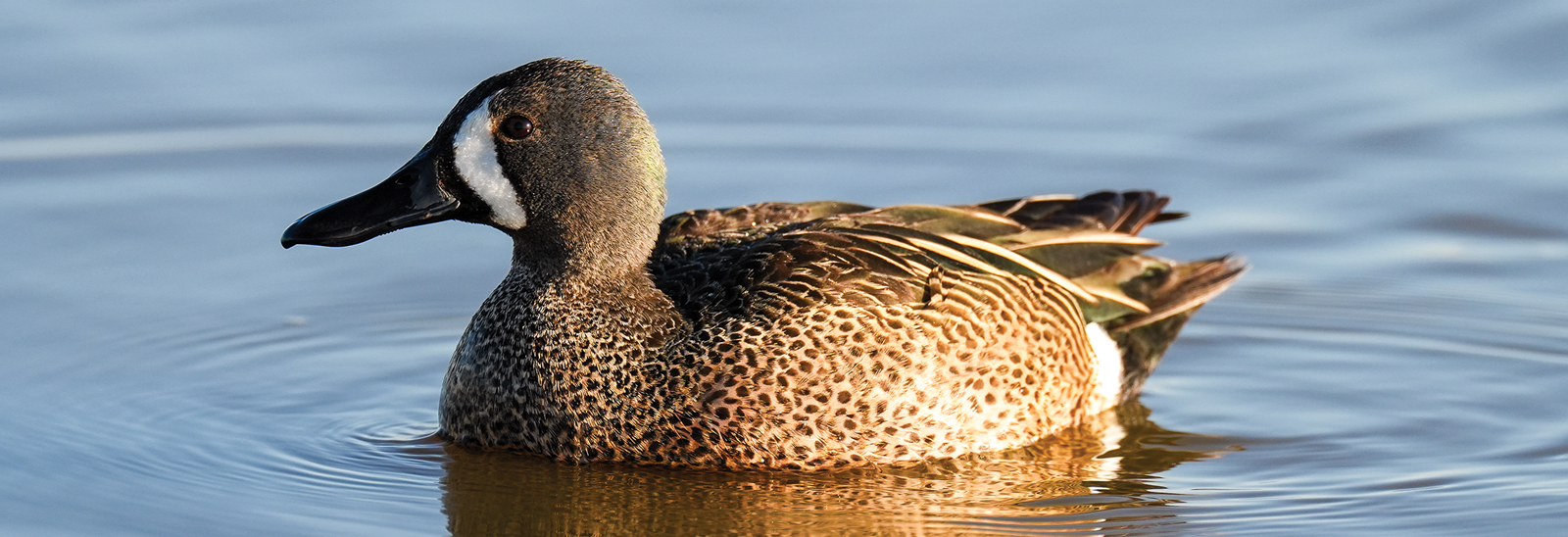
One of the big headlines earlier in spring was that North Dakota’s May duck index dipped below the long-term average for the first time since 1993. Fortunately for hunters, that wasn’t the end of the story. Despite fewer breeding ducks this year, the state produced substantially more ducklings than last year thanks to improved conditions following the May Breeding Duck Survey. Timely precipitation throughout critical duck breeding habitat in the state helped catalyze production.
Winter left much of North Dakota with limited runoff potential due to frequent midwinter thaws. Aside from an early April snowstorm across south-central North Dakota that improved settling conditions for early-arriving species such as mallards and pintails, precipitation remained scarce through mid-May. As a result, wetland conditions during the May breeding waterfowl survey were similar to 2025, and warm, windy weather coincided with fewer breeding ducks on the landscape. The overall duck index was down 9.5% from 2025 while Canada geese were also down 6.5% from the year prior, continuing their recent declines.
The state began to receive some rain shortly thereafter which improved conditions statewide, but especially in critical duck breeding areas in the central, northeastern and northwestern portions of the state. Waterfowl that settled in the state were able to take advantage of these improved conditions. Duck broods counted during the mid-July survey were up 55% from last year, with nearly every major species increasing. Gadwall, pintails and redhead production appeared especially strong, and the redhead brood count was the highest recorded in the survey’s history.
The increased production should be welcome news to waterfowl hunters this year. A larger proportion of young birds entering the fall flight tends to make for better hunting. Although this year’s fall flight estimate was 8.7% higher than last year, it remains about 31% below the 1994–2016 average. Favorable weather can boost production in the short term, but long-term duck populations are also shaped by the amount and quality of breeding habitat. The loss of grasslands and continued degradation of wetlands across North Dakota have reduced the landscape’s ability to produce ducks.
While the Department does not formally survey Canada goose production statewide, banding crews and observations from this summer suggested excellent production, especially along the Missouri Coteau. This is good news for Canada goose hunters, especially after a few years of population declines.
This year also brings a few regulation changes. Resident waterfowl hunters will be able to pursue waterfowl during the first nine days of the season (Sept 26. – Oct 4.). Nonresidents will be permitted to hunt waterfowl starting Oct. 5. Additionally, all waterfowl hunters will now have the opportunity to hunt geese all day after Nov. 29. This change is meant to help simplify regulations, as the Department has typically added additional days for all day goose hunting during the late season.
While weather will ultimately determine when and where birds move through the state, this year’s improved hatch should provide hunters with more young birds than they encountered last fall. After an uncertain start to the breeding season, timely summer rains helped improve the fall outlook. Regardless of how the season unfolds, hunters are encouraged to spend time afield and enjoy the unique waterfowl opportunities North Dakota has to offer.
John Palarski, Migratory Game Bird Management Supervisor
--- Youth Waterfowl Season ---
(For legally licensed residents and nonresidents ages 15 and younger.)
Opens: Sept. 19
Closes: Sept. 20
Shooting Hours: Half-hour before sunrise to sunset.
Daily Limit: Ducks and geese – same as regular season.
--- Special Veteran and Active Military Waterfowl Season ---
(For legally licensed veterans and members of the Armed Forces on active duty, including members of the National Guard and Reserves on active duty, other than for training.)
Opens: Sept. 19
Closes: Sept. 20
Shooting Hours: Half-hour before sunrise to sunset.
Daily Limit: Ducks and geese – same as regular season (does not include bonus blue-winged teal).
--- Early Canada Goose Hunting ---
Opens: Aug. 15 (statewide)
Closes: Sept. 7 (Missouri River Canada Goose Zone), Sept. 15 (Western Canada Goose Zone), Sept. 22 (Eastern Canada Goose Zone)
Shooting Hours: Half-hour before sunrise to sunset.
Daily Limit: 15
Possession Limit: 45
--- Canada Geese Regular Season ---
Opens: Sept. 26 (residents only), Oct. 5 (nonresidents)
Closes: Jan. 1 (Missouri River Canada Goose Zone), Dec. 24 (Western Canada Goose Zone), Dec. 19 (Eastern Canada Goose Zone)
Daily Limit: 5 (Missouri River Zone), 8 (all other zones)
Possession Limit: 15 (Missouri River Zone), 24 (all other zones)
--- White-fronted Geese (Statewide) ---
Opens: Sept. 26 (residents only), Oct. 5 (nonresidents)
Closes: Dec. 6
Daily Limit: 3
Possession Limit: 9
--- Light (Snow) Geese (Statewide) ---
Opens: Sept. 26 (residents only), Oct. 5 (nonresidents)
Closes: Jan. 3
Daily Limit: 50, no possession limit
Shooting Hours for all Geese: Half hour before sunrise to 2 p.m. Exception: Shooting hours are a half hour before sunrise to sunset on all Saturdays and Wednesdays through the end of each season. Hunting is allowed all day beginning Nov. 29.
--- Regular Duck Season ---
Low Plains Unit
Opens: Sept. 26 (residents only), Oct. 5 (nonresidents)
Closes: Dec. 6
Shooting Hours: Half-hour before sunrise to sunset.
High Plains Unit
Opens: Sept. 26 (residents only), Oct. 5 (nonresidents)
Closes: Dec. 6
Opens: Dec. 12
Closes: Jan. 3
Shooting-hours: Half-hour before sunrise to sunset.
Daily Limit: Six ducks (including mergansers), which may include no more than five mallards (two of which may be hens), three pintails, two redheads, two canvasbacks, one scaup and three wood ducks. In addition to the daily bag limit of ducks, an additional two blue-winged teal may be taken from Sept. 26 through Oct. 4.
Possession Limit: Three times the daily limit.
--- Sandhill Cranes ---
Opens: Zone 1 and 2: Sept. 19
Closes: Zone 1 and 2: Nov. 15
Daily Limit Zone 1: 3
Daily Limit Zone 2: 2
Possession Limit Zone 1: 9
Possession Limit Zone 2: 6
Shooting Hours: Half hour before sunrise to 2 p.m. Exception: Shooting hours are a half hour before sunrise to sunset on all Saturdays and Wednesdays beginning Sept. 26 through the end of each season.
The mid-continent population of sandhill cranes remains healthy heading into the 2026 fall hunting season. Each spring, the U.S. Fish and Wildlife Service conducts an aerial survey along Nebraska’s central Platte River Valley. Although final 2026 numbers are still pending, preliminary data indicate another strong population estimate.
Over the past decade, this population has shown an upward trend. The three-year average population estimate, which guides regulatory decisions, reached a record high last year at more than 1 million cranes. As a result, North Dakota hunters can expect abundant opportunities to pursue sandhill cranes again in 2026.
The two zone – Zone 1 west of U.S. Highway 281 and Zone 2 east of U.S. Highway 281 – structure for sandhill cranes will continue. The two zones will have the same season lengths (58 days) and dates but will again have different bag limits. Zone 1 has a daily bag limit of three cranes; in Zone 2 the daily bag limit is two. The possession limit in Zone 1 is nine cranes, and six in Zone 2.
Nonresident sandhill crane hunters can pursue sandhill cranes with either a valid nonresident small game or waterfowl license, in addition to a crane permit. Nonresident sandhill crane permits are valid for use within the dates and zones of nonresident waterfowl or small game licenses selected during purchase.
Hunters are also reminded to be sure of their target before shooting, as federally endangered whooping cranes may be present throughout North Dakota during fall. Report all whooping crane sightings to the North Dakota Game and Fish Department in Bismarck at 701-328-6300.
Mason Ryckman, Migratory Game Bird Biologist
--- Doves ---
Opens: Sept. 1
Closes: Nov. 29
Daily Limit: 15
Possession Limit: 45
Shooting Hours: Half-hour before sunrise to sunset.
North Dakota continues to be an important breeding area for mourning doves within the Central Management Unit. Field observations across the state suggest strong production and abundance this year. As with the previous season, favorable weather conditions, including timely spring rainfall across much of the state, supported successful nesting and likely resulted in solid recruitment.
While official data from the Game and Fish Department’s late summer roadside counts are still pending for 2026, trends over the past five years have shown an upward trajectory in dove numbers. Furthermore, age ratios of juvenile to adult birds captured during statewide banding efforts are nearly identical to 2025, suggesting reproductive success was comparable despite localized differences in weather conditions.
Dove hunters can expect good to excellent hunting opportunities during early September, before cooler weather prompts migratory movement to the south. Scouting ahead of the season remains important to locate areas where birds are concentrated. As the season approaches, doves will begin concentrating near agriculture fields, particularly around harvested small grain or oil seed fields where abundant food sources are available. With prolonged periods of hot, dry weather across North Dakota this summer, water is expected to become an increasingly important factor in dove distribution as the season approaches. Hunters should pay particular attention to stock ponds, dugouts, wetlands, and other reliable water sources, as doves often make predictable morning and evening flights between feeding areas and water, especially when natural water becomes scarce.
Eurasian collared doves continue to expand their range and are now common in nearly every city and small town in North Dakota. However, they are seldom found in rural areas and are rarely harvested during typical dove hunts. Still, these birds may be taken during the dove hunting season and, if harvested, count toward the daily bag and possession limits along with mourning doves.
Some hunters may be randomly selected by the U.S. Fish and Wildlife Service to participate in a wing survey, which involves submitting one wing from each dove harvested early in the season for analysis. Additionally, hunters are reminded to check for leg bands on mourning doves and report any banded birds directly to the Bird Banding Laboratory at reportband.gov. Band recovery information provides valuable data that helps biologists monitor mourning dove survival, migration, and population trends across North America. .
Mason Ryckman
--- Crows ---
Fall Season Opens: Aug. 15
Closes: Nov. 2
Spring Season Opens: March 13, 2027
Closes: April 25, 2027
Daily Limit: No limit on crows.
Shooting Hours: Half-hour before sunrise to sunset.
In addition to the crow season, crows may be taken when committing or about to commit depredations as specified in federal law.
--- Snipe ---
Opens: Sept. 12
Closes: Nov. 29
Daily Limit: 8
Possession Limit: 24
Shooting Hours: Half-hour before sunrise to sunset.
--- Woodcock ---
Opens: Sept. 19
Closes: Nov. 2
Daily Limit: 3
Possession Limit: 9
Shooting Hours: Half-hour before sunrise to sunset.
Furbearers
For more season details, refer to the North Dakota Game and Fish Department website, gf.nd.gov, or the 2026-27 Hunting and Trapping Guide.
We are excited to announce the opening of a regulated trapping season for marten in North Dakota this winter.
Marten were historically found in wooded areas in northeastern North Dakota. But, by the early 1900s, they were considered extirpated from the state. We can thank our neighbors to the north for their translocations of this furbearer into the Turtle Mountain Provincial Park in Manitoba, Canada in the late 1980s, which eventually led to the species return to our state as well. In recent years, research conducted by the North Dakota Game and Fish Department and Michigan State University provided the information necessary to responsibly move forward with a regulated marten trapping season.
With the opening of a marten trapping season, we will also be lifting restrictions on fisher trapping in the Turtle Mountains. The fisher and marten trapping seasons will run in conjunction with one another for seven days beginning in late November. Marten and fisher trapping are open statewide but limited to North Dakota residents only. And the limit is one fisher and one marten per trapper.
Trappers are encouraged to use caution when setting traplines for marten, as they are not especially difficult to catch. As such, deploying just a few well-placed traps during the seven-day season will likely be sufficient to catch a marten during the allotted time.
We also continue to expand river otter trapping opportunities as data from previous seasons informs our management. This coming winter will mark the 10th year since we re-opened otter trapping in the state. We are removing the otter harvest limit this coming season and switching to a three-week season. The bag limit will remain one otter per person, but this switch should allow more trappers an opportunity to harvest an otter than in previous seasons.
Furbearer population trends are a mixed bag going into this coming season. Coyote numbers are still good and should be similar or slightly higher than the previous seasons, but spring surveys indicated they are 32% below their 20-year average. Muskrat numbers will be similar to last year, with the Prairie Pothole Region having the highest numbers according to spring surveys.
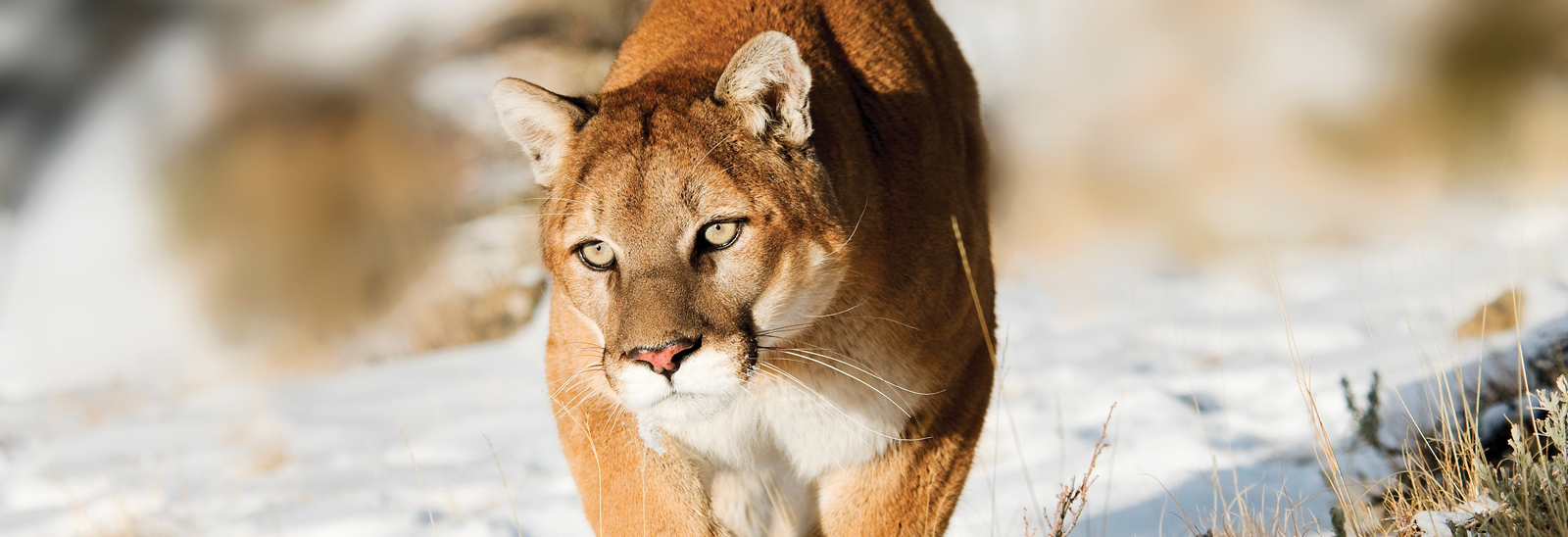
Last year, hunters and trappers took 74 bobcats (66 in Zone 1 and eight in Zone 2), 23 fishers, and four mountain lions in Zone 1 (all in the late season). We monitor population trends for these species using data collected from the carcasses of those animals taken during the hunting and trapping seasons. Trends indicate bobcat and fisher numbers are similar to their long-term averages. The mountain lion population trend remains low.
We encourage people to continue to report their black bear sightings online at https://gf.nd.gov/hunting/furbearers/furbearer-observation, including trail camera photos of bears.
Stephanie Tucker, Game Management Section Leader, Bismarck
--- Mountain Lion Hunting ---
Zone 1 (early) Opens: Sept. 4
Closes: Nov. 22
Zone 1 (late) Opens: Nov. 23
Closes: March 31, 2027
Zone 2 Opens: Sept. 4
Closes: March 31, 2027
The overall harvest limit on mountain lions in Zone 1 is once again 15, with an early season limit of eight, and a late-season limit of seven (or three females, whichever comes first). If the early season ends before eight mountain lions are taken, a conditional season could reopen after the late season, if the late season limit is reached prior to March 25.
There is no mountain lion harvest limit in Zone 2.
Mountain lions may be hunted statewide by residents using legal firearms or archery equipment during regular hunting hours. Beginning Nov. 23, mountain lions may also be hunted by pursuing with dogs. Cable devices and traps are not allowed. The limit is one lion per hunter. Kittens (lions with visible spots), or females accompanied by kittens, may not be taken.
Hunters must either contact the local game warden or Department field office or register their harvest online via their account and make arrangements to have their lion inspected and tagged.
--- River Otter Trapping or Cable Devices ---
Opens: Nov. 23
Closes: Dec. 13
Limit of one per person. Trappers must either contact the local game warden or Department field office or register their harvest online via their account to report their harvest within 12 hours and make arrangements to have their river otter tagged.
--- Fisher Trapping or Cable Devices ---
Opens: Nov. 23
Closes: Nov. 29
Open statewide for North Dakota residents. Limit is one fisher and one marten per person. Trappers must contact the local game warden or Department field office or register their harvest online via their account to report their harvest within 12 hours and make arrangements to have their fisher or marten tagged. For more information, see the North Dakota 2026-27 Hunting and Trapping Guide.
--- Beaver and Raccoon Hunting, Trapping or Underwater Cable Devices ---
Open: Year-round.
For more information, see the North Dakota 2026-27 Hunting and Trapping Guide.
--- Beaver and Raccoon Cable Devices on Land ---
Opens: Nov. 23
Closes: March 15, 2027
From March 16, 2027, through May 10, 2027, cable devices must be within 50 feet of water; and must be no more than 4 inches off the ground.
Beaver dams may be dismantled when their presence causes property damage.
--- Weasel Trapping, Hunting or Cable Devices ---
Trapping Opens: Oct. 24
Hunting and Cable Devices Opens: Nov. 23
Closes: March 15, 2027
Weasels may be hunted statewide with rimfire or pre-charged pneumatic air guns of .22 caliber or smaller and archery equipment.
--- Muskrat and Mink Trapping, Hunting or Cable Devices ---
Trapping Opens: Oct. 24
Hunting and Cable Devices Opens: Nov. 23
Closes: May 10, 2027
Muskrat huts may be opened for insertion of traps or cable devices; however, the huts must be restored to their approximate original condition to prevent freeze-up.
Beginning March 16, 2027, non-floating colony traps must be under at least 2 inches of water, and trapping or using cable devices on the outside of any muskrat house or structure of any size is prohibited; traps may be placed completely inside a muskrat house or structure of any size; foothold traps must be submerged under water at all times or must have a protective covering (except when used on float sets); body-gripping traps used in water can have no more than 2 inches of the trap above the water or must have a protective covering.
Beginning May 1, 2027, float sets must have a protective covering.
Mink and muskrat may be hunted statewide with rimfire cartridges or pre-charged pneumatic air guns of .22 caliber or smaller and archery equipment.
--- Bobcat Trapping, Hunting or Cable Devices ---
Zone 1: Nov. 7
Cable Devices Opens: Nov. 23
Closes: March 15, 2027
Beginning Nov. 23, bobcats may also be trapped using cable devices and hunted by pursing with dogs.
The pelt and carcass of each bobcat taken in Zone 1 must be presented to Department personnel for inspection and tagging prior to sale or transfer of possession, but no later than 14 days after the close of the season.
Zone 2: Nov. 23
Closes: March 15, 2027
Limit is one bobcat per person in Zone 2 and total harvest limit is eight.
In Zone 2, anyone who harvests a bobcat must either contact the local game warden or Department field office or register their harvest online via their account to report their harvest within 12 hours and make arrangements to have their bobcat tagged.
For more information, see the 2026-27 Hunting and Trapping Guide.
--- Red Fox, Gray Fox, Coyote Trapping, Hunting or Cable Devices ---
Day Hunting and Trapping Open: Year-round
Night Hunting and Cable Devices Opens: Nov. 23
Cable Devices Closes: March 15, 2027
Night Hunting Closes: May 31, 2027
Red fox, gray fox and coyote may be hunted at any hour from Nov. 23 through May 31, 2027. Any hunter who engages in the hunting of red fox, gray fox or coyote during the time from a half-hour after sunset to a half-hour before sunrise, must hunt exclusively on foot.
Hunters can use night vision, artificial light, thermal vision, and infrared light equipment during the night hunting season. Hunters are prohibited from using archery equipment (including crossbows) for night hunting until after the close of the archery deer season.
--- Badger Trapping, Hunting or Cable Devices ---
Hunting and Trapping Open: Year-round
Cable Devices Opens: Nov. 23
Closes: March 15, 2027
Small Game, Waterfowl, Furbearer Regulations
North Dakota’s 2026 small game, waterfowl and furbearer regulations are set, with some noteworthy changes from last year.
Changes include:
- Opening day for ducks, geese, coots and mergansers for North Dakota residents is Sept. 26. Nonresidents may begin hunting waterfowl in North Dakota on Monday, Oct. 5.
- Starting Nov. 29, shooting hours for geese will be one-half hour before sunrise to sunset to the end of the respective goose season.
- Ruffed grouse can now be taken statewide.
- American marten will be allowed for take for the first time in 2026. The season will mirror the fisher season.
- Fisher can now be trapped statewide, removing the restricted area in the Turtle Mountains where American martens are located.
- River otter harvest will change to a three-week season, running from Nov. 23 through Dec. 13. Previously, the season was Nov. 23 through March 15, closing after the quota of 30 otters was met.
Hunters and trappers can find upland game, migratory game birds and furbearer/trapping regulations on the Game and Fish website at gf.nd.gov. Printed guides are available at vendor locations.