


Hemorrhagic Disease
What causes Hemorrhagic Disease in deer and other big game? In North America there are two orbiviruses that cause HD, known as Epizootic Hemorrhagic Disease Virus and Bluetongue Virus. The viruses are closely related and cause a similar disease syndrome. There are three serotypes of epizootic hemorrhagic disease virus (EHDV 1,2, and 6) and seven serotypes of established bluetongue virus (BTV 3, 6, 10, 11, 12, 13 and 17) in the United States. The vector of EHDV and BTV is a biting midge (Culicoides spp.)
Impacts of Hemorrhagic Disease in North Dakota
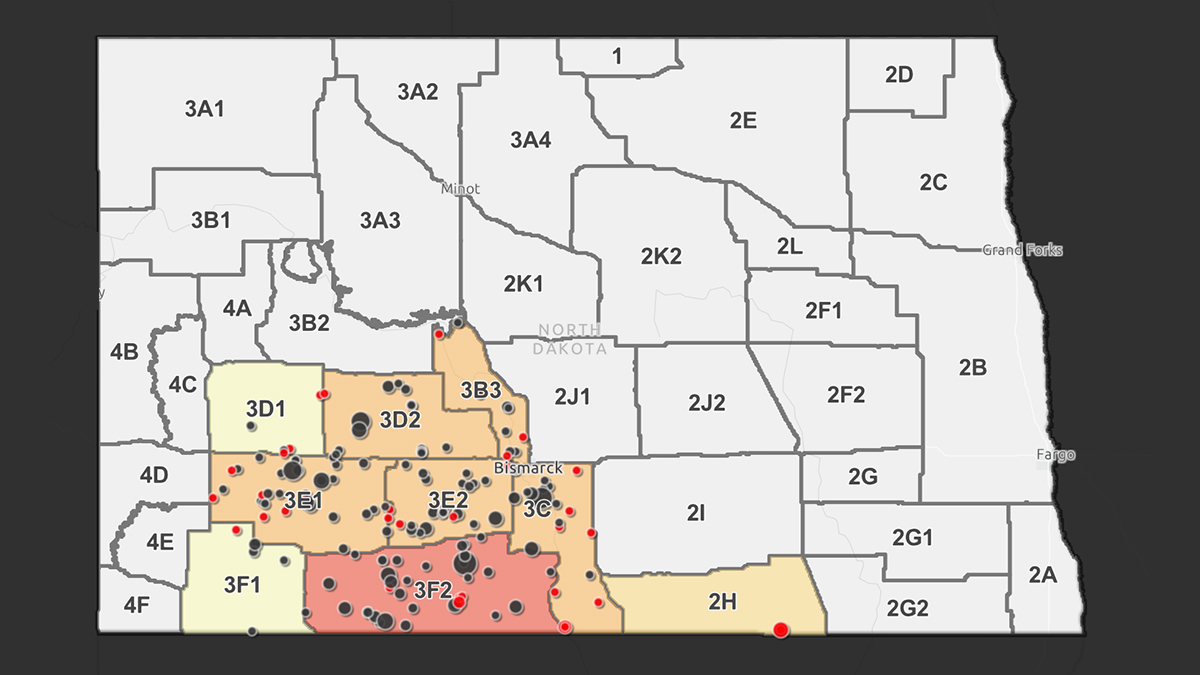
Losses from Hemorrhagic Disease occur periodically in North Dakota and primarily affect white-tailed deer and other ungulates such as pronghorn, bighorn sheep, mule deer and elk. Sometimes the incidents are isolated and affect few animals, and in other cases the disease is spread over a large geographic region. The typical range where HD is found in North Dakota is southwest of the Missouri River, and in large outbreaks most counties in this region are affected.
These events typically coincide with wet springs, hot summers, drought, and a late first frost date. Most animals that die from this are infected before the first hard frost, which kills the biting midges that spread the disease.
HD causes dehydration and a high body temperature, causing animals to seek water prior to death. Other clinical and behavior symptoms may include respiratory distress; swelling of head, neck, and tongue; lesions on tongue and roof of mouth; indifference to humans; and in later stages, hemorrhaging from body orifices.
HD is not a danger to humans. However, hunters should not shoot or consume an animal if it appears sick. Hunters should report any mortality observations to the Game and Fish Department online, or by phone 701-328-6351.
HD FAQs
What animals are commonly infected by HD?
All ungulates can be affected, but mortality is most common in white-tailed deer.
Is this animal infected?
- Infection is seasonal and occurs if the right weather conditions are present for biting flies in the genus Culicoides to reproduce.
- Groups of dead animals may be found in late summer or early fall near water sources with no apparent signs of disease.
- Clinical signs are variable.
Can I get it?
No, Hemorrhagic Disease is not known to cause illness in people.
How do I protect myself and others?
- The viruses that cause HD do not infect people.
- There is no risk from handling or eating meat from infected animals.
- Secondary bacterial infections that may develop may make the meat unsuitable for consumption.
- Caution should always be taken when handling any sick or dead animal as the animal may have a disease that may be zoonotic (zoonotic means a disease that humans can get from animals).
- If multiple dead animals are encountered in a given area, contact the North Dakota Game and Fish Department.
Is the meat from a deer that has HD safe for pets?
Yes, meat is generally safe for pets to consume if no secondary bacterial infections are present.