A Blind Spot: Agency Conducts Eye Worm Study
Zachary Eshleman
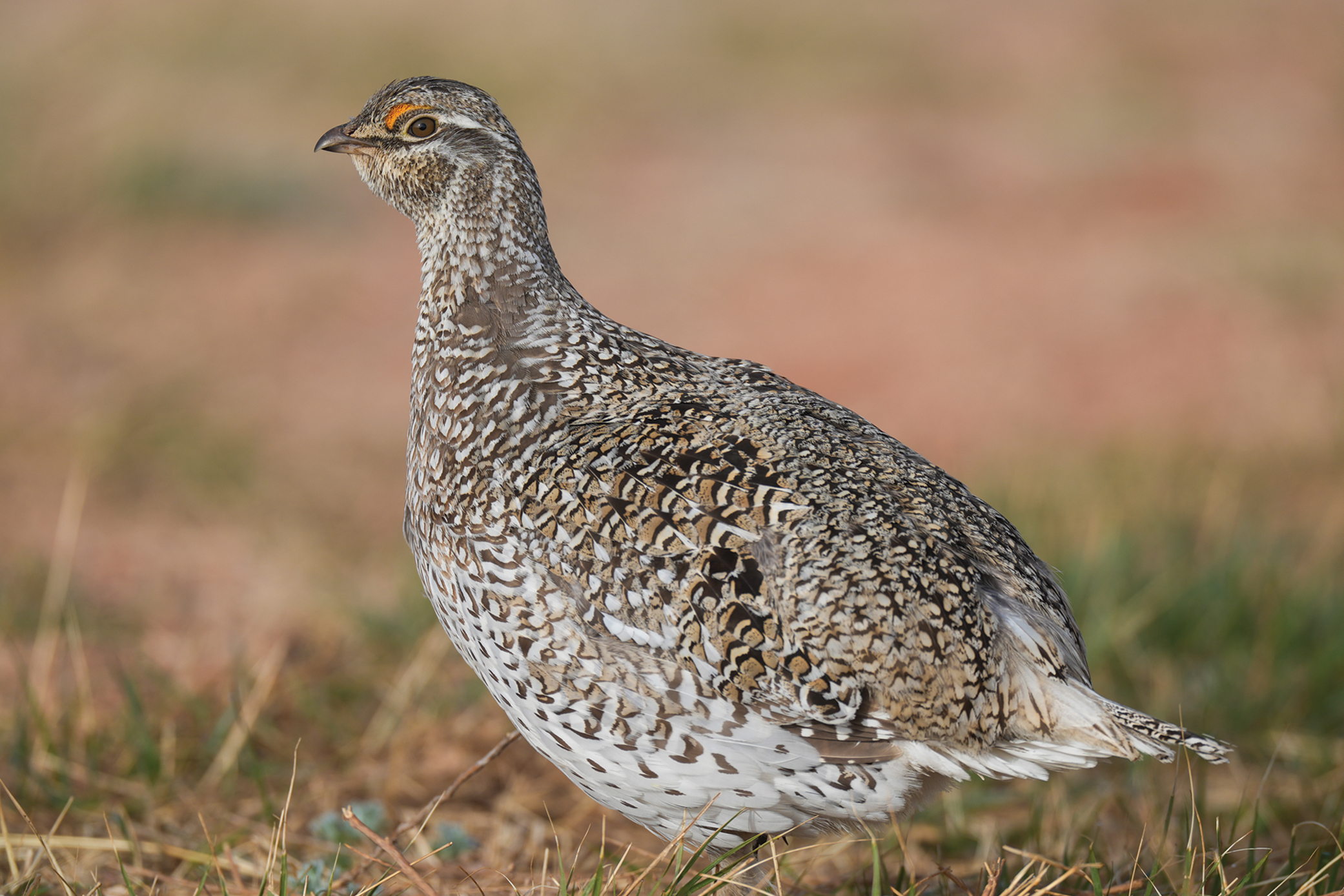
Last September, a short video from Montana made its way through upland hunting circles. In it, hunter Joe Crafton pressed a finger to the eye of a sharp-tailed grouse he had just shot. Several small, wriggling worms slid across the bird’s pupil. Crafton had checked three grouse and four gray partridge that day. Every one of them carried eye worms.
“I was unaware they had infections on these species or this region until now,” he wrote online.
Posts like this got people talking. The parasites, nematodes of the genus Oxyspirura commonly called eye worms, raised questions for hunters who pursue these birds across the country.
Now, North Dakota’s Game and Fish Department is bringing the possibility of eye worms in the state under scrutiny.
This simple and timely study, launched in the 2025 hunting season, is asking three questions: Are eye worms already here in our sharp-tailed grouse, gray partridge or pheasant populations? If so, how common are they? And what is their effect?
Rodney Gross, North Dakota Game and Fish Department upland game biologist, remembers the moment interest took off.
“It became a hot topic in the quail world,” he said, and he discussed how the buzz began when a researcher promoting a medicated feed designed to kill the parasites appeared on the MeatEater podcast discussing their prevalence in Texas. Then came the aforementioned discovery in Montana.
In North Dakota, the reaction was quieter.
“I’ve only had two or three people call me worried about it,” Gross said.
Still, he wanted to be proactive and start gathering data while populations are strong. Eye worms are not thought to harm overall populations, so by starting this study while populations are strong it will be easier to analyze their full effect when there are fluctuations in the future.
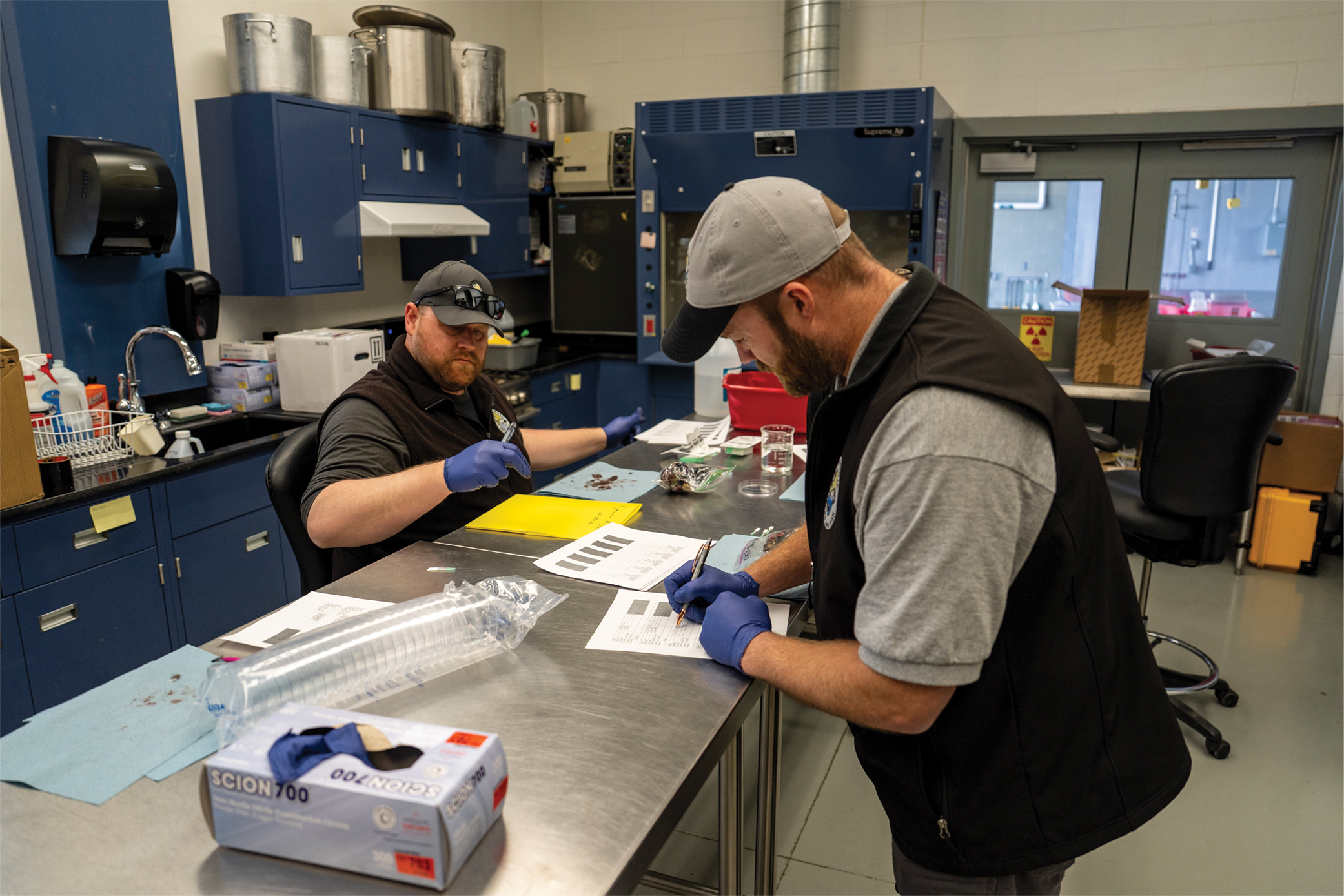
With feasibility and budget in mind, this study was kept simple using a method proven to be successful by similar studies conducted in Kansas and Texas. Gross turned to hunters within the Department and others in the scientific community in North Dakota.
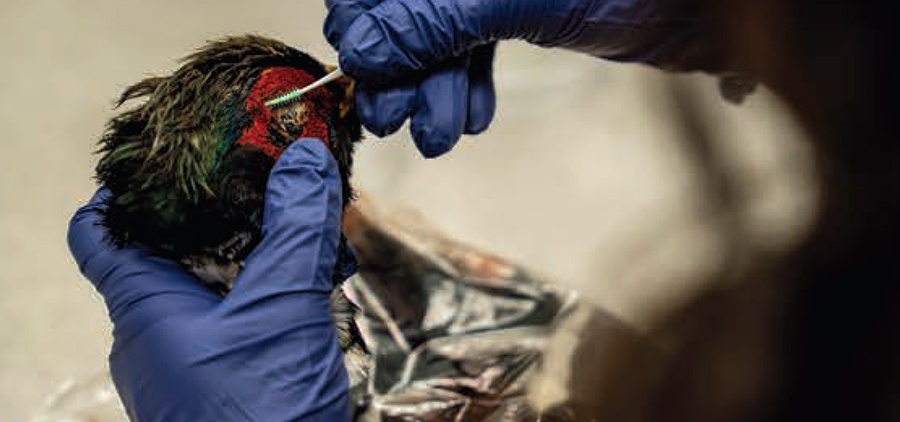
“I know a lot of people here shoot a lot of pheasants and grouse, so I figured, ‘Hey, if you shoot one, just chop the head off, bag it, mark when you got it, where you got it, and send it to me,”’ he said.
His call out for samples was answered, and Gross received 1,031 heads throughout the season. The total broke down to 900 ring-necked pheasants, 90 sharp-tailed grouse and 41 gray partridge. Samples came from 27 counties.
Scientists need data from multiple good and bad reproduction seasons to understand any real effect of the parasites. Other prairie grouse populations have shown eye worm rates near 95% in some studies, yet those birds maintain healthy numbers overall. Gross and the team are not concerned that eye worms currently limit sharp-tailed grouse in North Dakota.
As the first study of this kind in the state, this baseline data matters. With pheasant numbers climbing and sharp-tailed grouse holding steady, the Department wants to document conditions while populations are strong.
For a hunter who interacts with these game birds, the prevalence of these parasites is only one side of this story. Questions of meat contamination and safety of their hunting dogs also weigh heavily on those in the upland community. Fortunately, there is no danger to humans or dogs from eye worms; although feeding raw meat from game birds to dogs is still not advisable because of the possibility of other parasites.
As Gross put it, this study isn’t about a panicked reaction; it’s about facts. In a world of viral social media scares, sometimes the best story is the one that starts with a hunter, a pocketknife and a plastic bag and ends with data instead of rumor.