

All Hands on Deck
Zachary Eshleman
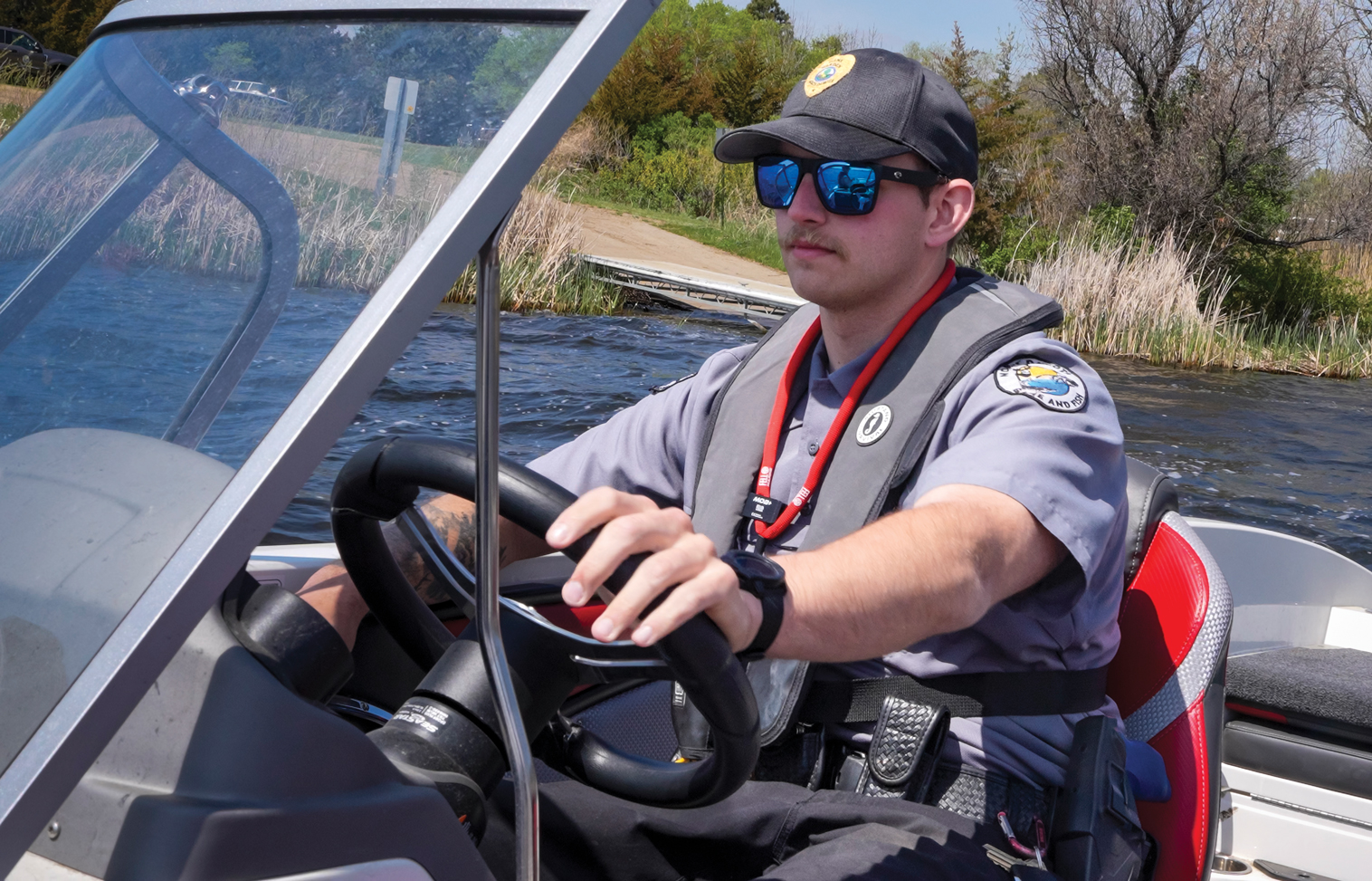
Boaters at Sweet Briar Lake got a nice surprise as they pulled up to see 20 North Dakota Game and Fish trucks at the ramp. No, this wasn’t some massive sting operation. Instead, it was the yearly in-service training where game wardens from across North Dakota gather for hands-on training to prepare for the unique situations they encounter while checking hunters, anglers and boaters.
With the busy boating season upon us, the sessions focused special attention on working around boats and the scenarios that can arise on North Dakota lakes and rivers.
Jerad Bluem, a district game warden covering Morton and Sioux counties, explained the purpose. As state-licensed peace officers, wardens must complete a set number of training hours each year. Most of that comes from outside the Department and covers general police skills. So, this particular session zeroed in on the parts of the job that are specific to game and fish work.
“Everybody thinks of hunting and fishing, but boating is one of our primary responsibilities. We are the agency tasked with boating enforcement,” explained Bluem. That includes checking registration, required safety equipment such as life jackets and fire extinguishers, and enforcing laws against boating under the influence.
These group training sessions also serve a bigger purpose. Most wardens work alone in their districts day-to-day, but on the water, they often work in two-officer or even three-officer teams.
Practicing together like this helps remove any confusion and keeps the way they respond to situations consistent no matter who they work with.
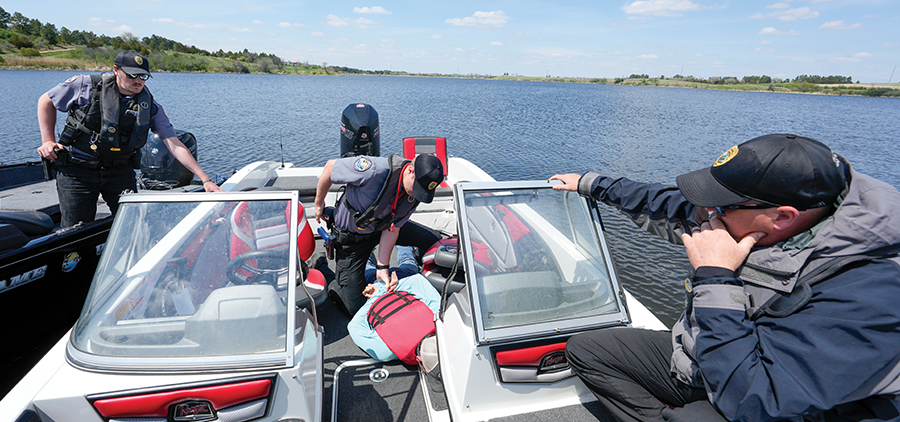
“We also want to have consistency across the state,” said Bluem. “The procedure that I do in Mandan should be the same procedure that somebody does in Devils Lake.” The training included two main scenarios. In one, officers practiced arresting a person for boating under the influence and safely resolving the situation while still on the water. In the other, a routine field check for a missing fishing license turned up an extraditable warrant from another state. Wardens had to make the approach by boat, manage their own vessel and the suspect’s vessel, account for weather and other conditions, and complete the arrest.
“Everybody gave their opinion on what would work best for the particular scenario,” Bluem said. “The 30-year game warden can give advice to the first-year game warden, while the first-year game warden thinks of things that the 30-year doesn’t. Together we come up with the safest option for the public. At the end of the day, if we have to do our job, we want to do it effectively, safely and within our authority.”
That shared focus on safety and consistency is what the training is designed to deliver, so wardens across North Dakota are ready every time boats hit the water.