

Back Cast
These days, starting at sunrise, wildlife biologists are driving predetermined 20-mile routes on rural backroads to get some insight into how fall’s upland game bird seasons may shake out compared to, say, last year or the year before.
If you were to encounter one of these individuals, and there are a number of them, you’d wonder, because of their sluggish pace of about 15 mph, if they’d lost something and that something might be resting in the ditch.
What they are looking for, as part of the Game and Fish Department’s long-running late summer roadside brood counts, which run from July 20 to Aug. 31, are upland birds ... pheasants, sharp-tailed grouse, gray partridge, the usual suspects. When they spot one, no matter the species, they’ll stop, wander into the roadside vegetation, clap their hands and stomp their feet to flush whatever is hiding.
When the birds fly, they count what they see, mentally separating the adults from young. Biologists have been doing this across North Dakota for 50-plus years. They’ve long told hunters who dig some insight into what fall might hold, it’s not a true count of the population, but rather an index, a comparison of production from year to year.
I’m one of those hunters who dig some preseason insight into the land we hunt. Yet, any inside understanding into this chunk of the countryside is self-earned as the land is not part of the brood survey routes run by agency biologists.
They say the ingredients for the perfect brood survey morning include clear skies, no wind and plenty of dew. The latter pushes the birds out of hiding to dry out on fence lines, rock piles and gravel roadsides where passersby can spot and count them.
This morning, almost mid-August, the weather conditions are textbook. The majority of the pheasants we do see are sunning on top of round bales surrounding a cattail-choked slough that’s a sonofagun to push in fall, but worth the trouble.
If being easily distracted isn’t a trait agency wildlife managers want in their brood run personnel, then I wouldn’t be long for the task.
When we see deer on land where the population has been slow to rebound, just like in other parts of the state, the binoculars come out and we start counting heads, some with antlers, some not. Wet pheasants will have to wait as we wonder out loud where we think they are coming from and where we think they are headed.
We understand that the deer gun season isn’t for two-plus months, and that the landscape will change significantly following harvest and Mother Nature’s mood in November. Even so, talking strategy, envisioning which rockpile you’d sit on to intercept their comings and goings makes for good conversation.
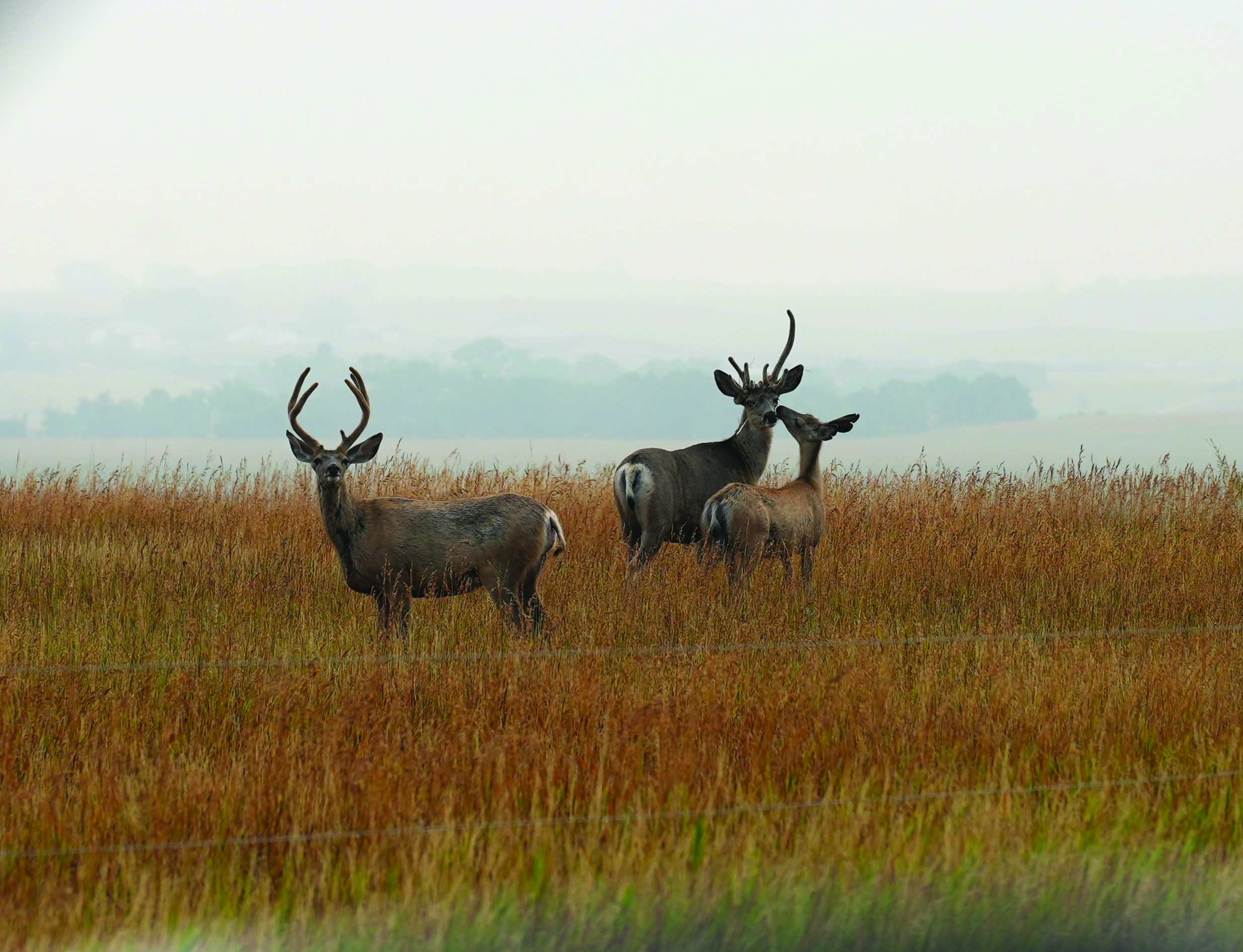
The marks of this morning, as we are keeping a rough count, is a bumper mourning dove population, maybe a dozen pheasants or fewer, nine deer, seven of which are mule deer, including a buck with an interesting rack.
While it’s not a true count of the wild game populations that we hunt off of these backroads, it’s more than we knew yesterday and that’s enough.