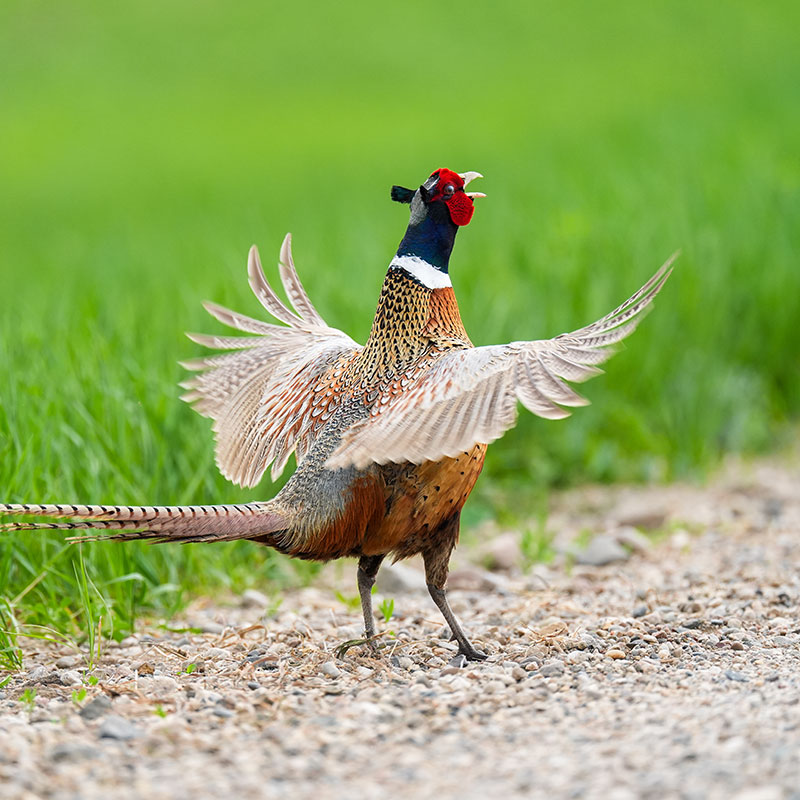
The number of roosters heard during the North Dakota Game and Fish Department’s 2026 spring pheasant crowing count survey was 23.2 crows per stop, up 9% statewide from last year.
“Overwinter survival of adult pheasants has been outstanding. Typically, we lose up to 75% of our pheasant population each winter, but that has not been the case as of late,” said RJ Gross, Department upland game management biologist.
By region, observers heard 32.7 crows per stop in the southwest, up 5% from 2025; 22.2 crows per stop in the northwest, up 4%; and 23.1 crows per stop in the southeast, up 24% from last year. The count in the northeast, which is not a primary region for pheasants, was 9.3 crows per stop, up 43% from 2025.
Crowing counts are just one part of the picture, providing a glimpse of the population going into the breeding season. But Gross expects more good news as the peak of the pheasant hatch approaches.
“Entering the nesting season, residual grass cover looked good,” Gross said. “We have received ample precipitation that has led to increased growth in nesting and brood rearing cover across the state. Combined with high overwinter survival over the past three years and near ideal nesting habitat conditions, things are looking great for pheasants in North Dakota.”
Pheasant crowing counts are conducted each spring throughout North Dakota. Observers drive specified routes, stopping at predetermined intervals, and count the number of roosters heard crowing. The number of pheasant crows heard is compared to previous years’ data, providing a trend summary.
As always, the late summer roadside counts conducted in July and August will give a better idea of brood production and the hunting outlook for fall.
The North Dakota Game and Fish Department’s 79th annual spring breeding duck survey conducted in May showed an index of about 2.4 million birds, down 9.5% from 2.66 million birds in 2025 and 2.9 million in 2024.
The 2026 breeding duck index dipped below the 1948-2025 average for the first time since 1993, according to John Palarski, Department migratory game bird supervisor.
In these spring waterfowl surveys, Palarski said they’re counting a portion of what remains of last year’s fall flight. Duck production in North Dakota has been poor in recent years and midcontinent duck populations continue to decline.
“Waterfowl here in North Dakota have to have those wetlands in order to nest. But many species like mallards, pintails and blue-winged teal that are upland nesting ducks, also need grass,” he said. “And so, we’ve seen a couple million acres of grass in the form of CRP come off the landscape in recent years. Between those declines and wetland loss due to drainage and consolidation, that’s going to impact our ability to produce ducks into the future, which has acute impacts for waterfowl hunters here in the state, but also has continental impacts, because North Dakota is the Duck Factory.”
Historically, duck numbers in North Dakota paralleled wetland conditions closely. In the heyday of North Dakota duck hunting from 1994-2016, the breeding duck index frequently topped 4 million birds, but it is unlikely for that to happen again, even in the wettest years, until habitat availability improves.
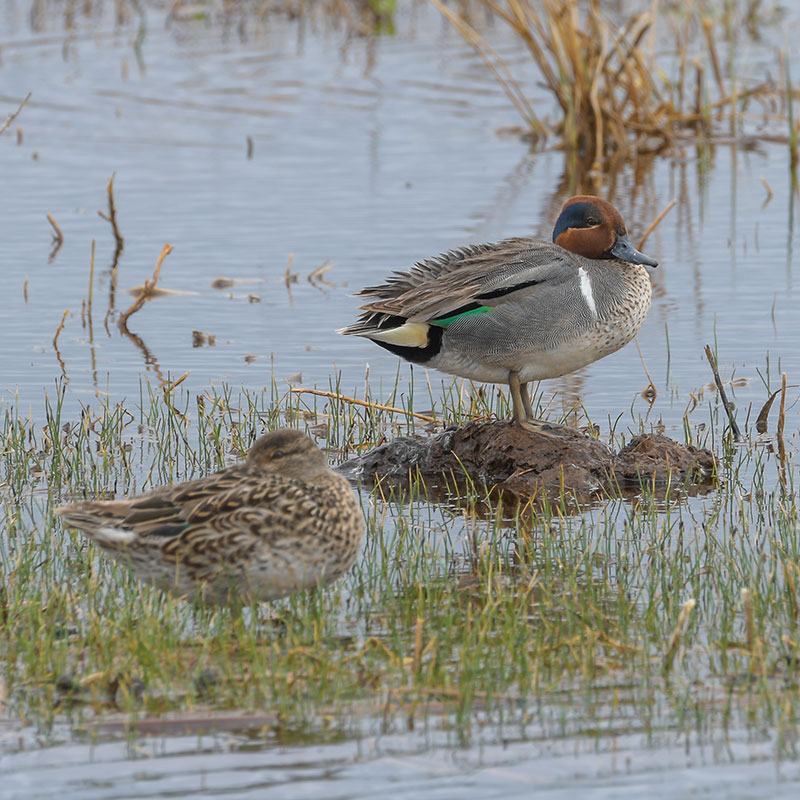
Indices for individual species were variable. Mallards (up 6.8%), pintails (up 23.7%) and green-winged teal (up 20.9%) indices increased from 2025 while blue-winged teal, gadwall, widgeon and most diving duck species decreased. Although mallards are up from 2025, they’re still down 15.3% from their long-term average.
Palarski and crew covered more than 1,800 miles of transects counting wetlands and waterfowl down to the species and social grouping on both sides of the road. This spring, the wetland count was similar to last year but 34.9% below the long-term average.
The Department’s July brood survey will give a better idea of duck production and insight into the fall hunting season.
The North Dakota Cooperative Fur Harvester Education Program is holding classes Aug. 4, 6, and 8 at the North Dakota Game and Fish Department in Bismarck and Oct. 1, 2 and 3 at the Velva Wildlife Club in Velva.
Fur harvester education classes are 16 hours in length, free, voluntary, and cover topics associated with trapping and fur hunting. Much of the instruction includes hands-on experience with traps and equipment commonly used for harvesting furbearers and properly caring for the pelts.
Successful completion of this training provides certification recognized by other states where mandatory trapper education training is required. Participants can enroll for either of these classes online.
The North Dakota Cooperative Fur Harvester Education Program is also hosting a training seminar on using cable devices in North Dakota Oct. 10 from 9 a.m. to 4 p.m. at the Velva Wildlife Club.
The seminar is free and available to anyone who would like information and experience using cable devices. All aspects of cable device construction, care, use, ethics, responsibility and legal requirements are covered. Much of the instruction includes hands-on field application and set construction. Preregistration is required by contacting Rick Tischaefer at 701-460-1055.
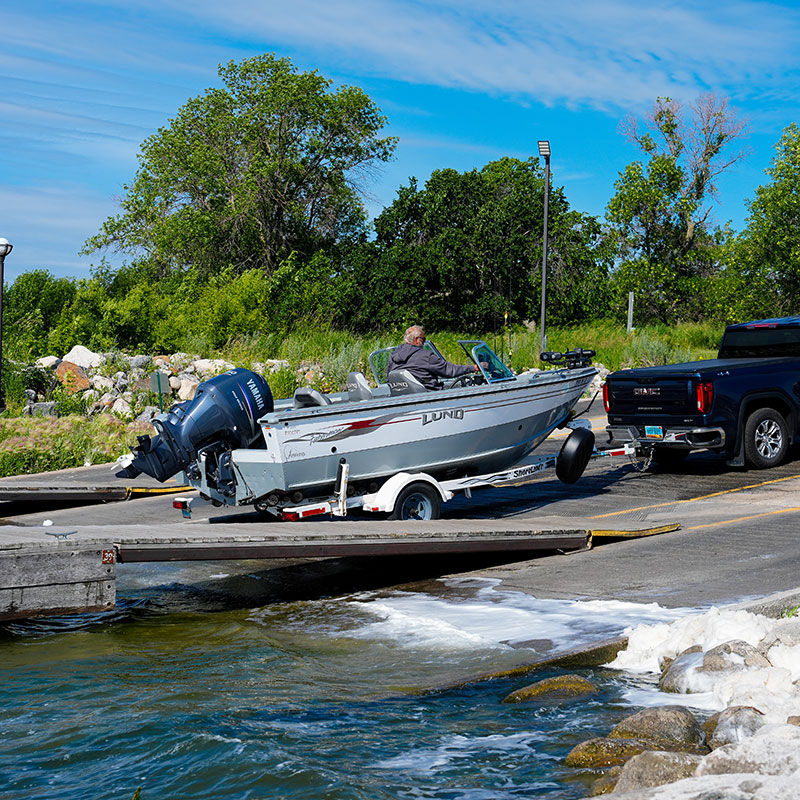
The North Dakota Game and Fish Department encourages boaters to plan accordingly when launching and loading a boat. Here are a few simple reminders to ensure a fluent transition at the ramp:
LAUNCHING
- Don’t pull onto the ramp until your boat is ready to launch.
- Prepare for launching in the parking area. Remove covers, load equipment, remove tie downs, attach lines and put in drain plug before backing onto the ramp.
- When ready, pull in line to launch. Wait your turn. Be courteous.
LOADING
- Don’t block the loading area with your boat until your tow vehicle is ready to load. Wait until you are clear of the launch area to unload gear.
- As soon as your trailer is in the water, load and secure your boat to the trailer.
- Remove boat and trailer from the water as quickly as possible.
- Get clear of the ramp. Pull into the parking area to finish securing your boat, unload gear, drain all water and inspect for and remove any vegetation. Remember to leave plugs out when transporting your boat.
Regardless of how safe and cautious boaters are on the water, accidents happen. If a boating accident involves injury, death or disappearance of a person, an accident report must be completed and sent to the North Dakota Game and Fish Department within 48 hours of the occurrence.
If property damage exceeds $2,000, but no deaths or injuries occur, a boat operator has five days to file a report.
These reporting requirements are mandatory whether there is one or more boats involved.
A boat accident form is available at any Game and Fish office or by contacting a local game warden.
Photographers interested in sending photos for the North Dakota Game and Fish Department’s Watchable Wildlife Photo Contest are asked to follow the guidelines for submitting their work.
Photographers should go to the Game and Fish Department’s website. Then it is a matter of providing some pertinent information about the photo and uploading it. Doing so helps both with ease of submitting photos for the photographer and managing those images for Department staff.
The contest is now open and the deadline for submitting photos is Oct. 2. For more information or questions, contact Patrick Isakson, Department conservation supervisor, at pisakson@nd.gov.
The contest has categories for nongame and game species, as well as plants/insects. An overall winning photograph will be chosen, with the number of place winners in each category determined by the number of qualified entries.
Contestants are limited to no more than five entries. Photos must have been taken in North Dakota.
By submitting an entry, photographers grant permission to Game and Fish to publish winning photographs in North Dakota OUTDOORS, and on the Department’s website.
Outdoor recreationists are encouraged to keep it clean this summer by packing out all trash.
All garbage should be placed in proper trash receptacles. If trash cans aren’t available, or full, dispose of trash at home.
It is not uncommon to see garbage piling up around full trash containers. Styrofoam containers are not biodegradable, but are often found wedged in cattails, drifting or washed up on shore.
Tires, mattresses and kitchen appliances have found their way to public use areas. This illegal dumping is costly to clean up and takes a significant toll on the environment. Not only does it spoil the beauty of the land, it destroys habitat, has the potential to pollute North Dakota waters and can injure wildlife.
North Dakota state law requires youth ages 12-15 who want to operate a boat or personal watercraft by themselves with at least a 10-horsepower motor must pass the state’s boating basics course.
The course is available for home study by contacting the North Dakota Game and Fish Department. Two commercial providers also offer the course online, and links to those sites are on the boat and water safety education page.
While the home-study course is free, there is a fee to take it online. The online provider charges for the course, not the Game and Fish Department. The fee remains with the online provider.
The course covers legal requirements, navigation rules, getting underway, accidents and special topics such as weather, rules of the road, laws, lifesaving and first aid.
Were you lucky enough to bag a turkey in spring? Check out the latest installment of Cayla’s Kitchen featuring Souvlaki, which translates to “small skewer” in Greek. Marinated in lemon juice, olive oil, garlic and oregano before going on the grill, this turkey recipe is the perfect fit for a summertime cookout. Find this field-to-table inspired recipe and more online.
Each spring, North Dakota Game and Fish Department staff count the number of male sharp-tailed grouse, greater prairie chickens and greater sage grouse dancing on leks, while also tallying the number of male ruffed grouse drumming in suitable aspen habitats.
These surveys serve as relative indices of spring breeding populations.
“The sharp-tailed grouse counts were mixed across the state this spring, which resulted in an unchanged statewide count compared to 2025,” said Jesse Kolar, Department upland game management supervisor.
This result was better than expected following poor reproduction and decreases in adult sharptail densities in last summer’s roadside surveys and the 24% decrease in hunter harvest last fall.
“Thus, we expected to see very poor numbers for lek counts this spring, but we suspect that our mild winter led to minimal mortality and helped minimize losses after the cool and wet summer of 2025,” Kolar said.
By district, observers saw 4.9 males per square mile in the southwest, down 8% from 2025; 5 males per square mile in the prairie potholes, up 2%; and 2.9 males per square mile in the drift prairie, up 10% from last year. The only remaining survey block in the Red River Valley is Grand Forks County, which is not a primary region for sharptails but was up 9% from last year.
Ruffed grouse survey results indicated an uptick in drums heard in the Turtle Mountains (+40%) and a decrease in the Pembina Hills (-15%) compared to 2025.
“In contiguous forest habitats, ruffed grouse numbers usually rise and fall in cycles, but because habitat in North Dakota is isolated and fragmented, we have not seen these peaks, but the population has been increasing slightly since 2019,” Kolar said.
Small greater prairie chicken populations remain in Grand Forks County and the Sheyenne National Grasslands but overall, North Dakota no longer holds enough suitable, intact tallgrass prairie to support a huntable population.
Only one male and one female sage grouse were observed in 2026. Both sage grouse and greater prairie chicken hunting seasons will remain closed.
Overall, the long-term outlook for our native prairie grouse remains a concern due to grassland conversion, fragmentation and woody encroachment on prairies.
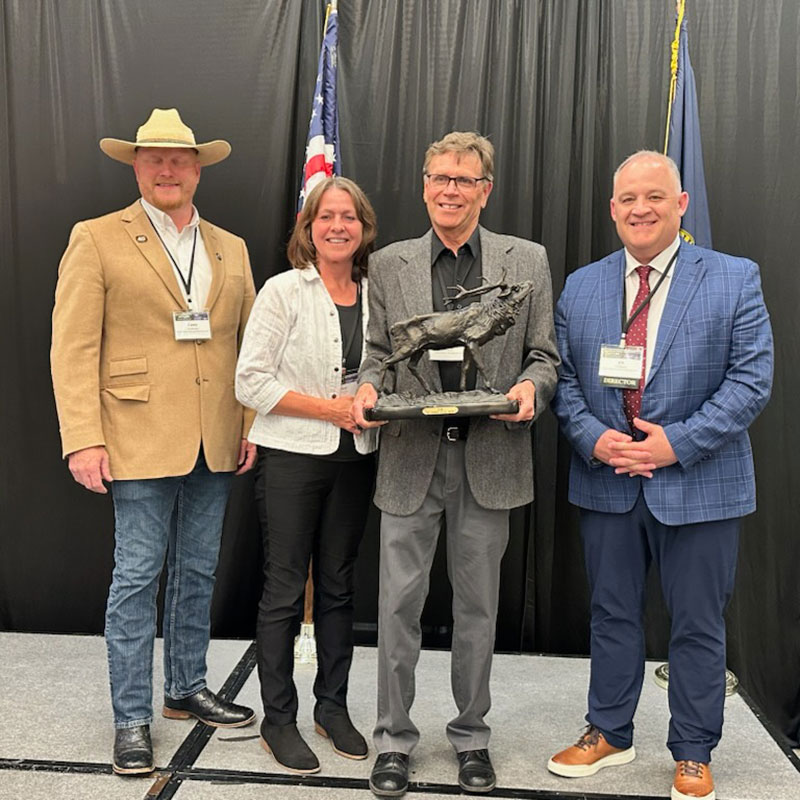
Power Earns WAFWA Award
Greg Power, Game and Fish Department fisheries chief, won the 2026 Phillip W. Schneider Lifetime Achievement award at the Western Association of Fish and Wildlife Agencies annual meeting in June.
The award recognizes an individual who has dedicated their entire career to conservation of fish and wildlife resources in the West.
“Greg exemplifies a lifetime of dedication to fisheries conservation through more than 40 years of service with the North Dakota Game and Fish Department,” said Casey Anderson, Department deputy director. “Rising through every level of the fisheries division to become fisheries chief, he guided fisheries management with a science-based, practical approach that balanced ecological sustainability with high-quality recreational fishing opportunities while keeping regulations simple and accessible for the public.”
Throughout his career, Power advanced numerous conservation initiatives and programs, including fisheries monitoring, habitat enhancement, stocking programs, and the expansion of public fishing waters in North Dakota from 186 in 1990 to more than 420 today. He also contributed to major efforts such as the U.S. Army Corps of Engineers Master Manual, the Bureau of Reclamation’s Garrison Diversion Project, and the creation of North Dakota’s aquatic nuisance species program. Strong partnerships with federal hatcheries helped create new fishing opportunities for anglers across the state.
“As a leader and mentor, Greg fostered a culture of scientific rigor, collaboration, and public service, helping shape the next generation of fisheries professionals,” Anderson added. “He was also known for his accessibility and commitment to public engagement, carefully considering public input and ensuring fisheries issues were thoughtfully addressed.”
Rykerd Hired for Wildlife Position
Nate Rykerd was named game management biological technician for the North Dakota Game and Fish Department in Bismarck.
A 2017 graduate of North Dakota State University in Fargo, Rykerd came to the Department with extensive experience in a variety of seasonal wildlife positions. Before joining the agency, he worked as a wildlife technician for the Wyoming Game and Fish Department beginning in 2023.
Private Lands Staff Honored
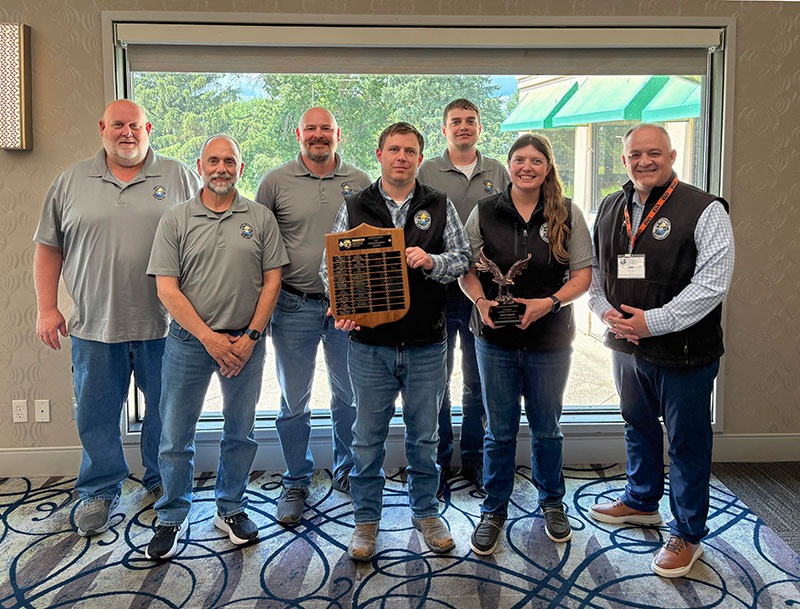
The North Dakota Game and Fish Department’s private lands section won the 2026 Excellence in Conservation award at the Midwest Association of Fish and Wildlife Agencies annual gathering in June.
“The Department’s private lands team exemplifies what the award is designed to honor: innovation, partnership, and measurable, landscape scale conservation success. Their work strengthens wildlife habitat, expands public access, supports agricultural communities, and safeguards the state’s outdoor heritage for future generations,” said Kevin Kading, Department private lands section leader. “Through dedication, creativity, and deep collaboration with landowners, this team has transformed private lands conservation in North Dakota.”
Through their efforts, it was noted, wildlife habitat in North Dakota is improving, public access is expanding, and the state’s outdoor heritage is being strengthened for generations to come.
Miller Earns Midwest Award
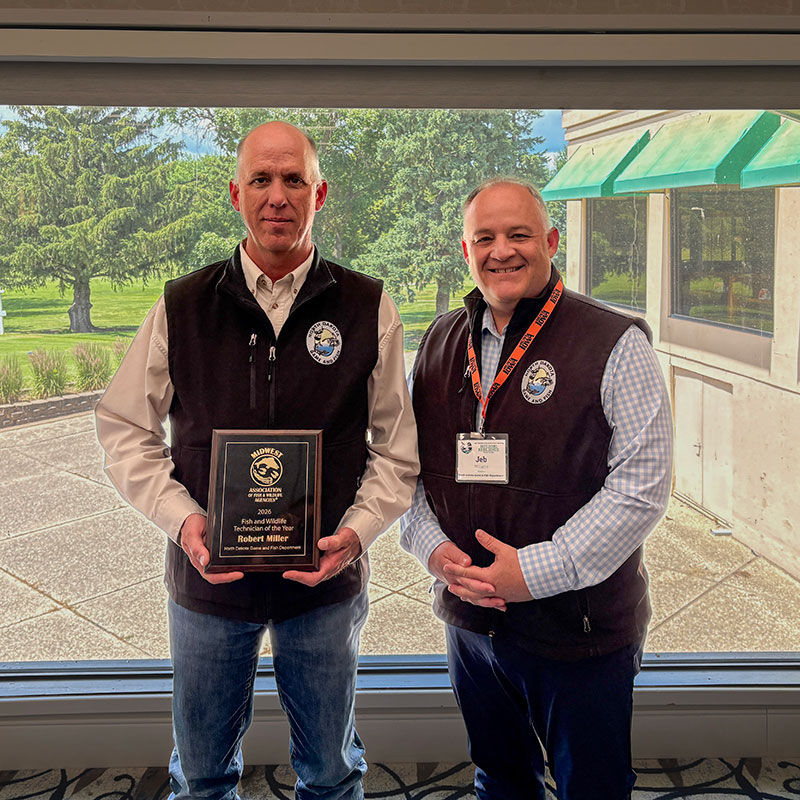
Robert Miller, North Dakota Game and Fish Department wildlife biological technician, was awarded the Midwest Association of Fish and Wildlife Agencies 2026 Fish and Wildlife Technician of the Year award in June.
“Robert Miller has dedicated more than 30 years of service to the Department as the wildlife technician in Riverdale, and his long-standing commitment to our mission is evident in everything he does,” said Casey Anderson, Department deputy director. “An avid sportsman, he understands the importance of conserving North Dakota’s wildlife resources and has spent his career putting that understanding into practice.”
Anderson said Miller continuously seeks new ways to enhance the quality of our wildlife management areas, often researching new habitat practices or management strategies to ensure we provide the best possible conditions for wildlife.
“If there is someone you can count on to uphold the Department’s mission, it’s Robert. He embodies the dedication, innovation, and professionalism that this award is meant to recognize,” Anderson added.