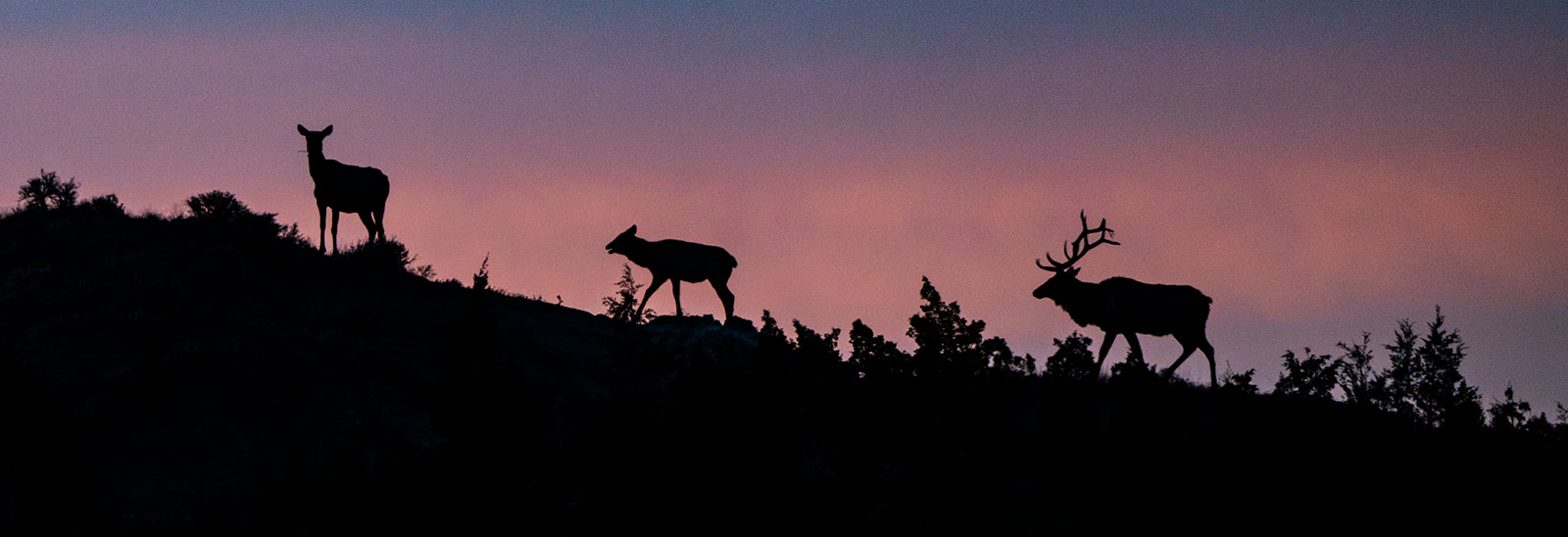
Badlands Classroom
Zachary Eshleman
This past summer I decided it was time to fill a gap in my knowledge as an outdoorsman and learn a little about hunting elk. I had never pursued them, and aside from a couple of chance sightings, I had basically no experience even observing elk in the wild. I felt intimidated by it and a little inadequate, especially as someone who works in the outdoor industry, so I set out to change that. With elk tags in the state being a rare thing, I figured I would hunt them with my camera for now, but that brought me to a bit of an ethical dilemma.
The best time to photograph elk is the rut, and that is also when the season is open. I wasn’t about to be hustling after bugles on public land where somebody else might be making the same stalk.
That is what led me to Jesse Kolar, a friend and the North Dakota Game and Fish Department’s upland game management supervisor in Dickinson. He filled his tag years ago, so now he gets his local elk fill with a camera in the backcountry of Theodore Roosevelt National Park. After a few conversations, I had some map pins, advice, and a general location he said I should start.
That is how, on a September afternoon, I found myself alone, dropping down a butte in the park’s South Unit with a camera on my chest, an overnight pack on my back and a backcountry permit in my pocket. I worked my way around the bison and wild horses, spooked a couple of mule deer and turkeys, and used game trails to weave toward where I wanted to be. I was walking into my first lessons.
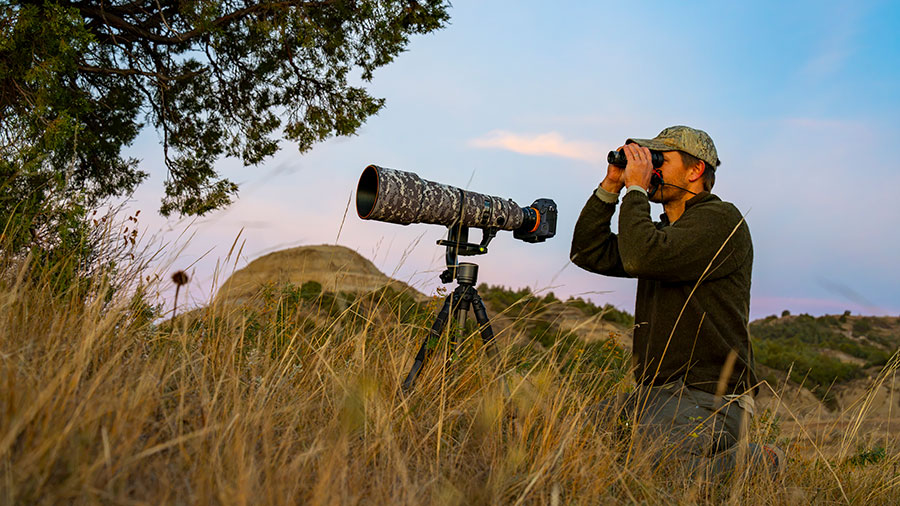
Jesse Kolar looking for elk in the badlands.
Maybe I was distracted by the hike and the amazing landscape, or maybe there weren’t any elk near me, but I heard no bugles on my way in. I chose my campsite on a little plateau just as the sun set, and I slept under the stars in my hammock. It was a warm night, and my minimal packing worked out just fine.
The night was far from silent. Shortly after it was too dark to see, I heard crashing in the junipers below me. The sound of antlers against wood felt like it was right there, but I had no chance of finding it. Still, the sound was invigorating; there were monsters in the dark.
The elk in the park were also far more wary of people after the culling, and they spent their time in more remote areas of the park, and they stuck to the cover of junipers throughout the day.
I’m not going to argue that finding elk there and photographing them is the same as hunting. However, I do think you would struggle to find a better simulation anywhere else.
I woke up in the morning to fresh opportunity. It was nearly a full moon, and the bugles were echoing long before the sun rose. I didn’t need a headlamp to move around, so after sitting for a minute and only hearing them far off behind me, I decided to just go for it. I picked out a bugle and went in that direction.
I worked down a canyon and expected to see a bull around every bend. With continued disappointment, I followed a sound that seemed the same the whole time. I came to an abrupt end in the cut I was walking and made my way up the steep butte, still heading in the direction of the bugling.
A mile and a half in and starting to lose hope, I sat glassing from the edge of a coulee. In front of me the land dropped away for a few hundred feet before rising again with the far side covered in those impenetrable junipers. The bugles of one bull now sounded like he was standing in front of me on the other side, but I still couldn’t get eyes on him.
After about 20 minutes of watching and listening, I figured the echoes had thrown off my sense of direction. I moved farther along the edge so I could see more of the valley floor to my left, hoping he was there instead.
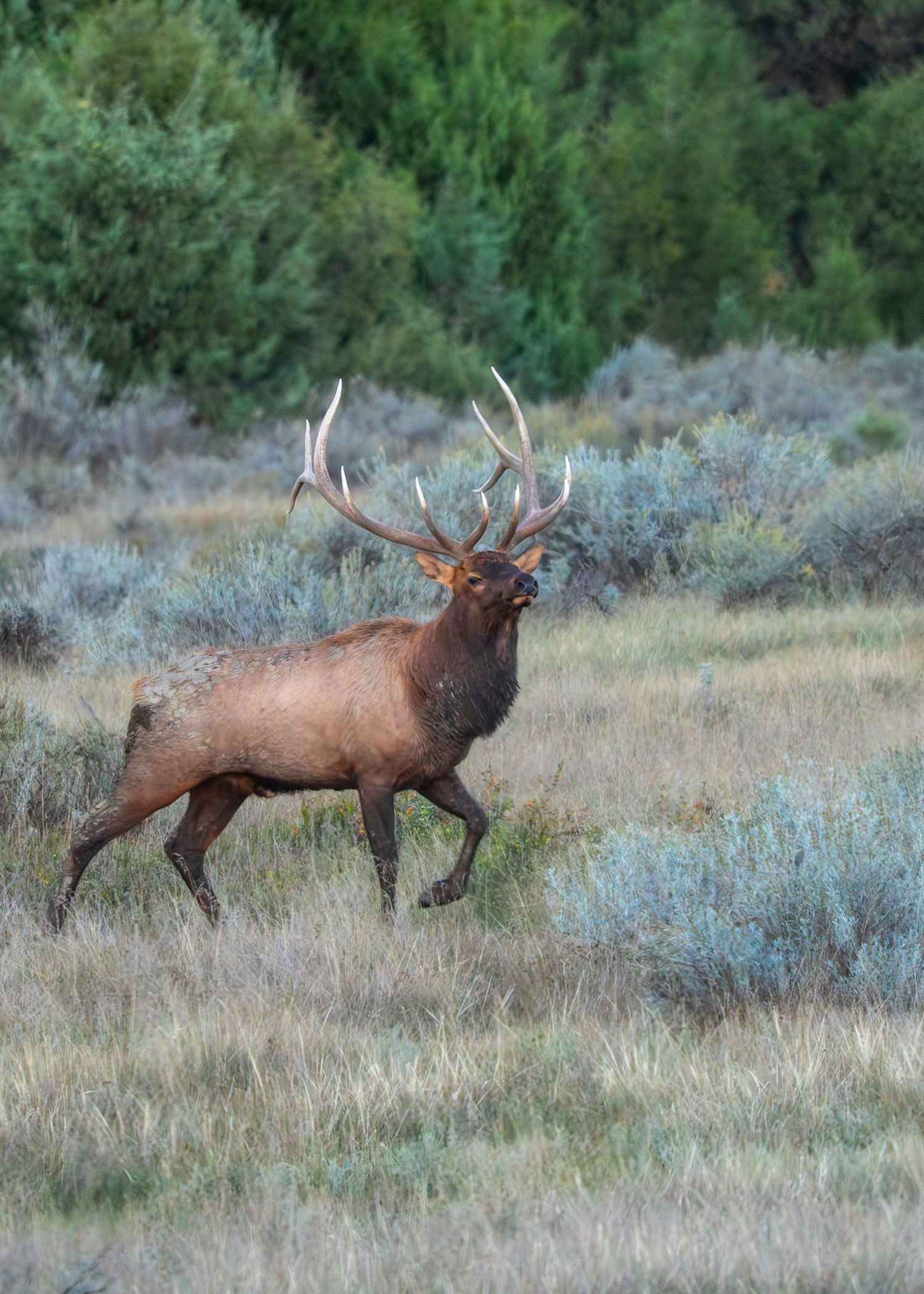
About 40 yards later, he came into view. A 6x6 bull, minding his business about 600 yards away. I watched him for 10 minutes as he moved from my side of the small valley to the opposite. Then he worked around a curve where a small rise blocked my view.
Time to close the distance.
I hurried into the draw. It took maybe 10 minutes to get down and over to the edge where he had gone out of sight. I turned the corner slowly, crawling to look over the little rise, expecting him at 100 yards or so.
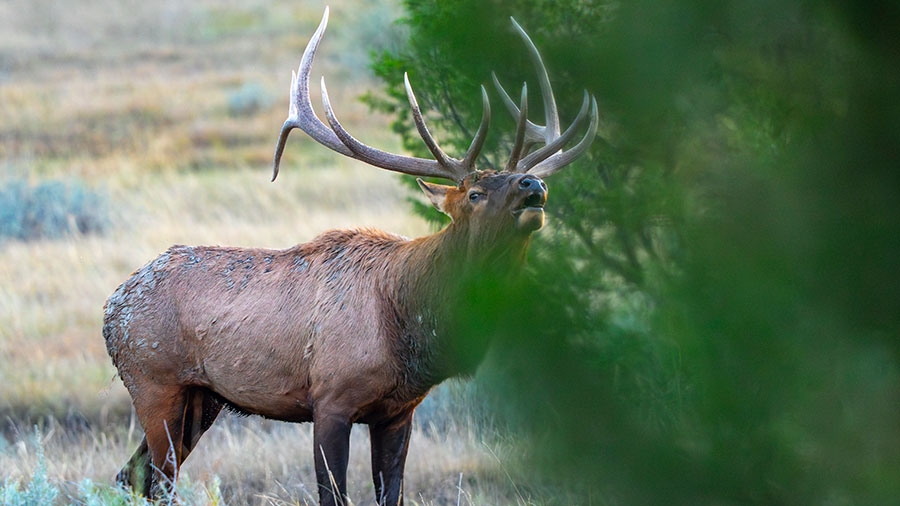
Nope. There he was at 25 yards, facing me. I froze. A small tree blocked his direct view of me. When he went back to grazing, I slowly brought my camera up, and I inched to the side to get an angle on him. He stood there long enough for a few frames and let out a bugle that I could feel in my chest. Then he continued slowly away into the junipers. I took no shot and left with no meat. It was just a heart-pounding stalk, and my first introduction to elk in one of the best classrooms our country has to offer.