

Death in the Mud Margins
Ron Wilson
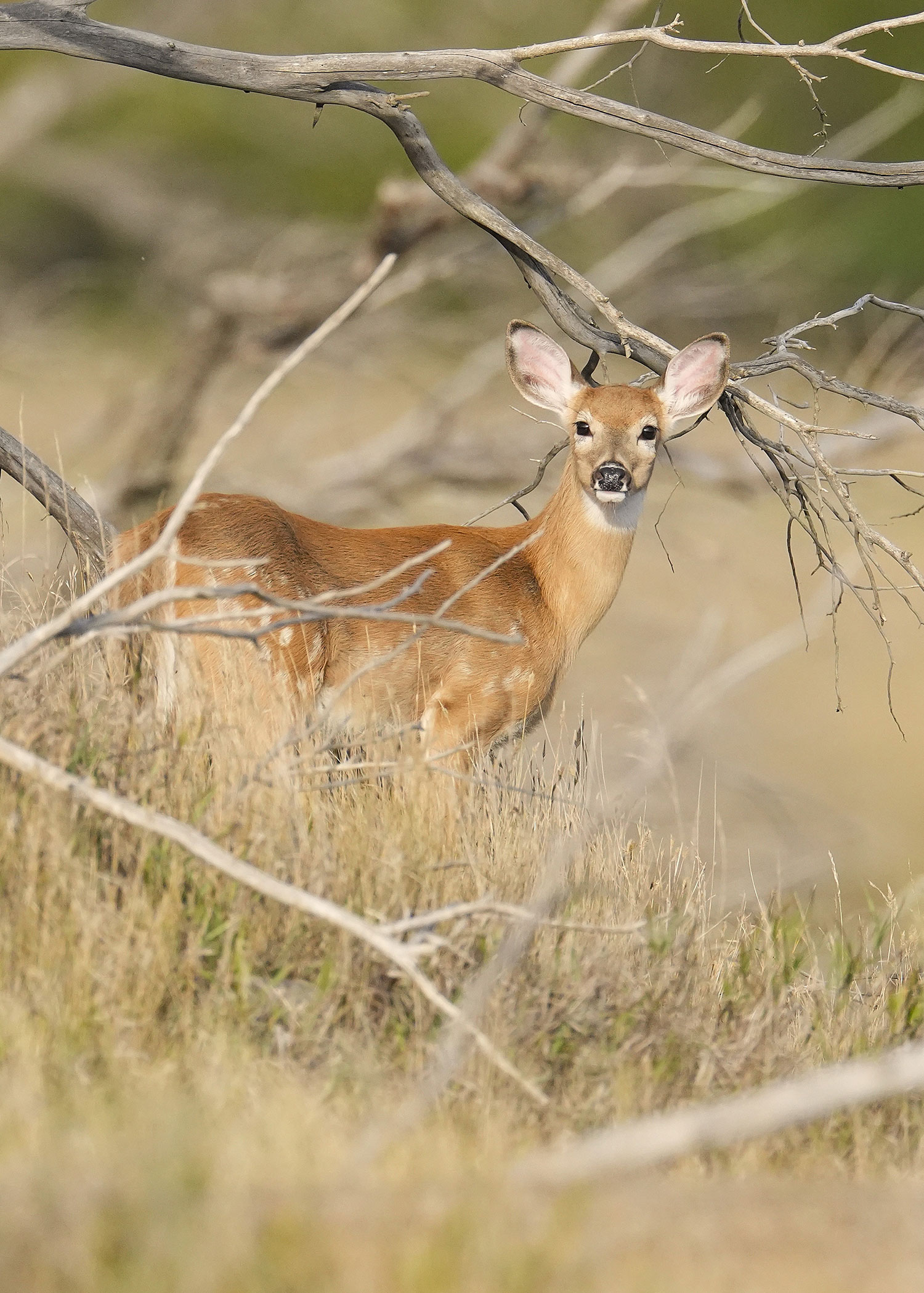
There are a number of things that get in the way of big game animals in North Dakota, especially white-tailed deer, in their effort to reach the numbers wildlife managers and hunters would like to see.
First, there’s the weather where drought and tough winters can hit with equal severity in this neck of the Northern Plains. Then there’s the lack of suitable habitat on the landscape to safeguard deer and other animals during the state’s leanest months and provide sanctuaries for adults to birth and raise young in spring and summer.
Then there’s disease. The silent killers that aren’t as in-your-face as a January blizzard, but at times can pack a significant punch.
North Dakota Game and Fish Department officials confirmed the state’s first case of epizootic hemorrhagic disease in 2026 on Aug. 8 from a whitetail doe near Lake Tschida, said Dr. Logan Weyand, Department wildlife veterinarian.
Starting in early August, Weyand said agency staff fielded 184 reports that tallied 425 mortalities of ungulate species including white-tailed deer, mule deer and pronghorn. The bulk of the fallout was to white-tailed deer in southwestern and south-central North Dakota, with some association along the Missouri River. The hunting units hit hardest were 3F2, 3C, 3E1 and 3E2.
In response to the outbreak, state officials announced in October several conservative harvest strategies in southwestern and south-central North Dakota to safeguard an already slow-to-rebound deer population hit hard by weather and disease in the last five years. One of the strategies, for example, was to prohibit harvest of antlerless whitetails in the hardest hit deer gun units.
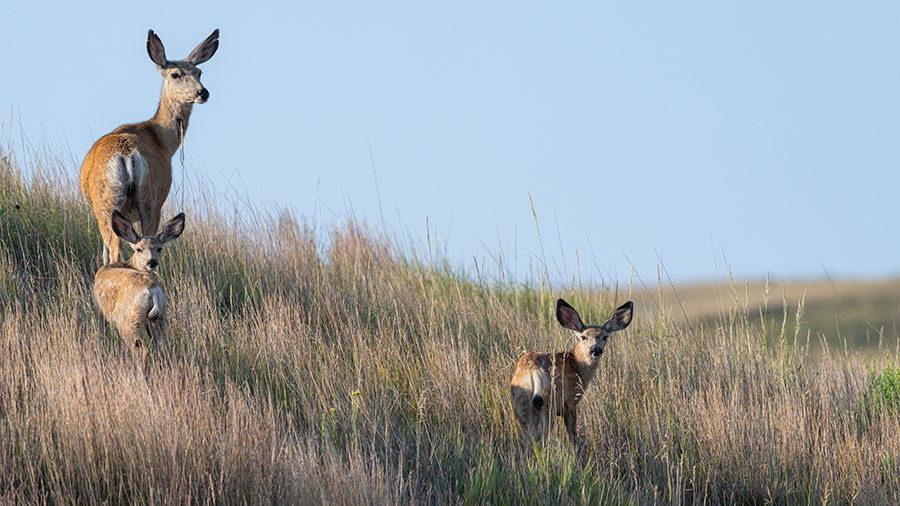
Mule deer aren’t hit as hard as white-tailed deer during EHD outbreaks and wildlife biologists believe its because mule deer spend much of their time in the drier, more arid areas on the landscape where the midges don’t survive as well.
EHD is a naturally occurring virus spread by biting midges that is often fatal to whitetails, and less commonly to mule deer, pronghorn and elk. EHD is no newcomer to the landscape as Game and Fish Department officials reported the state’s first documented outbreak decades ago.
“North Dakota suffered its first EHD outbreak in 1962 … between the two units of Theodore Roosevelt National Park along the Little Missouri River,” Department wildlife officials reported in 1988 in North Dakota OUTDOORS. They continued, saying that EHD reared its ugly head again in 1970, 1976, 1981 and 1987.
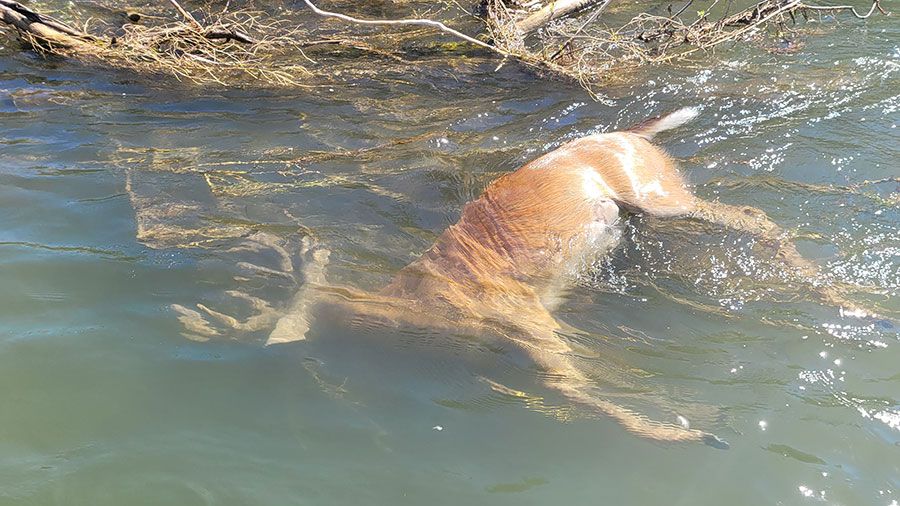
EHD is a well-studied disease phenomenon across the United States. Scientists know that the disease comes and goes and that whitetails can certainly survive in the long term with EHD. Even so, there’s more to learn in an effort to manage the disease.
“North Dakota and a lot of other states deal with EHD and currently there are limited options on ways to manage this disease and reduce the impacts on white-tailed deer in particular,” Weyand said. “Given the continuous impacts it is having in North Dakota, we are taking some new research approaches this year focused on the virus, and then soon to come the vector. The goal starting this year is to dive deeper into some of those different factors that are important from a research standpoint, to see what solutions may eventually be out there.”
When described by scientists, EHD is a nasty disease, and an infected deer can die from the virus as quickly as one to three days.
“When the deer is bitten by a midge and then infected, that virus will enter the lymph system and it starts to replicate in the deer’s body,” Weyand said. “In a lot of these carcasses, what we see is buildup of fluid in the chest cavity and around the heart, sometimes in the abdomen. And that is because EHD results in a systemic issue where fluid leaks out of blood vessels due to inflammation.”
While a killing frost or two will end this year’s EHD outbreak, hurdles remain in the effort to rebuild North Dakota’s whitetail population.
“The two biggest factors in this effort right now are time and habitat. These animals still need time to recover from the tough winter of 2023. We’re still seeing the effects in the eastern end of the state, particularly where we have far less habitat,” Matykiewicz said. “A rebound in the population, the subsequent growth after that disturbance, is just so much slower with there being a lack of resources on the landscape. But even where we have better habitat, better resources, particularly around river valleys, stream beds and riparian areas, it’s still going to take time because we’re going from a fairly low-density deer herd to a lower density deer herd.”