

Life's Been Good to Me
Interview with Greg Power
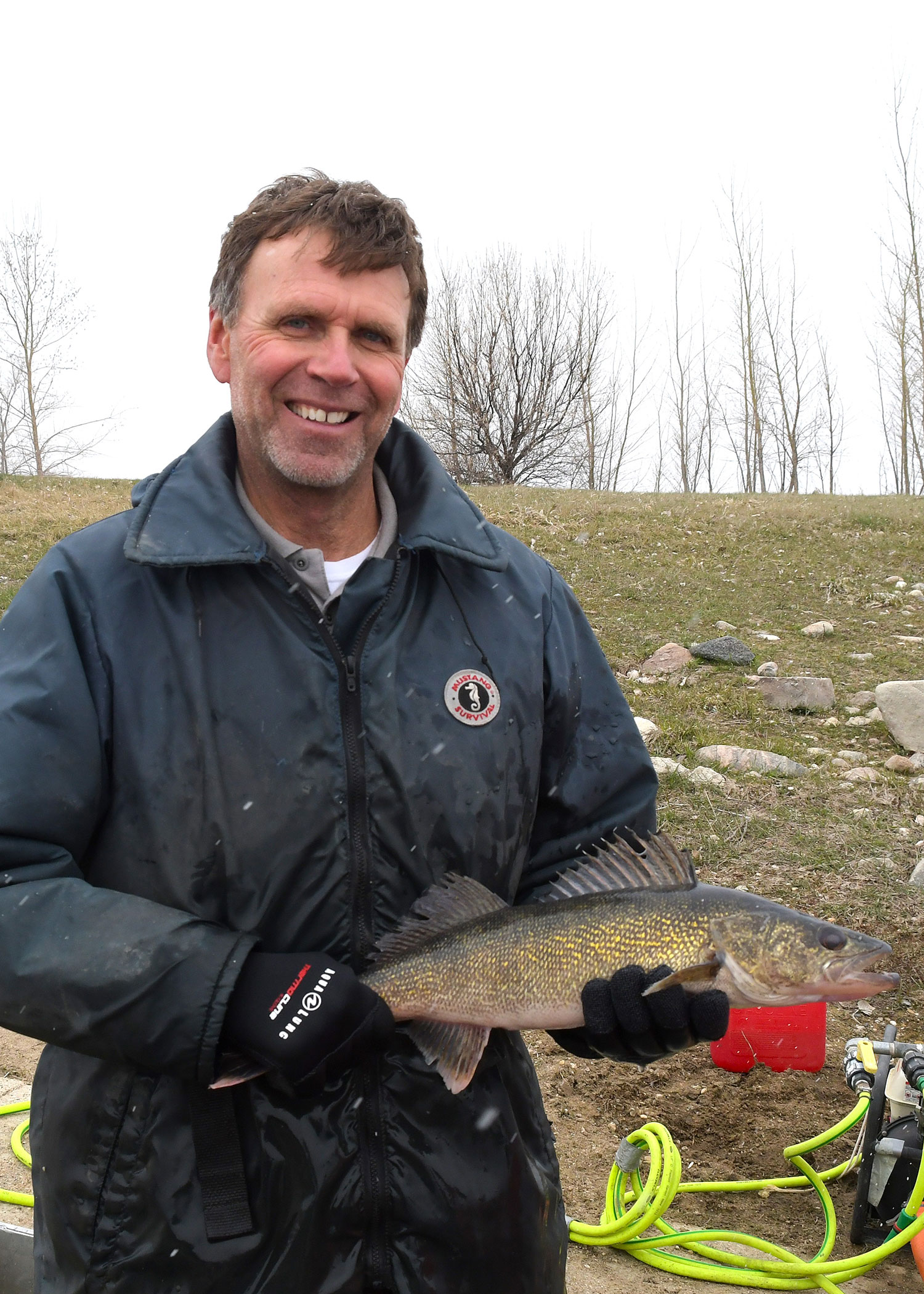
After 40-plus years working in the North Dakota Game and Fish Department’s fisheries division, the last 20 as chief of fisheries, Greg Power retired earlier this month.
When asked about finally calling it a career, Power said he was told that he’d know when it was time to retire and that was proven true.
“I never counted down the days or set a strict target date. But over the last year or so, I found myself thinking a lot about relevance and purpose — apparently a very common hurdle as we transition into our senior years. I’ve come to realize that the time is right, both for me to start my next chapter and for the organization to welcome new blood and fresh perspectives,” he said.
North Dakota OUTDOORS staff interviewed Power about his decades-long career, including the ups and downs of managing hundreds of fisheries on the often unpredictable Northern Plains landscape.
NDO: You’ve been in the Game and Fish Department’s fisheries division for more than 40 years. How have things changed during that long run?
Power: Where do I even begin? I’ve said this so many times, but I’ve been so blessed on so many levels. Life’s been good to me, from my family to a profession that has been my passion.
When I started, things were tough when it came to North Dakota’s fisheries resources. There were maybe 160, 180 waters, and today we are somewhere in the neighborhood of 450 waters.
We have 80 new walleye fisheries out on the prairie that didn’t exist back then. We have great quality out on the landscape, from pike fishing, perch fishing, to great walleye fishing right now. Then there is the fishing for smallmouth bass, the paddlefish snagging fishery and quality catfishing in the Missouri River and trophy cats in the Red River. There has been a pretty remarkable change on the landscape over the years, and I’ve been fortunate to have quite a table setting presented to me.
NDO: What fisheries management changes have you seen, good or bad, over the last 40 years?
Power: There’s been a lot of change, and most of the change has been positive. With fishing regulations, for example, we’ve always had the belief that we wanted to keep things simple. And I think for the most part, the fishing public likes what we’ve done as our regulations are some of the most straightforward compared to anywhere in the country. Undoubtedly, we could have done things a bit differently over the last 40-plus years. But there’s always a negative to that. Even so, our regulations, I think for the most part, have been positive.
NDO: What do you consider your biggest professional accomplishment in the last 40-plus years?
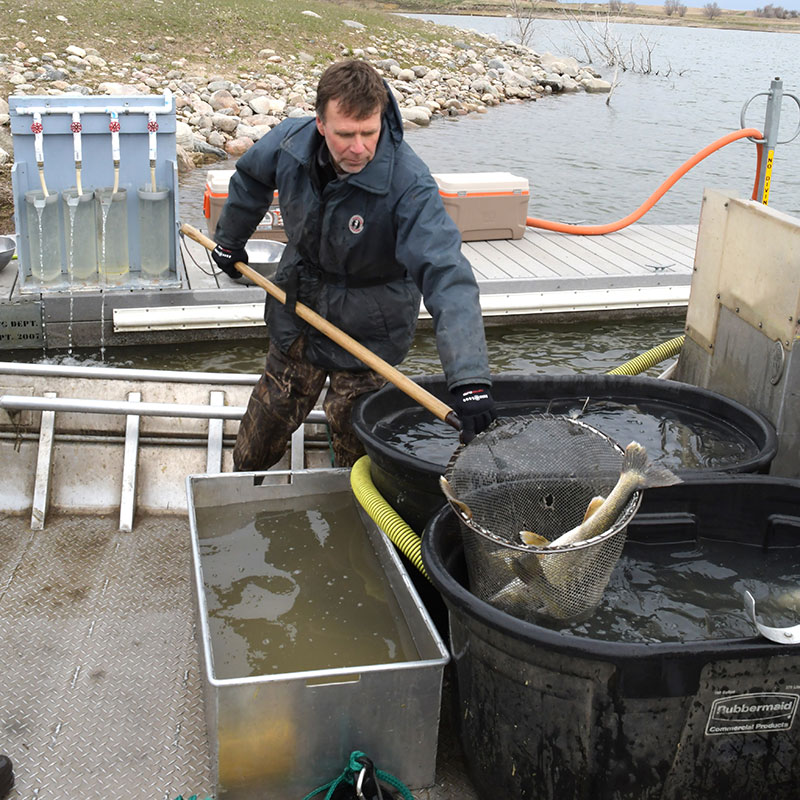
Power: That’s a tough one. More than anything, I’d say, was keeping a team of professionals in the Game and Fish Department as a whole and specifically with the fisheries division. We’ve been so blessed with having top notch personnel out there. They’re not storytellers but, holy cow, the work ethic, what they get done and some of the ideas that they come up with is impressive. I think this might be one of the best accomplishments because it is way more than me. It’s a team effort that’s gone on for basically my entire career.
NDO: And it’s not like the fisheries division has grown that much over the last 40 years, yet you’re managing more than twice as many lakes today compared to back in the day. Correct?
Power: Yeah. While the workload has increased significantly, you never hear the staff complaining about it. They just put their noses down and work with it. We are, I believe, the smallest fisheries division in the U.S. but you wouldn’t know it by what our fisheries crews get done year in and year out.
NDO: Any disappointment in the last 40-plus years?
Power: I’ve been disappointed at times in the apathy of the public. Fishing in North Dakota, for example, generates millions in collectible state taxes, more than $800 million is spent annually on fishing equipment, and so on. Fishing is kind of a big player and you’d think there’d been less apathy and more engagement, but there isn’t. On a fish species level, largemouth bass have been a disappointment. When I started, our largemouth bass fisheries were better than they are today, and we’ve tried a lot of different things. Water quality is another and that’s a big picture issue. We had a program at one time called Save Our Lakes that tried to address water quality issues. But again, it’s oftentimes just Band-Aids and it’s an issue that’s slowly hurting our fisheries. We continue to have blue green algae advisories that go on and we have sedimentation issues in some of our fisheries, especially our reservoirs, so there will continue to be water quality challenges in years to come.
NDO: Speaking of water. There have been years where we’ve dealt with everything from drought to flooding. How has Mother Nature influenced things over the years?
Power: When it comes to the fisheries in North Dakota, that’s what makes it special or unique. But when it comes to management, we’re managing extremes. You know, they talk about climate change and stuff, but North Dakota has always had dramatic climate change. So, we’ve seen the peaks and valleys. Those floods and those dry years, probably short term, are not a good deal. But in the long-term, when you get revegetation of shorelines during times of low water followed by flooding, you can get dramatic swings in the perch and pike fisheries as the inundated vegetation provides a nutrient boost to the fisheries, while providing places for fish to naturally reproduce.
NDO: The stars aligned with your career, as some of best fishing anglers have ever seen in North Dakota have come under your time as fisheries chief. Would you agree?
Power: Certainly. With pike and perch, you got to live with those peaks and valleys, and their day will come again. But one thing we can sustain over the longer haul, especially with our production capabilities, is walleye. I used to write a lot for the North Dakota OUTDOORS and I would often say the good old days are today. It’s a broken record, but that’s been kind of my career and that’s been a really nice thing. But again, I go back to the professionalism of the staff. I’m of that baby boomer generation where you worked hard, you played hard. But a lot of people say the younger generations, you know, there’s some challenges there. But I don’t see that within the Game and Fish Department. I tell you what, Gen Z, whatever they are now, the younger hires we have, their passion for the outdoors is high and I’m very optimistic about the future of the Department and the fisheries division. We have good young professionals who really care about the resource.