A Bird in Hand
Zachary Eshleman
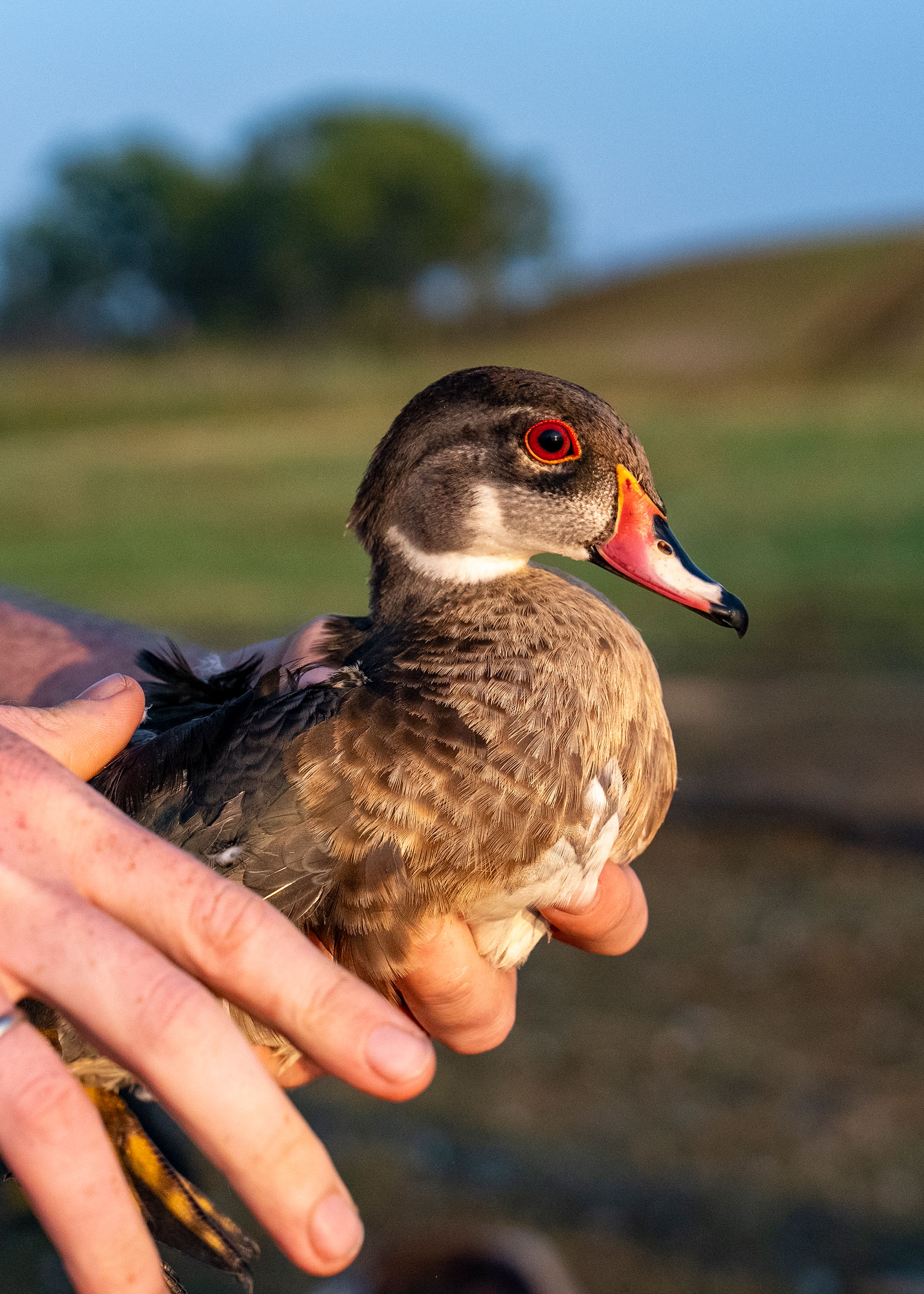
Bird banding has been used to study migratory birds for hundreds of years. In the United States, the first recorded instance happened around 1803 outside Philadelphia when John James Audubon tied silver thread to Eastern phoebes to see if they returned to the same nesting area each year.
This early experiment still aligns with the purpose of modern banding. Researchers use banding to learn where birds come from and where they go. That lets conservation work focus on where it will do the most good, and it gives decisionmakers a current picture of what the most prized game birds are doing.
Knowledge that modern bird hunters take for granted, such as the existence of the four flyways, the timing of different species’ migrations, and where prairie ducks winter, would not exist without this persistent effort.
I wanted to see behind the scenes of how this data is collected and used, so I went to John Palarski, North Dakota Game and Fish Department migratory game bird supervisor, and asked to get out in the field with him this banding season.
“By the time we get to August, that’s when our focus really shifts to duck banding,” Palarski said, “Throughout the whole month and all the way up until our regular waterfowl season opener, we’re out there.”
Palarski, an avid waterfowl hunter himself, has a difficult task this time of year. In his words, he is looking to get “as many ducks as possible,” and it’s not like he can just shoot them out of the sky. With rocket netting, it is a one-shot deal, so the ducks cannot just trickle into the chosen location. He needs to find high numbers grouped together to make that one shot worth it.
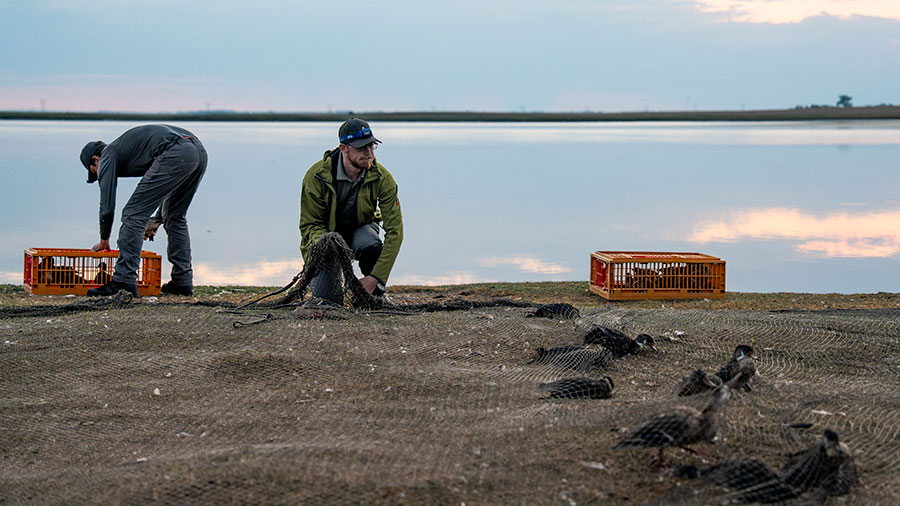
“I’m used to scouting, trying to find fields or water with lots of ducks, and getting access on private land. So, it’s very similar to hunting,” he said. “By the time we get to waterfowl season, I’m not necessarily burnt out on duck hunting yet. But it almost feels like I’m hunting them for two months before the season even starts.”
The two main capture methods are swim-in traps and rocket nets, and which one he chooses depends on a few factors.
“The methods we decide to use to catch these different duck species actually kind of depends on the species. The swim-in traps do a really good job of catching species like redheads and blue-winged teal,” he said. “But if you’re really trying to target mallards and pintails, rocket netting is the best way to go.”