From Dust
Zachary Eshleman
Do you think North Dakota is flat? I beg to differ. As most North Dakotans know, walking across the prairie can quickly become a humbling experience. The land refuses to stay level. Rolling hills that appear gentle from the road become short, steep coulees and shallow draws that lead you downhill and back up, over and over again. Add a stiff wind that never seems to quit and ground cover that hides everything that would love to roll your ankles, and pretty soon a mile as the crow flies can easily feel like 2.
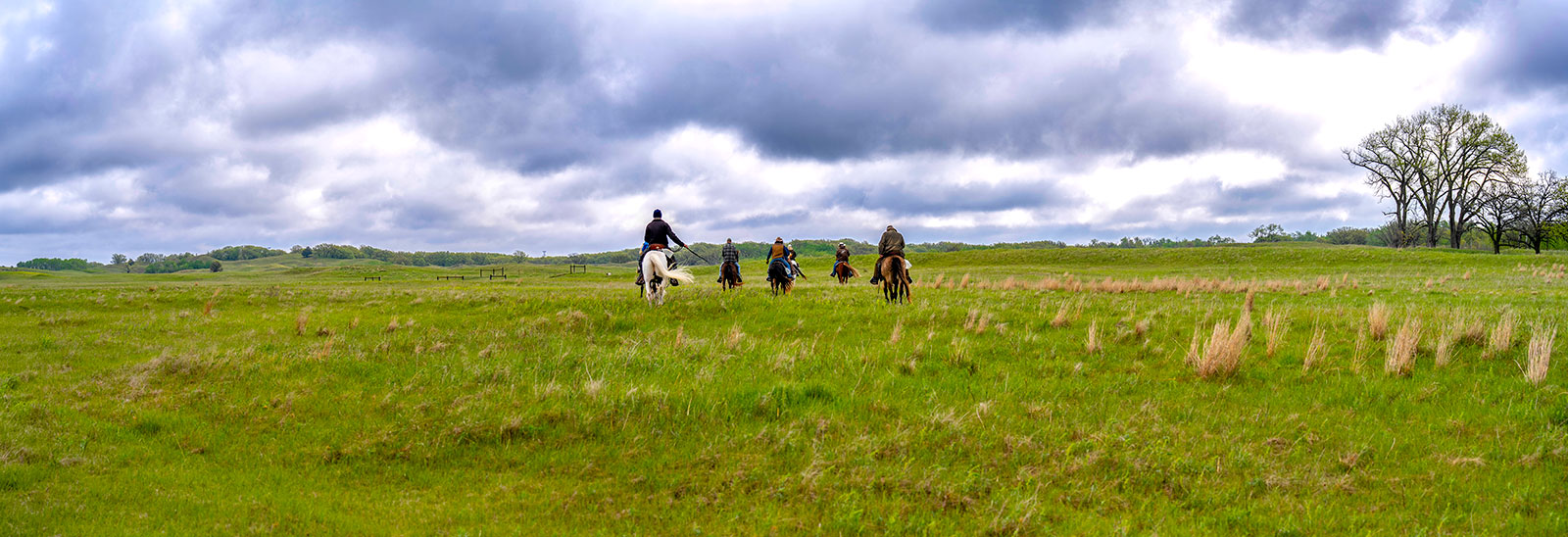
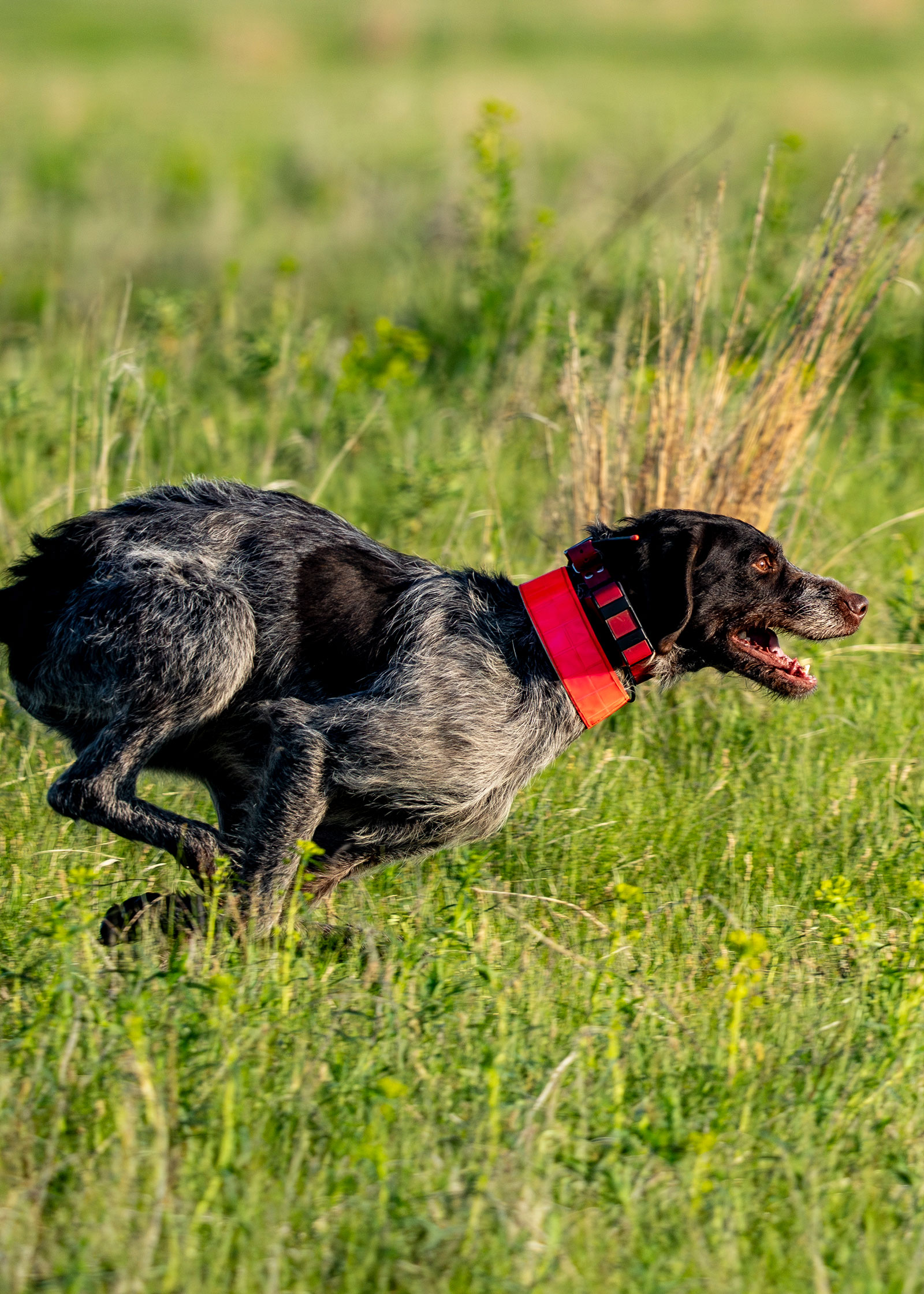
This was my situation when I was invited to spend the weekend camping at Sheyenne National Grassland for the German Wirehaired Pointer Club of Wisconsin’s spring field trial. This was an out-and-back trial where two dogs start from camp in the first brace and then are swapped for two different dog-and-hunter duos for the return trip. A unique aspect of this weekend was that everyone who participated was on horseback, working their way through the native prairie as people have done for hundreds of years. The judges followed along, and so did a gallery of participants if they wanted to. I was the heavy-breathing guy bringing up the rear on Memorial Day weekend, carrying camera equipment and realizing that I should probably accept the offer of a horse to ride that afternoon.
Later that day, once I got on my horse, Dolly, it was hard not to feel a sense of nostalgia for a time I’ve never known. The way she effortlessly crested hills and stepped through the terrain I was struggling with brought the utility of these creatures in this environment to bear.
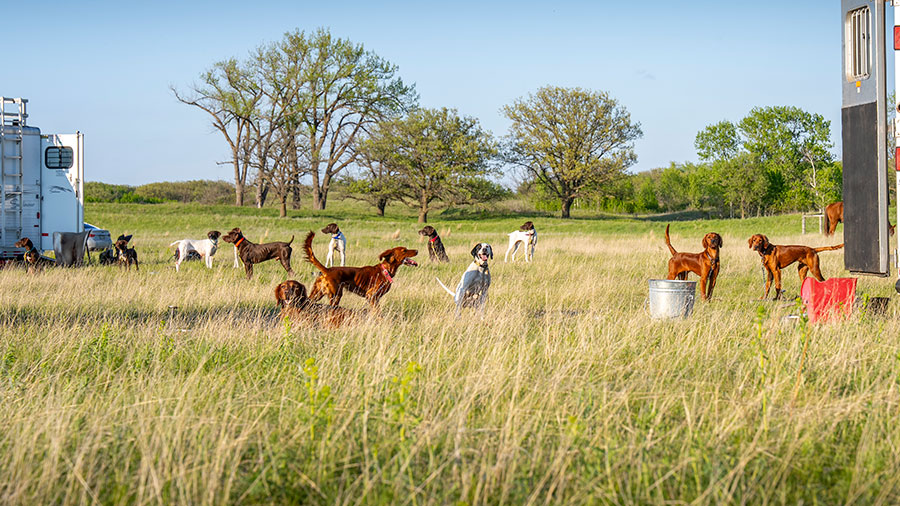
Within the confines of Sheyenne, this ride took me straight back to a chapter of North Dakota history that has quietly faded into the corners of the state’s memory. Over a century and more ago, vast stretches of tallgrass prairie covered much of the eastern part of our state and the Great Plains beyond our borders. Big bluestem and switchgrass stood shoulder-high in places, and greater prairie chickens called out on the leks by the thousands each spring. Hunters and ranchers rode horseback with bird dogs through these same rolling sand hills and oak savanna patches. It was practical work, not sport alone. Dogs located birds for the table or for market, and horses carried riders across ground too rough for wagons and distances too great for walking.
These field trials themselves carry that same thread. Organized events for pointing dogs date back more than 150 years in the United States, with roots in European traditions stretching even further back. The modern versions aren’t the same as they used to be, but neither is the world we live in.
Modern gear has changed almost every aspect of the trials, from the equipment that handlers and dogs carry to the systems that track points and achievements from one competition to the next. It would be easy to take a dim view of these things and mourn the loss of simplicity, but I don’t find a lot of use in that.
Instead, I see the dogs, the riders, and the land itself working together here. They turn a fading memory into something you can still see, hear and feel on a spring morning when the wind moves through the tall grass and trees, the dogs point upland birds, and the horseback riders stride through the prairie.
Later that night in the tent, my soundtrack was a gentle rain pitter-pattering on the canvas while calves called to their mothers in the distance. The air got cool again after a warm day, and I was thankful these pieces of the old world still carry on in modern North Dakota.