Late Bloom
Zachary Eshleman
It is early October, and North Dakota bird hunters are living in paradise. Waterfowl seasons are in full swing. Sharp-tailed grouse, Hungarian partridge and doves have been on the menu for weeks. Even snipe, sandhill cranes and woodcock are open for the taking.
There is just one problem. The bird most of us see every time we cruise a gravel road still needs another week. Why are ring-necked pheasants so special that hunters have to wait until the second Saturday in October?
The wait is not a tradition for tradition’s sake. It is a wildlife management decision built on how pheasants breed, how roosters dress themselves for fall, and how quickly a hunter has to decide to take a shot before a bird disappears into the next patch of cover. This decision is also related to why we harvest only male pheasants to begin with.
Pheasants do not pair up the way most waterfowl and many other birds do. They are closer to wild turkeys in the sense that a successful rooster may father more than 10 broods in a year instead of sticking with one hen. That fact lowers the value of any individual male on the landscape. When a hunter harvests him, other roosters nearby can cover the breeding.
Think of it this way. If there are 10 roosters for 100 hens, reproduction is theoretically about the same as if there were 20 roosters for those same 100 hens. A hen will not raise more than one successful brood a year. Extra roosters do not create extra nests. The hens do.
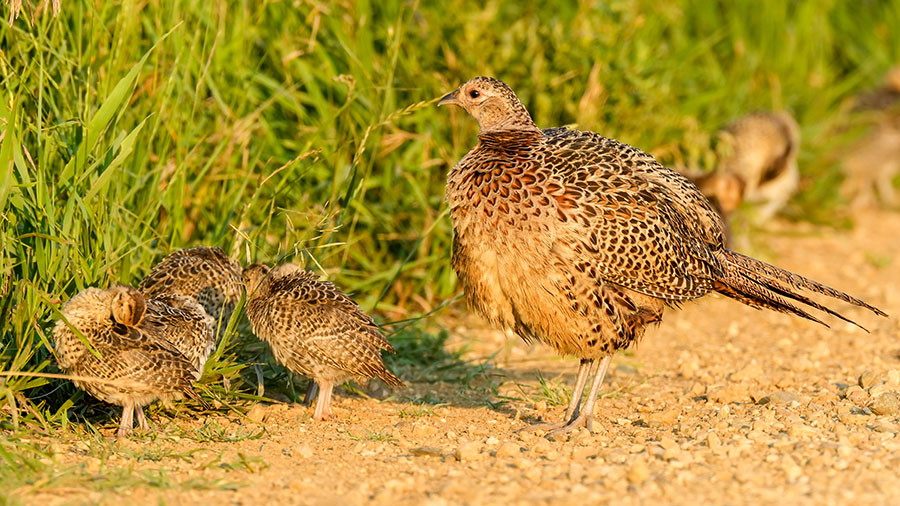
Downy stage pheasants with their mother
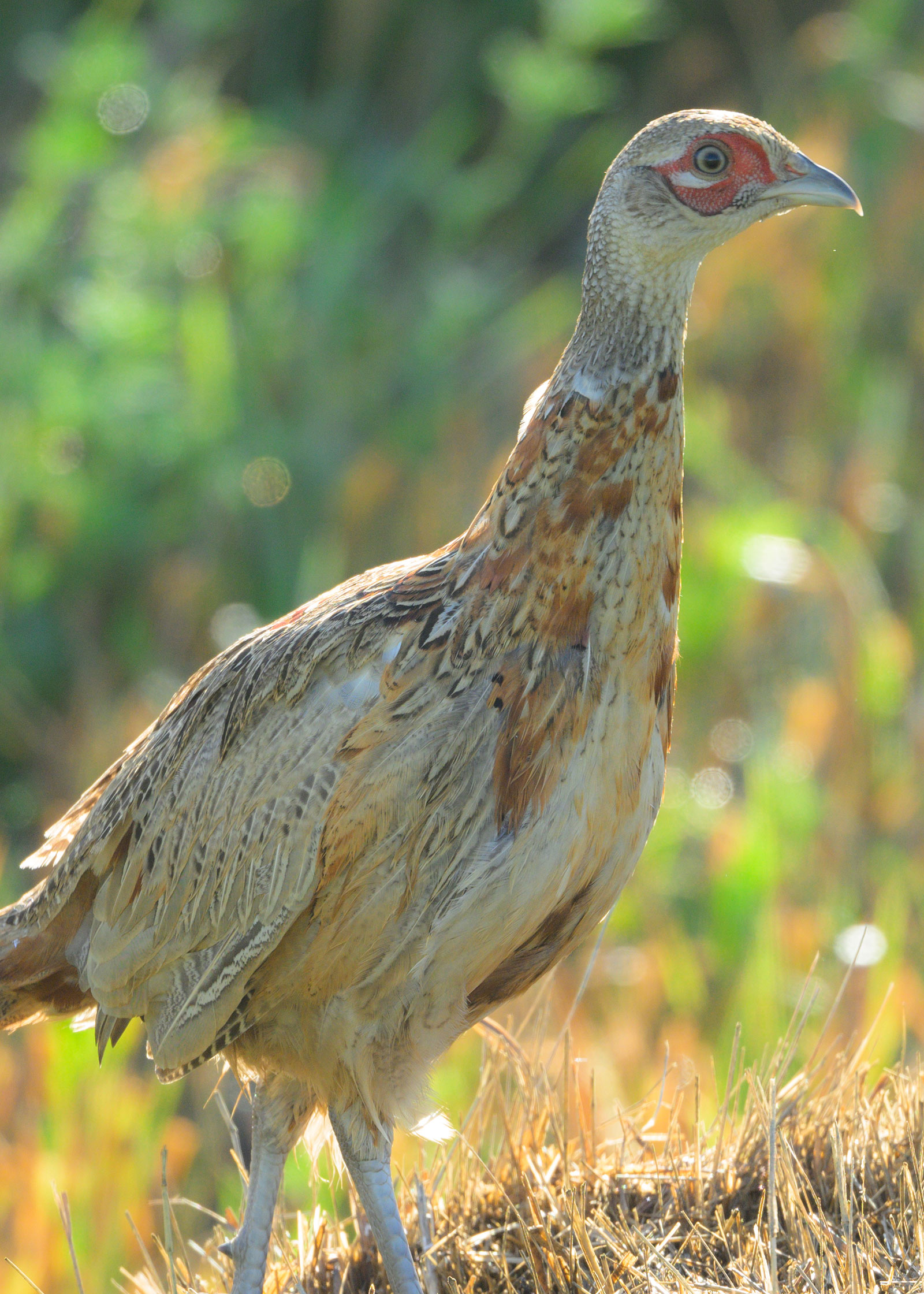
That is reason enough to keep hens off-limits, yet enforceability matters just as much. A legal bird has to look like a legal bird in a hurry, often against the sun, in the wind, and over a dog that is already on point.
That’s why, for pheasants, the hunting season follows the plumage.
North Dakota pheasants start life as little more than puffballs, and that can happen at different times in spring and summer. An early nest lost to weather, haying or a predator can push hens to attempt another one later into summer. Peak hatch in the state usually falls in mid-June, but late hatches keep trickling in long after that.