

State Wildlife Action Plan - Introduction
Executive Summary
The 2025 North Dakota State Wildlife Action Plan (SWAP) is a strategy to conserve fish, wildlife, and their habitats with a focus on preventing species from becoming endangered. The 2025 SWAP is a revision of the 2015 SWAP and serves as a 10- year blueprint to guide conservation efforts and funding decisions under the State Wildlife Grant (SWG) program. However, the SWAP is widely used by a diverse array of conservation partners, policy makers, industry professionals, consultants, teachers, and scientists. The SWAP represents a unified effort involving various stakeholders aimed at creating and implementing conservation strategies to ensure the long-term protection and sustainability of the state’s fish and wildlife species.
The first North Dakota SWAP was finalized in December 2005. It identified 100 Species of Conservation Priority, including information on distribution, abundance, habitat requirements, threats, conservation actions, and monitoring techniques. It also included information on a host of fish and wildlife that inhabited the state. This proved to be an important point in time as North Dakota had its first comprehensive strategic level plan to address management of nongame and rare or declining fish and wildlife resources. The second iteration of the SWAP was finalized in July 2015 and approved in February 2016. This version identified 115 Species of Conservation Priority and was structured to include a more unified approach to identifying threats and conservation actions by major habitat type. The 2025 North Dakota SWAP expands upon this successful approach.
The SWAP is built upon eight essential elements, identified by Congress, with an overall focus on species of greatest conservation need. The eight elements include: (1) information on the distribution and abundance of species of wildlife including low and declining populations; (2) descriptions of locations and relative condition of key habitats and community types; (3) problems affecting species and priority research or survey efforts needed; (4) conservation actions needed to conserve the identified species; (5) plans for monitoring species and the effectiveness of conservation actions; (6) plans for reviewing the strategy; (7) coordinating with federal, state, and local agencies and Tribal government on the development and implementation of the strategy; and (8) involve broad public participation.
Key components of the 2025 SWAP
- Species of Greatest Conservation Need (SGCN) and Species of Greatest Information Need (SGIN): The previous SWAPs referred to this list as Species of Conservation Priority and were divided into 3 different levels of priority. A major change to the 2025 SWAP is that the principal list will be referred to as SGCN and no levels will be assigned. A second list of SGINs has been developed. While SGCNs are known to be at-risk or in decline, SGINs face uncertainty in terms of their status, range, or level of risk. Furthermore, the 2025 SWAP includes a more thorough assessment of terrestrial and aquatic invertebrates. There are 134 SGCNs and 98 SGINs identified in the 2025 SWAP.
- Habitats: The SWAP is a habitat based, rather than a species based approach. Many species require a variety of habitat types throughout their life cycle. To ensure their long-term survival, it's essential to maintain a diverse landscape, including grasslands, wetlands, forests, rivers, streams, riparian and cropland.
- Threats: The top recurring threats identified across all habitats include conversion of habitat; invasive non-native species; fire suppression; underutilization of grazing; energy development impacts (e.g., fragmentation, displacement of wildlife, and anthropogenic disturbance); and conservation awareness (e.g., lacking recognition of the critical role resilient habitats provide for wildlife, water quality, and the well-being of North Dakota’s communities.)
- Actions: The top recurring actions identified across all habitats include offer incentives and programs to protect, enhance, and restore habitat; control or reduce invasive species; offer incentives and programs to implement prescribed fire/controlled burns; support grazing as a grassland management tool; urge ecologically responsible development and suitable reclamation standards; and public education and outreach.
- Monitoring: Developing and implementing statewide monitoring strategies for all SGCNs and their habitats is an ambitious task. It requires a flexible approach, ensuring that monitoring is aligned with well-defined performance metrics. The Department and partners regularly evaluate conservation efforts and management treatments through diverse monitoring techniques. New data will refine this process, facilitating the adoption of best practices for managing both species and habitats.
- Revision: The SWAP will undergo another revision in 2035, reinforcing its status as a living document that is routinely updated and adapts to changes and new information over time.
- Partners: Building and enhancing partnerships is crucial to the success of the SWAP. The effectiveness of these collaborations is demonstrated not only by accomplishments within the SWG program but also by the notable progress made in conserving SGCNs and their habitats through various partner-led initiatives.
- Public: Wildlife is entrusted in the care of state wildlife agencies to be safeguarded for its citizens. A key aspect of this role involves keeping the public informed about fish and wildlife topics, both locally and nationally, while also being receptive to their feedback.
- Wildlife-Associated Recreation and Education: The SWAP is vital in identifying strategies to conserve wildlife and their habitats, but equally important is to effectively increase public awareness and advocacy through various activities by increasing recreational and educational opportunities for the public. While this is not a required element of the SWAP, it is important for North Dakotans who enjoy the outdoors.
The completion of the 2025 SWAP marks the twenty-year anniversary of North Dakota’s dedicated program for rare and declining fish and wildlife species. While significant progress has been achieved over the past two decades, much work remains. As North Dakota faces increasing habitat threats and challenges, the SWAP will be a critical tool for addressing these ongoing issues.
The Western Meadowlark, the state bird of North Dakota, continues to decline at about 1% per year. This iconic bird became the ambassador for the Meadowlark Initiative, a proactive and comprehensive effort to conserve grasslands in the state.
Introduction
This chapter provides an overview of the State Wildlife Action Plan, the State Wildlife Grant Program, and the purpose it serves for fish and wildlife resources in North Dakota.
Focus on Rare or Declining Species
The North Dakota Game and Fish Department (Department) is typically known for the management of big game species (e.g., White-tailed Deer and Mule deer) and recreational fisheries (e.g., Walleye and Northern Pike) across the state. In addition to those management responsibilities, the Department is also accountable for the management of nongame wildlife. In North Dakota, nongame wildlife represents more than 80% of the state’s vertebrate fauna. Nearly 400 species of birds, 80 species of mammals, 75 fish, 16 reptiles, and 13 amphibians inhabit North Dakota. Freshwater mussels, crustaceans, and insects are also considered nongame and the exact total of invertebrates inhabiting the state is unknown. Often, nongame are the rarer and/or less studied species. Nongame species are an integral component in the balance of nature. The populations of many of these species are declining or thought to be at-risk. Preventing species from becoming listed as federally threatened or endangered is important. A listing has the potential to influence how public and private land is managed and used. The cost of protection or restoration of a listed species is far greater than preventing its decline in the first place. From an ecological perspective, loss of a seemingly insignificant species can cause other animals to decline or vanish. Such declines are hard to predict as many relationships are not yet well understood. Even so, animals that live in North Dakota are part of the state’s legacy, and many people believe the demise of any species is tragic.
Since funding opportunities for nongame species management is limited, North Dakota’s State Wildlife Action Plan (SWAP) is a strategy to guide the process of preserving the state’s fish and wildlife resources for the future. Unlike previous versions which focused on species of conservation priority (SCP), the SWAP now refers to the list of species of greatest conservation need (SGCN) and species of greatest information need (SGIN) based on research by conservation biologists and input from various taxonomic experts within each discipline (i.e., avian, reptile, invertebrate, etc.).
Due to limited funding availability, Congress provides states with supplemental funding through Title IX of the Commerce, Justice, and State Appropriations Act under the Wildlife Conservation and Restoration Program (WCRP) for conservation of species which typically receive no monetary support. These funds were made available in fiscal year 2001 (FY01), which provided $50 million for distribution among states. In 2002, states received additional funding under a new program, State Wildlife Grants (SWG). Since then, SWG amounts available to all states through the Department of Interior have ranged from $46 to $76 million annually.
The annual apportionment for each state was determined using a distribution formula of 1/3 land area and 2/3 population. No state receives less than 1% or more than 5% of the total amount each year. Due to North Dakota’s sparse population in relation to its large size, it receives the minimum of 1% of total funds. The average annual federal apportionment the Department received from FY15-FY24 is $599,051 (Figure 1) and provided North Dakota with approximately $6 million in federal funding (Figure 2) during that time frame. The SWG program is a matching grants program, meaning all federal dollars awarded must be matched with non-federal dollars. Matching funds from the Department along with project partners added nearly another $3 million dollars (Figure 2). Although the match requirement has changed over the years, the current requirement is that all projects require a 35% non-federal match for both implementation and research projects. SWG funding has decreased over the years, but the need for conservation of rare and declining species has only increased.
Although it has yet to come to fruition, the Recovering Americas Wildlife Act (RAWA) has the potential to provide states with a significant increase in funding in the future to address management and conservation of SGCN’s. RAWA has undergone several iterations throughout its legislative history, first introduced in 2016, but the bill has yet to receive full bipartisan support in Congress. Even though it has yet to receive congressional approval, optimism remains high within the conservation community that it will someday pass and provide additional resources for North Dakota to implement its State Wildlife Action Plan.
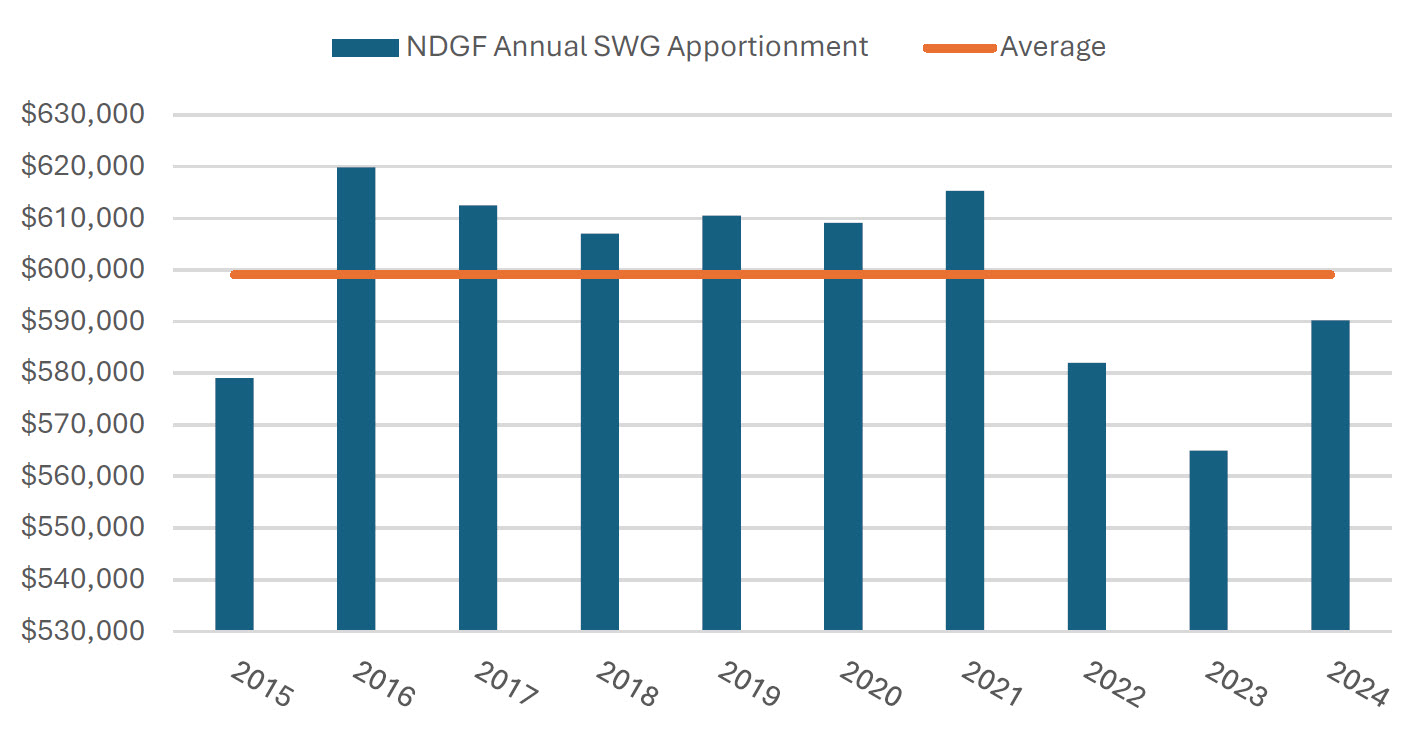
Figure 1. ND Game and Fish Department annual State Wildlife Grant allocation from 2015 – 2024. Average across years is $600,000.
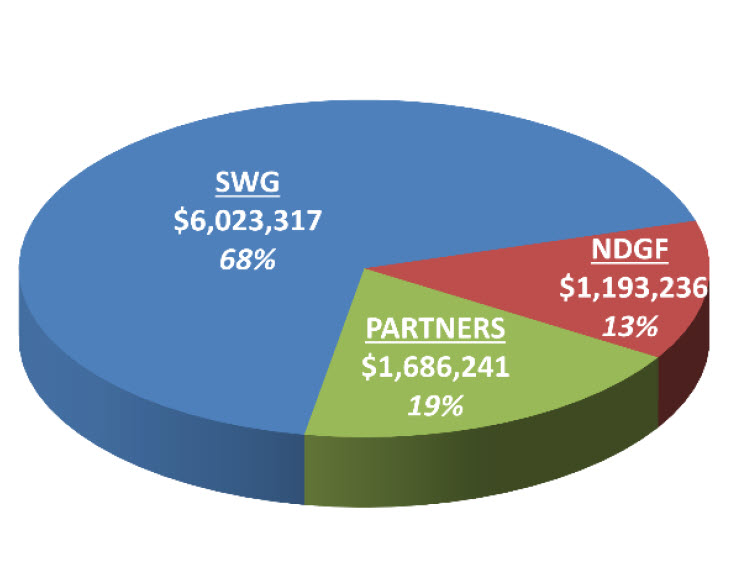
Figure 2. State Wildlife Grant, NDGF and matching partner dollars spent on projects in North Dakota from 2015-2024.
(SWG - 68%, $6,023,317; NDGF - 13%, $1,193,236; Partners - 19%, $1,686,241.)
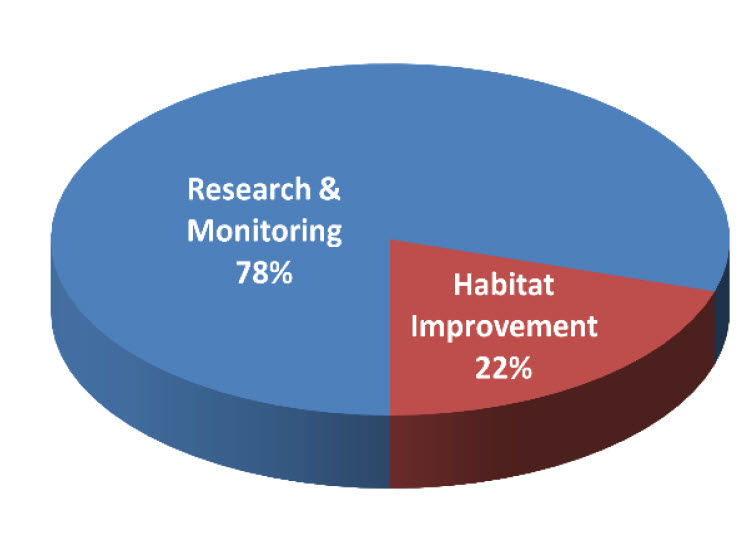
Figure 3. Percentage of State Wildlife Grant funds by project type.
(Research and Monitoring - 78%; Habitat Improvement - 22%.)
Effectiveness of SWAP and SWG
In the 20+ years the SWG program has been in existence in North Dakota, over 80 individual projects with approximately 45 different partners have been initiated. While the projects have been wide-ranging, they can be described as falling into one of two categories for this report: 1) research and monitoring; and 2) habitat improvement. For the FY15-FY24 reporting period, research and monitoring efforts utilized 78% of SWG funds while habitat improvement projects consumed 22% of funds (Figure 3).
With limited funding resources and an overabundance of needs, the Department strives to balance the amount of survey and research projects while still contributing to substantial efforts to improve fish and wildlife habitat. A total of 42 research projects have been conducted over the years on dozens of wildlife species providing much needed information on their presence or absence in certain geographic areas, relative abundance, habitat needs and a variety of other life history traits. Several additional species occurrences have been documented in North Dakota because of these studies. Specifics of SWG projects on species and knowledge gained are provided in the SGCN species accounts.
For habitat related efforts in FY15-FY24, SWG has partnered on about four projects. These projects include efforts to restore/enhance or maintain grassland, riparian, and wetland habitat. During this reporting period, our efforts have resulted in approximately 11,000 protected acres via conservation agreements and/or restoration activities. While the 2015 SWAP has certainly provided valuable guidance and direction, it is time to review and update the plan. Federal regulations require states to conduct periodic reviews of the SWAP not to exceed 10 years. The Department’s 10- year deadline is October of 2025. Because of the size and scope of the SWAP, this process is not done easily in a few weeks or months. As a result, the Department has been working on updating its SWAP since 2023 and has submitted a final draft to the United State Fish and Wildlife Service for consideration in July 2025. Like the effort that was used to create the states strategic plan in 2005, this effort will address the same 8 elements mentioned below.
SWAP Requirements
An important distinction or change occurred in 2007 when Congress recommended that states refer to their CWCS as State Wildlife Action Plans or SWAP. While the content and purpose of our plan never changed, we nonetheless refer to it as a SWAP. By accepting State Wildlife Grant funds, North Dakota and all other 49 states committed to completing a SWAP by October 1, 2005, 2015, 2025, then 2035, etc. For guidance, Congress identified eight required elements to be included in each state’s SWAP.
The Eight Required Elements
- The distribution and abundance of species of wildlife, including low and declining populations as each State fish and wildlife agency deems appropriate, that are indicative of the diversity and health of wildlife of the State (referred to as SGCN or SGIN in North Dakota).
- The location and relative condition of key habitats and community types essential to the conservation of each State’s SGCN.
- The problems which may adversely affect SGCN or their habitats, and priority research and surveys needed to identify factors which may assist in restoration and improved conservation of SGCN and their habitats.
- The actions necessary to conserve SGCN and their habitats and priorities for implementing such conservation actions.
- The provisions for periodic monitoring of SGCN and their habitats, for monitoring the effectiveness of conservation actions, and for adapting conservation actions as appropriate to respond to new information and changing conditions.
- Provisions to review the SWAP at intervals not to exceed ten years.
- Provisions for coordination during the development, implementation, review, and revision of the Strategy with Federal, State, Tribal, and local agencies.
- Provisions to provide necessary public participation in the development, revision, and implementation of the Strategy.
While each state’s SWAP varies in its content and approach, its general purpose is to identify and focus on “species in greatest need of conservation,” while still addressing the “full array of wildlife.” Additionally, the SWAP is intended to promote a comprehensive approach to habitat and wildlife management to leverage conservation of all species.