State Wildlife Grant Success Story - Assessment of American Toad and Canadian Toad Populations in Eastern North Dakota: Is North Dakota a Hybrid Zone?
In North Dakota’s 2015 State Wildlife Action Plan, the Canadian Toad (Anaxryus hemiophrys) was listed as a Species of Conservation Priority due to suspected population declines either throughout its range or specifically within the state. However, recent amphibian surveys in eastern North Dakota found Canadian Toads in half of the surveyed counties, with many of these populations being abundant (M. Smith: SWG T-44-R, 2014–2016; SWG T-52-R, 2018–2021). Misidentification with American Toads (Anaxryus americanus), which closely resemble Canadian Toads, may have influenced earlier data indicating population declines. In contrast, American Toads were found in only one county during prior surveys, with just three individuals captured over three years, indicating potential rapid population decline or local extirpation. While Canadian Toads are typically associated with prairie environments, American Toads are woodland obligates. Ongoing changes in land use, including shifts in agriculture, may further reduce woodland habitats across the state. Additionally, hybridization or genetic mixing between the two species may contribute to the apparent decline of one species as hybrids become more common than pure individuals. The findings from recent SWG projects support the removal of the Canadian Toad from the priority list and the addition of the American Toad as a Species of Greatest Conservation Need in the 2025 State Wildlife Action Plan.
In 2023, a State Wildlife Grant was awarded to Dr. Matthew Smith, Associate Professor of Practice at North Dakota State University, to survey for American Toads in eastern North Dakota. The project aims to determine whether the species has been extirpated from the state or, if still present, to identify key habitat characteristics supporting its persistence. The study also evaluates potential hybridization with Canadian Toads and whether such hybridization may have contributed to the American Toad’s decline. During the 2024 field season, no pure American Toads were captured in North Dakota, though numerous hybrids were documented. Preliminary findings suggest that hybrid individuals in North Dakota may exhibit greater variability than previously reported. The research will continue through 2026.
Tribal Success Story - American Marten
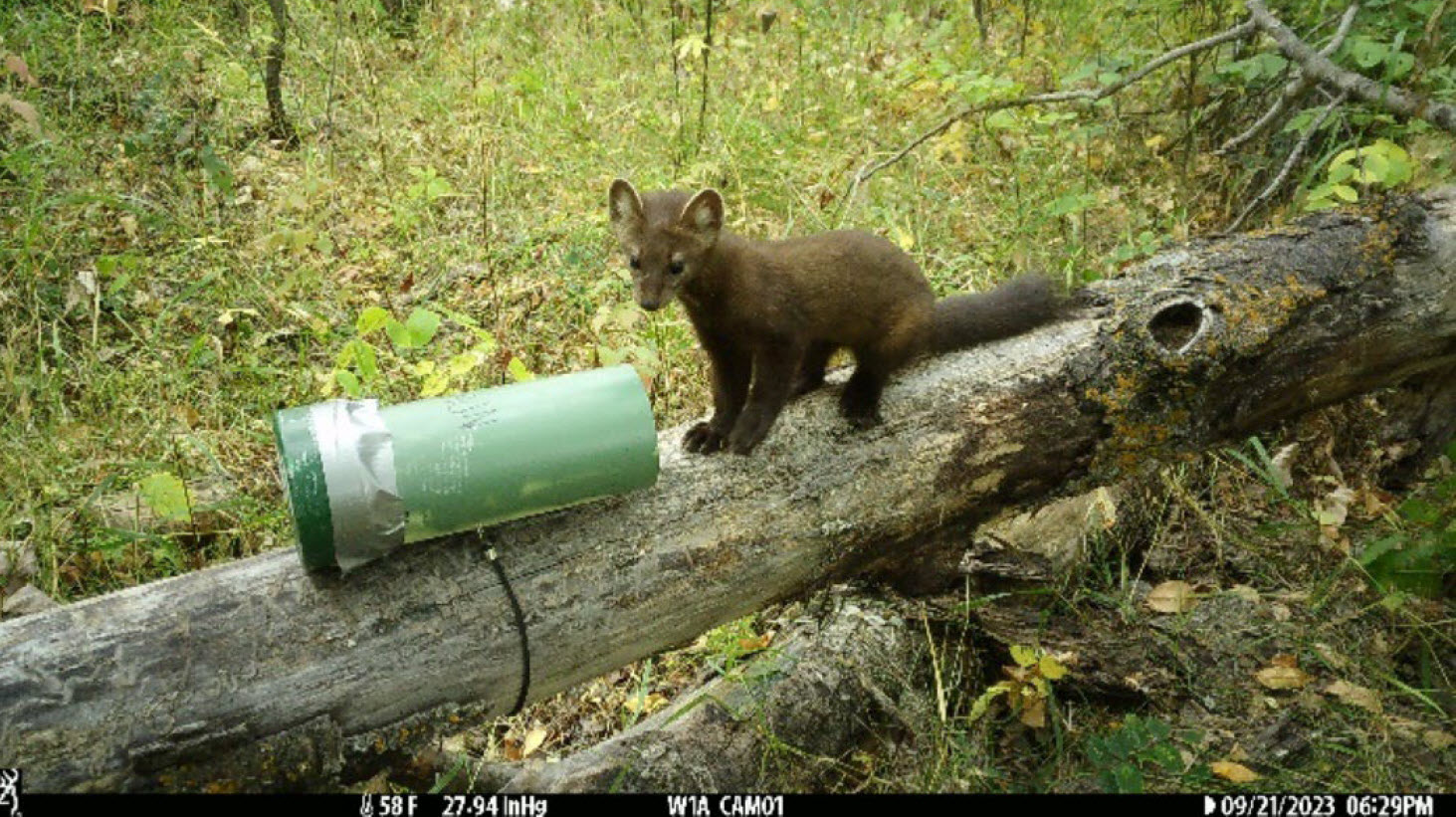
The American Marten (Martes Americana) was once fairly common in the Turtle Mountains and Pembina Hills. The species was extirpated by 1900 and confirmed observations of the species did not occur until the early 2000’s. From 2006 to 2009, a State Wildlife Grant aimed at surveying River Otters and other meso-carnivores validated many more observations of martens in the Turtle Mountains. The American Marten was added as a
Species of Conservation Priority in the 2015 State Wildlife Action Plan.
From 2022-2024, the North Dakota Game and Fish Department worked with the Turtle Mountain Band of Chippewa to assess the marten population within the Turtle Mountains. The reservation encompasses a substantial portion of this region, which contains extensive, intact tracts of the marten’s preferred aspen habitat.
Researchers from Michigan State University used cubbies with bait or a lure to attract martens to investigate and leave behind a hair sample in the process. The genetic mark recapture survey has determined that there is a sizeable population of American Martens in the Turtle Mountains. The findings of this study – made possible through the successful partnership between the NDGF and the Turtle Mountain Band of Chippewa - supported the removal of the American Marten from the Species of Greatest Conservation Need list in the 2025 State Wildlife Action Plan.
Survey of Mussels and Aquatic Invertebrates in North Dakota
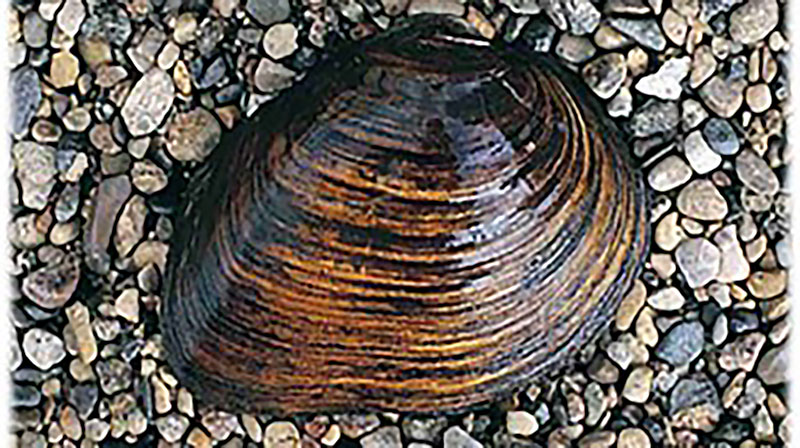
Freshwater mussels are in decline throughout North America due to a variety of reasons such as pollution and dams altering flow regimes of lotic waterbodies.
In 2024, the North Dakota Game and Fish Department partnered with Valley City State University (VCSU) to evaluate mussel species and aquatic invertebrate species composition within the state’s river and stream ecosystems.
A similar survey was conducted in 2008-2010 with the new survey incorporating environmental DNA (eDNA), passive integrated transponder tags (PIT tags), along with an evaluation of potential aquatic invertebrate SGCN or SGIN’s.
Preliminary results reveal an increase in mussel diversity and density in the Goose River, along with population increases for the Fatmucket and Creek Heelsplitter in Baldhill Creek.
Regarding other aquatic invertebrates, a potential new stonefly genus, Amphinemura, was collected in central North Dakota. The project is scheduled for at least one more field season with results pending.
Producing Beef and Birds: Impacts of High Intensity Short Duration Grazing on Grassland Songbirds
Grasslands are the most endangered habitat type on the continent, and in the world. As grasslands disappear, the species that rely on these ecosystems disappear alongside them. One example is the decline of grassland songbirds, who were found to be the most at-risk bird species group with nearly 75% of grassland species exhibiting population declines.
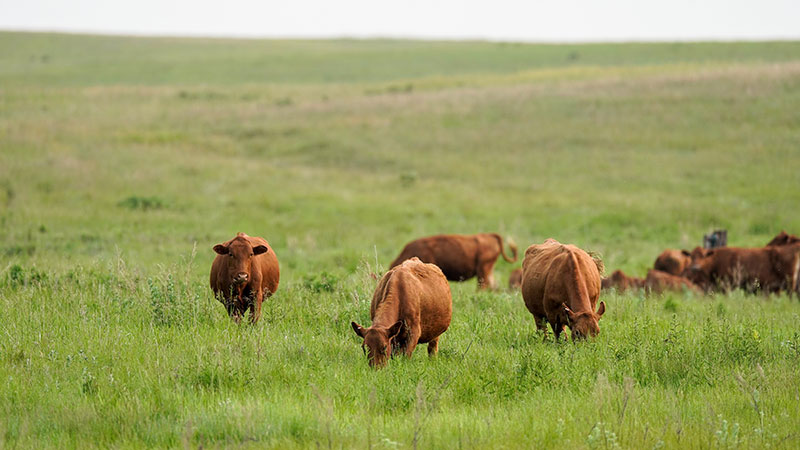
Given the 15.6 million acres of grasslands in North Dakota, many of which are primarily used for cattle production, there are opportunities to engage in different rotational grazing methods that provide dual outcomes for livestock and grassland birds simultaneously.
Currently available research has examined the effects of cattle grazing on variables such as forage production and on grassland nesting birds, however, such research has focused primarily on continuous and longer rotational (LR) grazing methods.
A shorter rotational grazing system with higher stocking rates and shorter paddock times called high intensity, short duration (HISD) has recently received attention due to its ecosystem benefits such as carbon sequestration, water filtration, and other ecosystem services. Considering the drastic declines in grassland bird populations, there is interest in understanding the impact of HISD on this important avian group.
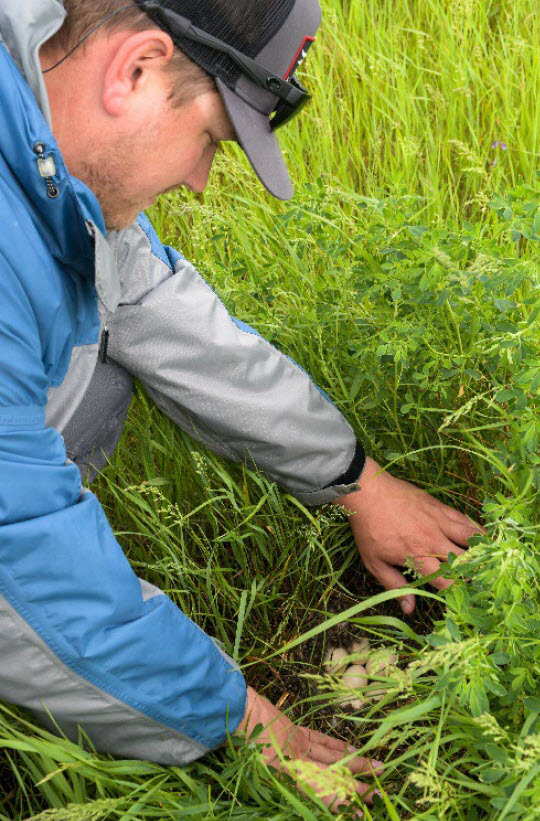
The following research questions were asked as it relates to grassland bird production in LR and HISD grazing practice systems: Does nest success of grassland nesting songbirds, shorebirds, waterfowl, and grouse vary between HISD and traditional rotational grazing practices? Does total nesting productivity (number of nests and nest success of grassland nesting songbirds, shorebirds, waterfowl, and grouse) vary between HISD and traditional rotational grazing practices? Do structural vegetation measures generally important for nest success vary between HISD and traditional grazing practices? What factors predict nest success for grassland nesting birds in grazed grasslands (e.g., vegetation structure, grazing practice, abiotic factors, etc.)?
From 2020-2025, a State Wildlife Grant was awarded to the University of North Dakota to carry out this project. Taylor Linder, Graduate Research Assistant, UND, led the research under Dr. Susan Ellis-Felege (UND), Marissa Ahlering (The Nature Conservancy), and Kaylan Kemink (Ducks Unlimited). Completion of the dissertation, in addition to publication of individual chapters, is anticipated in late 2025. Preliminary results indicate significantly more species on HISD sites compared to LR grazing sites; nest trampling was overall very low and more likely to occur on LR grazing sites; and Chestnut-collared Longspurs and Horned Lark were greater on LR grazing sites compared to HISD sites. Overall, there were insignificant differences in reproduction variables between the grazing practices.
The Meadowlark Initiative
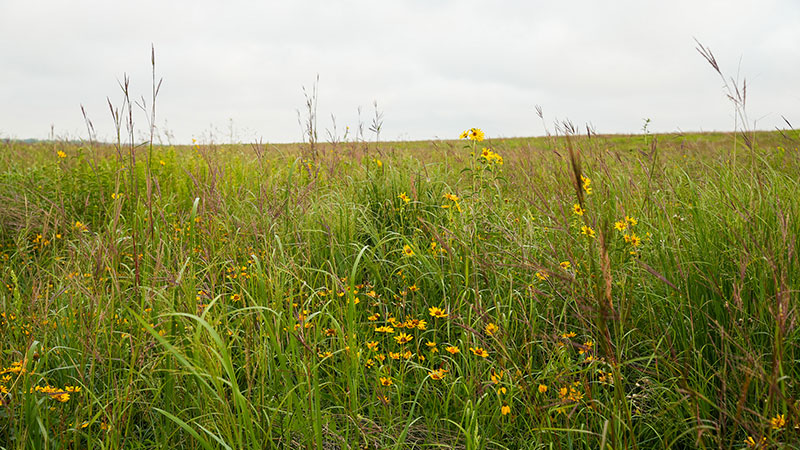
The Meadowlark Initiative was created in response to the steady decline of North Dakota’s state bird, the Western Meadowlark, which has been decreasing at a rate of approximately 1% per year and is listed as a Species of Greatest Conservation Need (SGCN) in both the 2015 and 2025 North Dakota State Wildlife Action Plans. Launched in 2020 by the NDGF, the Meadowlark Initiative is a statewide strategy that brings together the knowledge, resources, and efforts of partners in conservation, agriculture, and industry to enhance, restore, and sustain North Dakota’s native grasslands. The ongoing loss of prairie affects not only grassland-dependent species, but also people, communities, traditions, and overall quality of life—impacting water, soil, energy, and food systems. The initiative envisions vibrant, healthy grasslands that support biodiversity and foster prosperity for wildlife, pollinators, ranching operations, and local communities. The Meadowlark Initiative is not a standalone program, but a coordinated effort among multiple partners to sustain North Dakota’s grasslands - a Conservation Action consistently prioritized in all versions of the SWAP.
In 2021, the Meadowlark Initiative Regional Conservation Partnership Program (RCPP) was approved by the USDA Natural Resources Conservation Service. Fourteen partner organizations have committed to combining their resources to leverage RCPP funding, using an innovative spatial modeling approach to prioritize land management and conservation rental activities. Their shared goals include converting 20,000 acres of marginal cropland to diverse native perennial vegetation, enhancing 50,000 acres of existing and restored native grasslands, and restoring or improving 10,000 acres of wetlands within reconstructed grassland complexes.
Outdoor Heritage Fund – Working Grassland Partnership
North Dakota's Outdoor Heritage Fund (OHF) was established in 2013 as a program to provide grants to state agencies, tribal governments, political subdivisions, and nonprofit organizations for conservation practices. The OHF will receive up to $40 million per biennium from oil and gas production tax revenue. Higher priority is given to projects that enhance conservation practices in this state by supporting one or more statutorily identified directives: access to private and public lands for sportsmen and women; improving, maintaining and restoring water quality, soil conditions, plant diversity, animal systems, and by supporting other practices of stewardship to enhance farming and ranching; developing, enhancing, conserving, and restoring wildlife and fish habitat on private and public lands; and conserving natural areas and creating other areas for recreation through the establishment and development of parks and other recreation areas.
The North Dakota Natural Resources Trust submitted the original Working Grassland Partnership (WGP) proposal to OHF in 2016. The need to maintain grassland habitat in North Dakota is vitally important for the wildlife species that depend on healthy grasslands. The WGP proposal acknowledged the North Dakota State Wildlife Action Plan and the decline of grassland-dependent species, such as the Western Meadowlark, as key reasons for the project’s necessity. The WGP focuses on expiring CRP grasslands and providing options to landowners to retain these acres in grassland. Incentive-based upfront least payments and cost-share is provided to private landowners for grazing infrastructure, to transition former CRP acres into working, bird-friendly grazing lands for livestock operations. Due to the success of the WGP, the North Dakota Natural Resources Trust has submitted additional Outdoor Heritage Fund proposals and is now working on its seventh award. To date, WGP grants from the OHF have resulted in 196 landowner agreements and the enrollment of 84,650 acres.