

Ottoe Skipper

Specimen photo from University of Minnesota Insect Collection
A larger skipper, with females being larger than males. The upper wings are a bright orangish brown. The males have a dark brown to black edging along the outer margins. They also have a narrow black band containing stigma (specialized scent scales used in courtship) on the center of the forewing. Both have a yellow (sometimes orange) lower wing surface with males being unmarked and females with faint spots.
Status in North Dakota
Resident.
Range Map

Ottoe Skipper possible range (light gray). Few state records.
Reason for SWAP Designation
SGCN (c).
At-risk, expert review or recent assessment.
Globally ranked G3 (vulnerable).
Loss of prairie is the main driver for population declines.
Most remaining populations are associated with small, isolated prairie fragments with a high risk of local extinction.
Threats
The loss and degradation of native prairies is the primary cause for species decline.
However, some studies have indicated a sensitivity to grazing as well, and heavy grazing pressure can also lead to declines.
The species is also known for scattered and isolated populations across its range, leaving them more susceptible to extirpation due to catastrophic events such as wildfire and drought.
Research and Monitoring
Statewide pollinator surveys have been completed by the USFWS HAPET team and NDSU.
Pollinator surveys should continue throughout the state to determine species range and population trends in ND.
Management Recommendations
- Protect and manage high quality native prairie.
- Protect and manage known populations.
- Develop pollinator habitat.
- Limit the duration and intensity of grazing in suitable habitat. Do not graze habitat for entire season.
- Avoid broadcast spraying of pesticides and herbicides at known sites to minimize loss of adults and nectar sources.
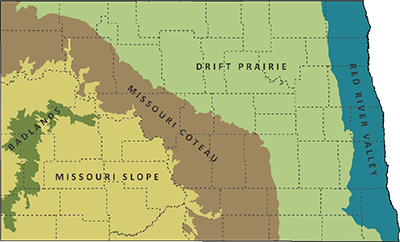
Primary Geological Regions
Habitat Associations
Habitat Use
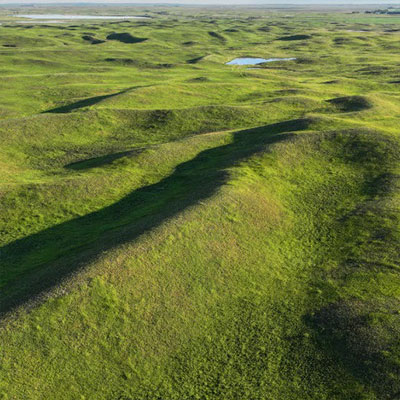
The Ottoe skipper typically prefers dry-mesic mixed-grass prairies.
Preferred habitat typically includes species such as little bluestem, side-oats grama, and prairie dropseed.
This species is associated with non-degraded native grasslands.