

Regal Fritillary

Regal fritillary butterfly on a common milkweed, Jill Haukos/Konza Prairie Biological Station, CC 4.0, https://www.fws.gov/media/regal-fritillary-butterfly-common-milkweed
Forewings orange with black bars running between veins. Hind wings are darker orange to black with a pattern of white spots present.
Status in North Dakota
Resident.
Range Map

Regal Fritillary primary (dark gray) and possible/uncommon (light gray) range.
Reason for SWAP Designation
SGCN (b).
At-risk or declining, ND important.
SGCN (c).
At-risk, expert review or recent assessment.
Loss and fragmentation of prairie habitat is the driving concern.
Threats
Habitat:
The loss of native habitat especially those that contain violets is the primary cause for this species decline.
Loss of habitat with high quality nectar sources for adults, such as native prairie is also a concern.
Connectivity between useable habitats is a concern.
Other Natural or Manmade Factors:
The use of herbicide for weed control at certain times of the year in native prairie tracts may be a detriment by reducing nectar sources for the butterfly.
Insecticide use near populations may also a factor.
Research and Monitoring
Most recently, statewide pollinator surveys have been completed by the USFWS HAPET team and NDSU.
Both provided data on presence/distribution of Regal Fritillary butterflies across the state.
Royer also previously surveyed butterflies at a number of sites in North Dakota.
Pollinator surveys should continue throughout the state to determine species range and population trends in ND.
Management Recommendations
- Develop pollinator habitat.
- Protect and manage high quality native prairie.
- Develop connectivity between quality habitats.
- Delay haying of habitat until after end of adult flight.
- Plant native nectar plants to improve habitat.
- Include native violets in prairie restorations and seedings.
- Avoid broadcast spraying of pesticides and herbicides at known sites to minimize loss of adults and nectar sources.
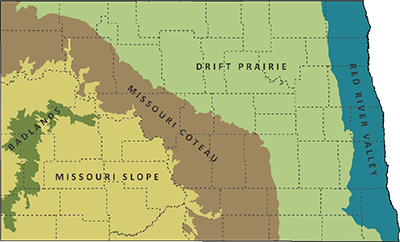
Primary Geological Regions
Habitat Associations
Habitat Use
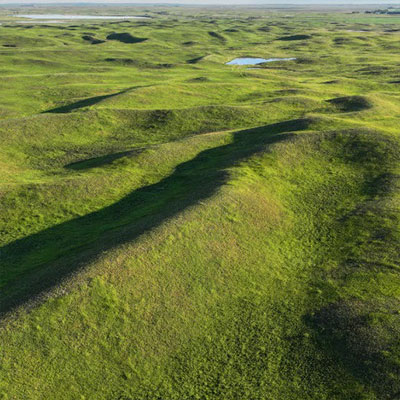
Regal Fritillary is typically found in tall-grass prairie remnants and other native prairie habitats.
Regal Fritillary larva relies exclusively on native violets as a food source.
Areas with high density of violets will contain both caterpillars and adults.
In North Dakota, the southeast quarter of the state provides the best habitat remaining for this species but may be encountered state- wide in patches of quality habitat.